

A small experimental rocket is tested using two different types of rocket boosters.
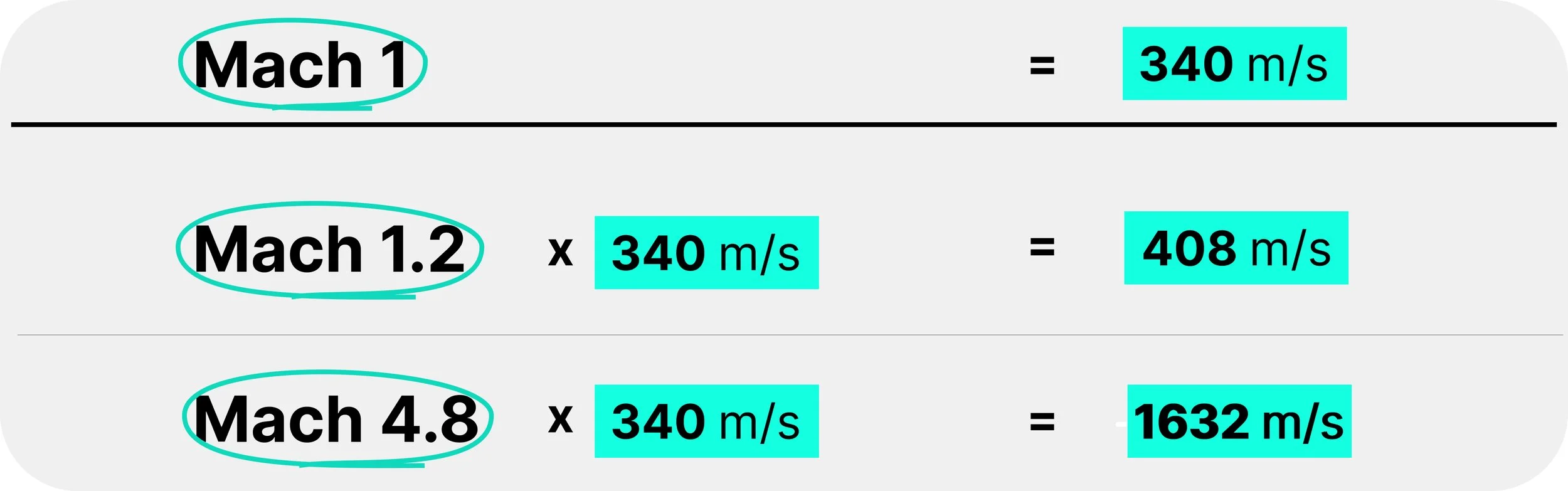
The speed of the rocket is measured on the Mach scale, where Mach 1 = 340 m/s.
The solid-fuel booster accelerates the rocket to Mach 1.2.
The liquid-fuel booster then further accelerates the rocket to Mach 4.8 in a time of 15 s.
The average resultant force on the rocket while this liquid-fuel booster is pushing it is 2400 N.
Calculate the mass of the rocket.
Assume the mass remains constant.
Give your answer to 2 significant figures.
[6 marks]
-
Mach 1 is the assumed speed of sound. It is used as a reference value.
You should use it as a multiplier.
So
Multiply the Mach number by 340 m/s to find the velocity at each point.
-
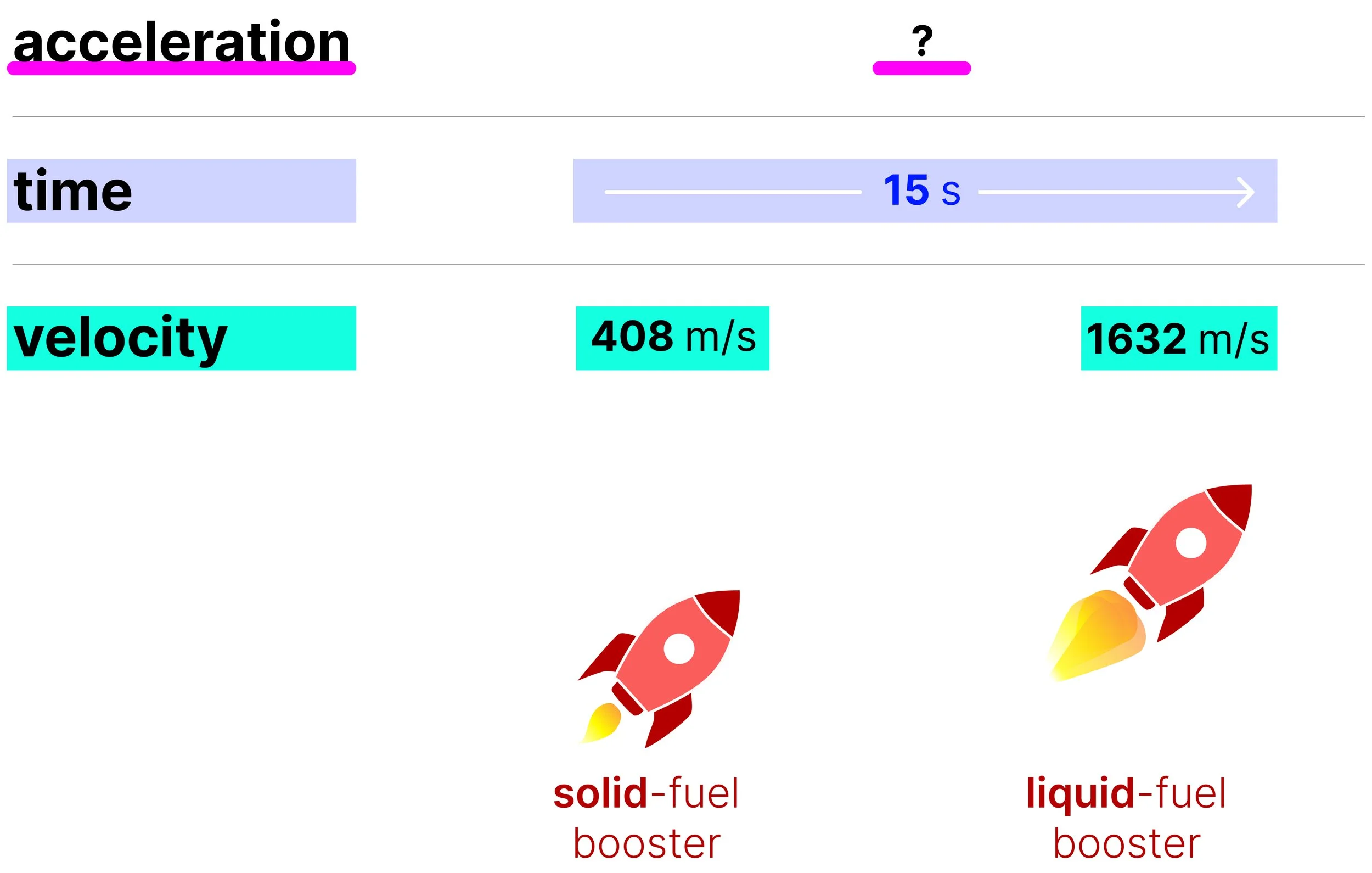
Initial velocity = 408 m/s
Final velocity = 1632 m/s
Time = 15 s
Acceleration ?
-
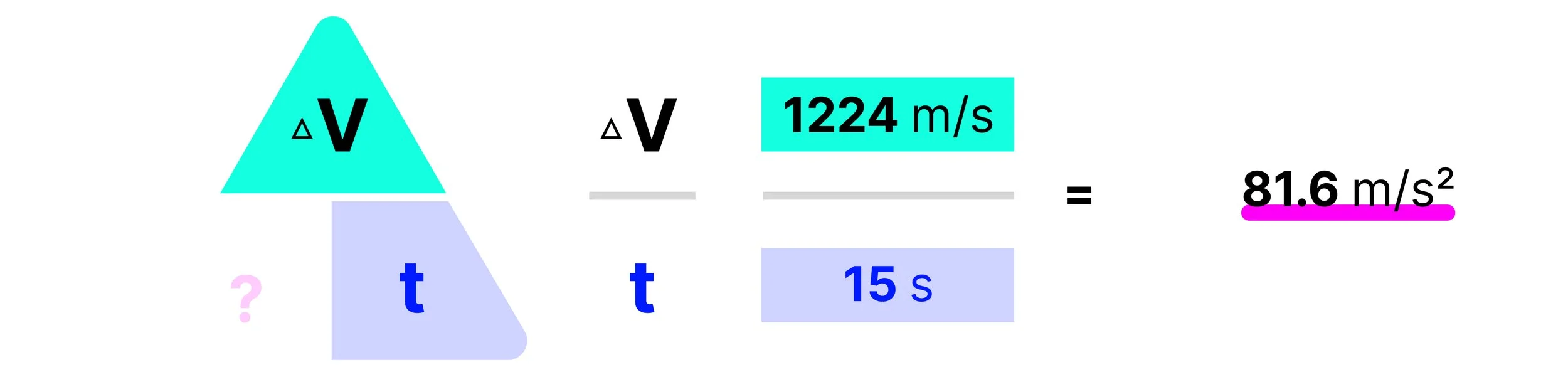
change in velocity = final - initial
1632 - 408 = 1224 m/s
*Remember: Velocity is speed with direction.
Since the car travels in the same direction throughout, we can use the given speeds as velocity values when calculating its acceleration.

-
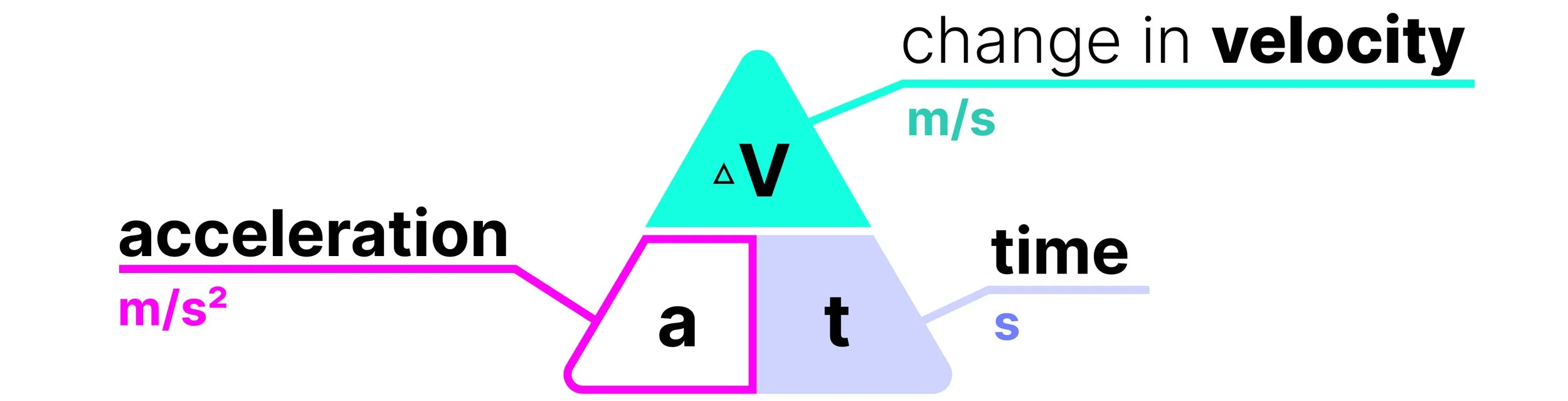
change in velocity = acceleration x time
-
a = change in V / t
1224 / 15 = 81.6 m/s²
Second Equation:
-
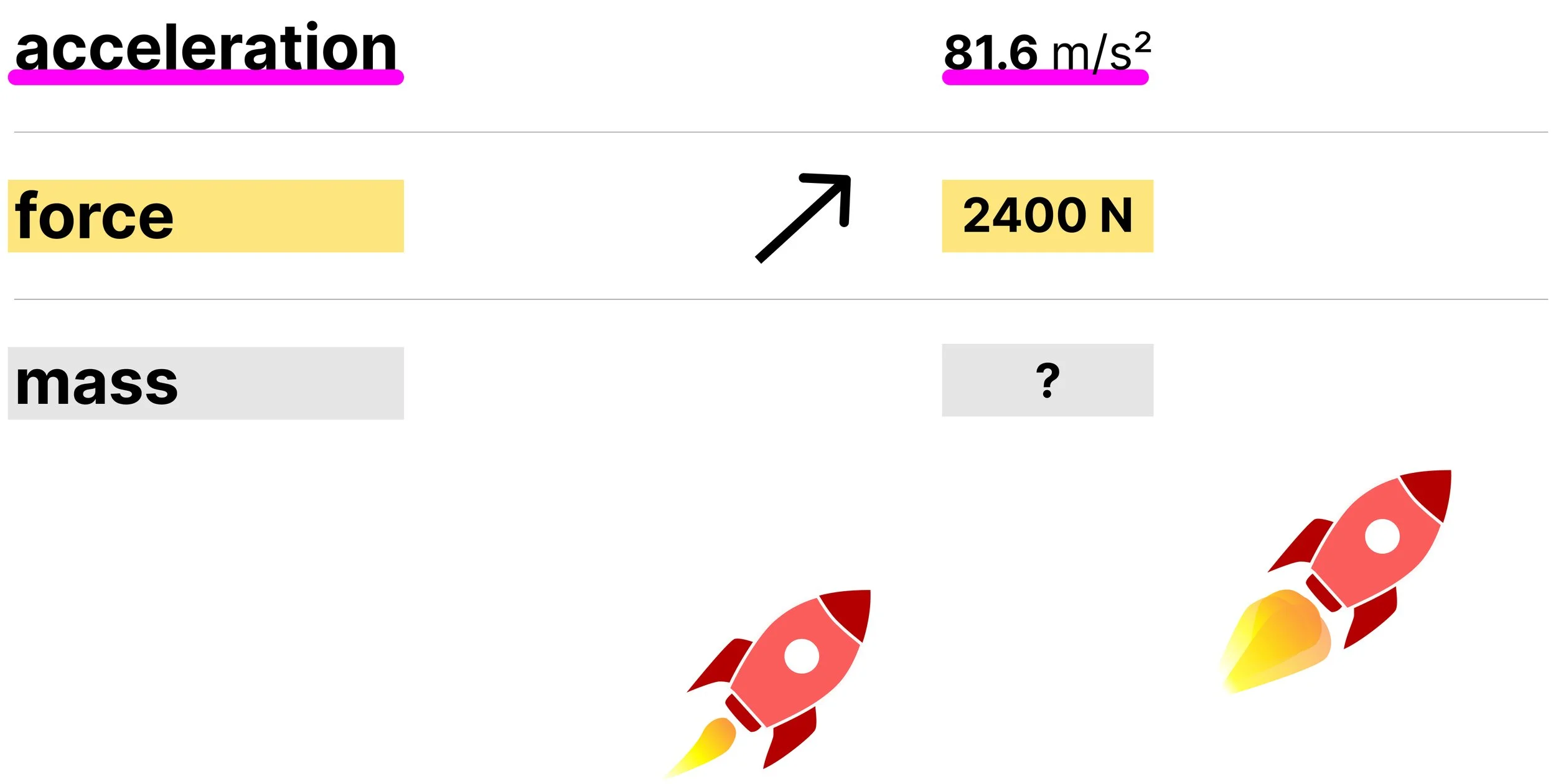
force = 2400
acceleration = 81.6 m/s²
mass = ?
-
Newton’s Second Law:
force = mass x acceleration
f = ma

-
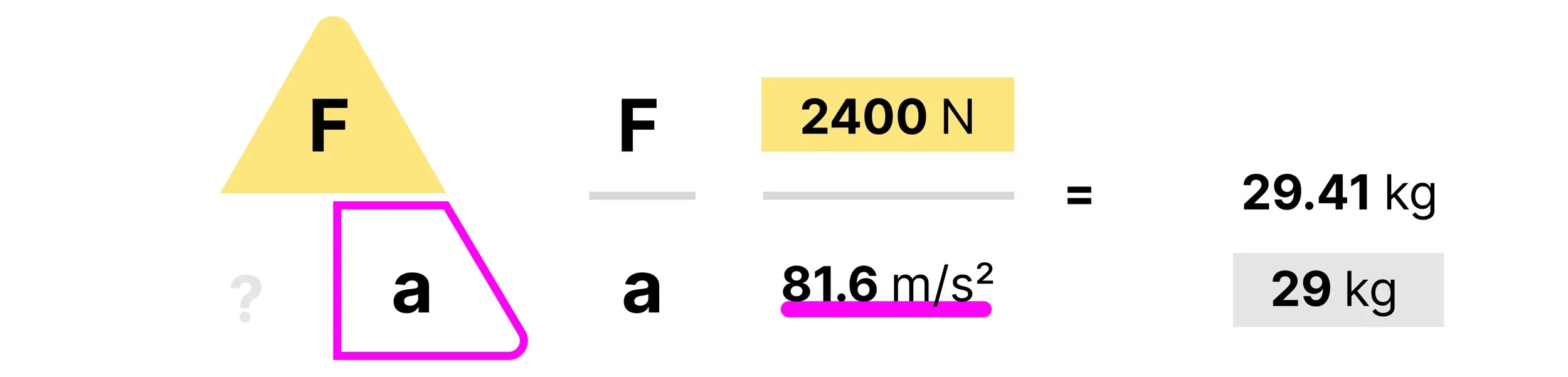
m = F / a
2400 / 81.6 = 29.41 kg
To 2 significant figures:
29kg
Continue Revising Paper 2





Need help improving your GCSE Physics grade?
These visuals are created by our experienced GCSE tutors.
