
Acceleration and Force - AQA Practical
AQA GCSE Physics acceleration and force required practical. Combined & Triple Science.
A student investigates how the force applied to a glider affects its acceleration. The apparatus includes an air track, pulley and light gates.
Plan a valid method that allows the student to plot an appropriate graph.
[6 marks]
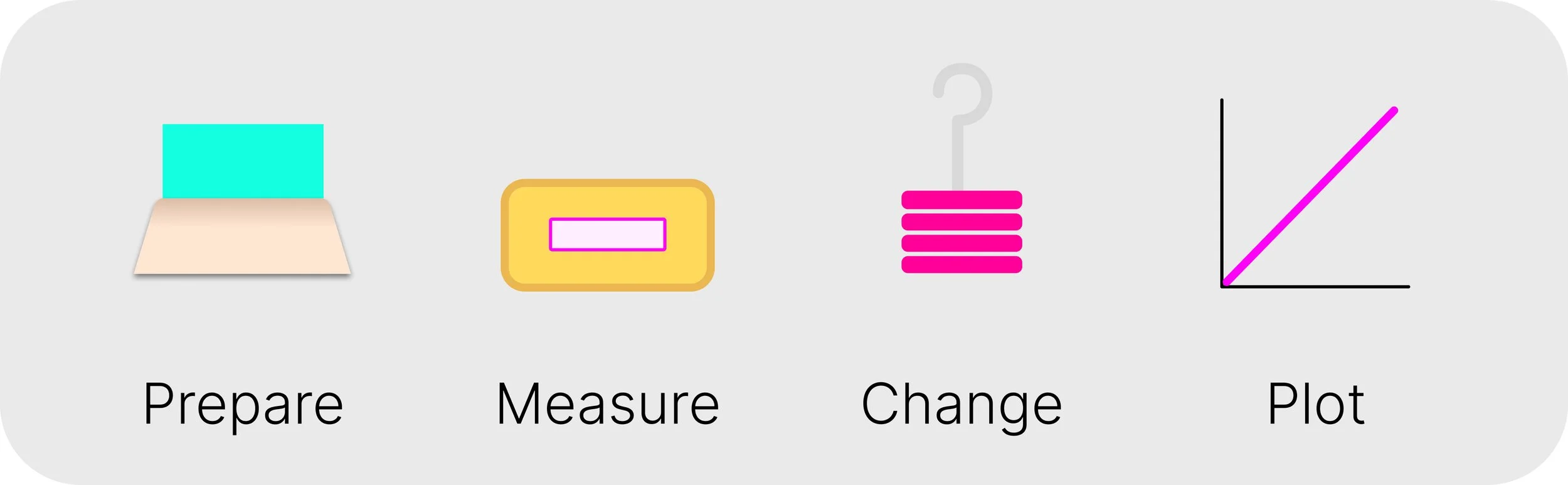
1. Prepare
-
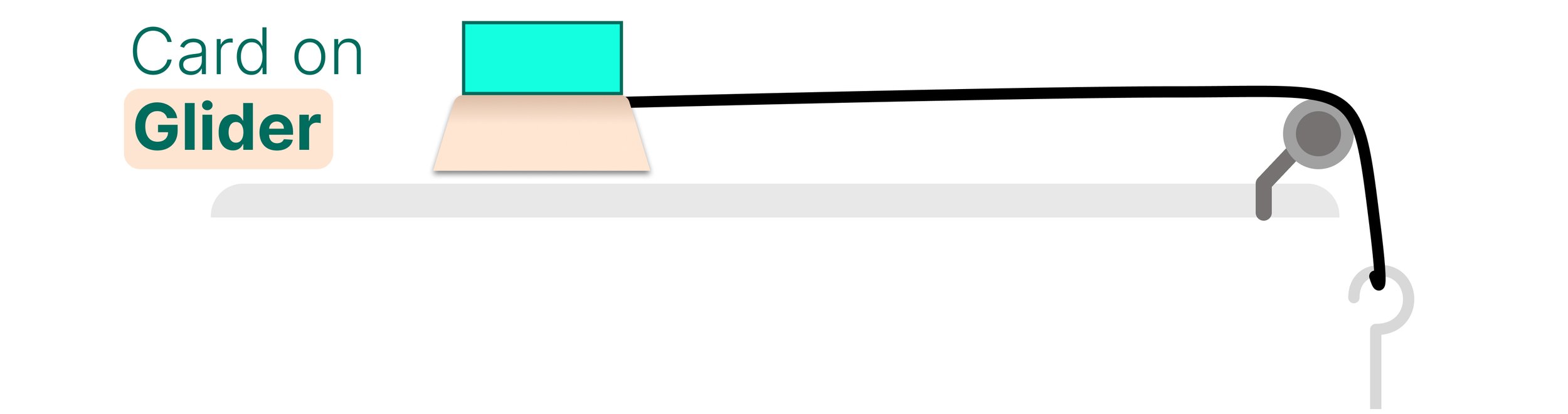
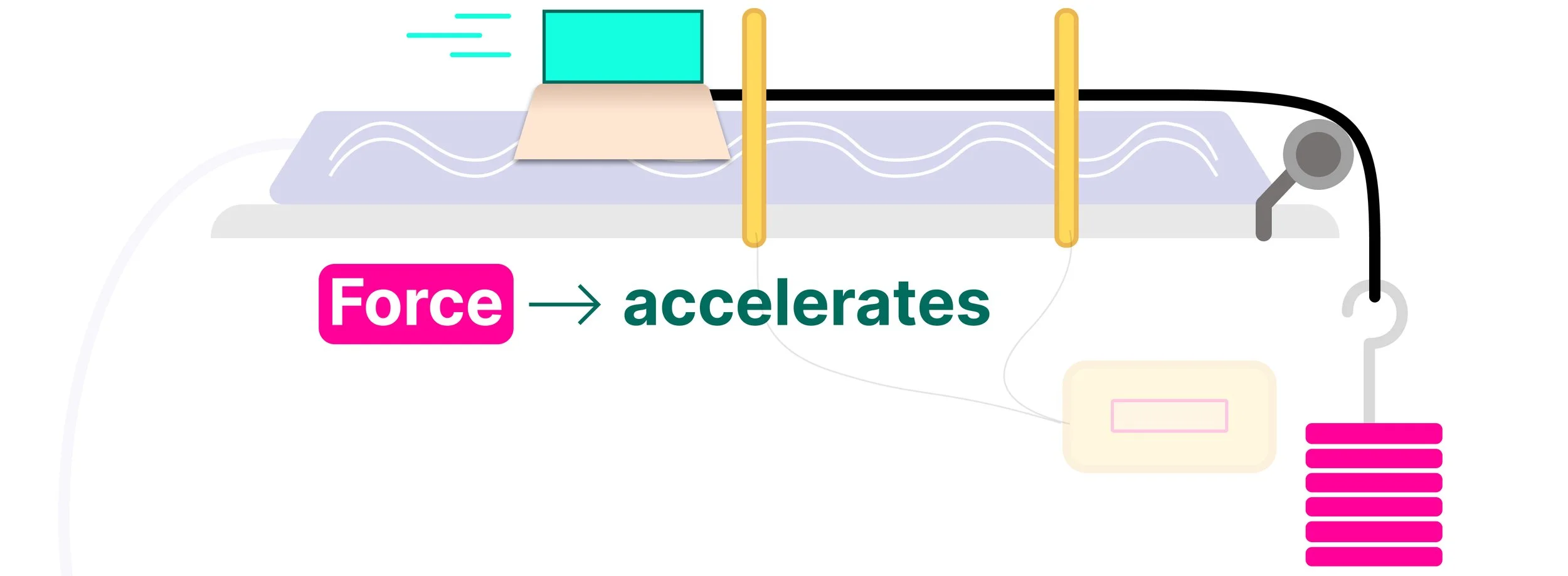
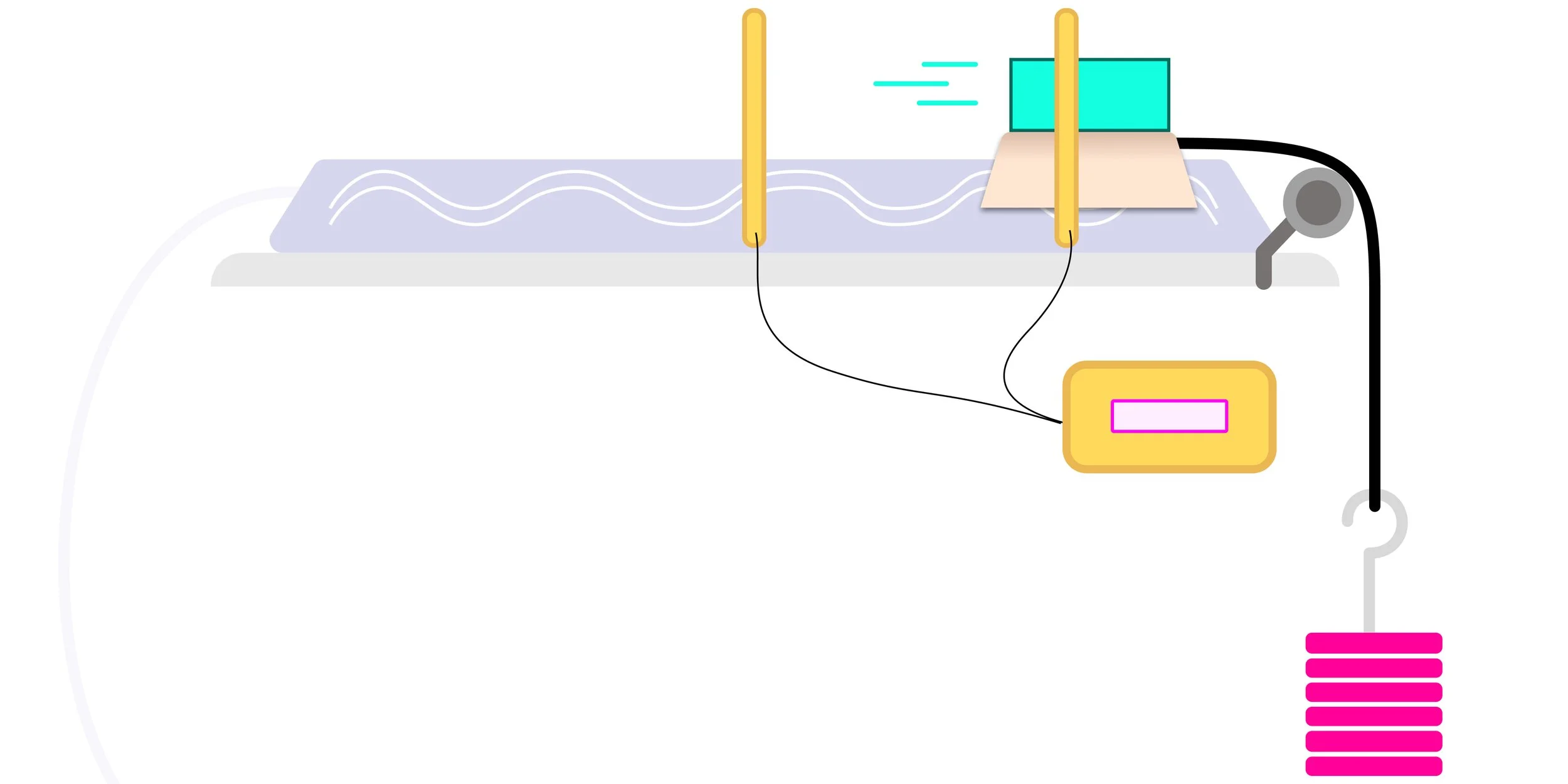
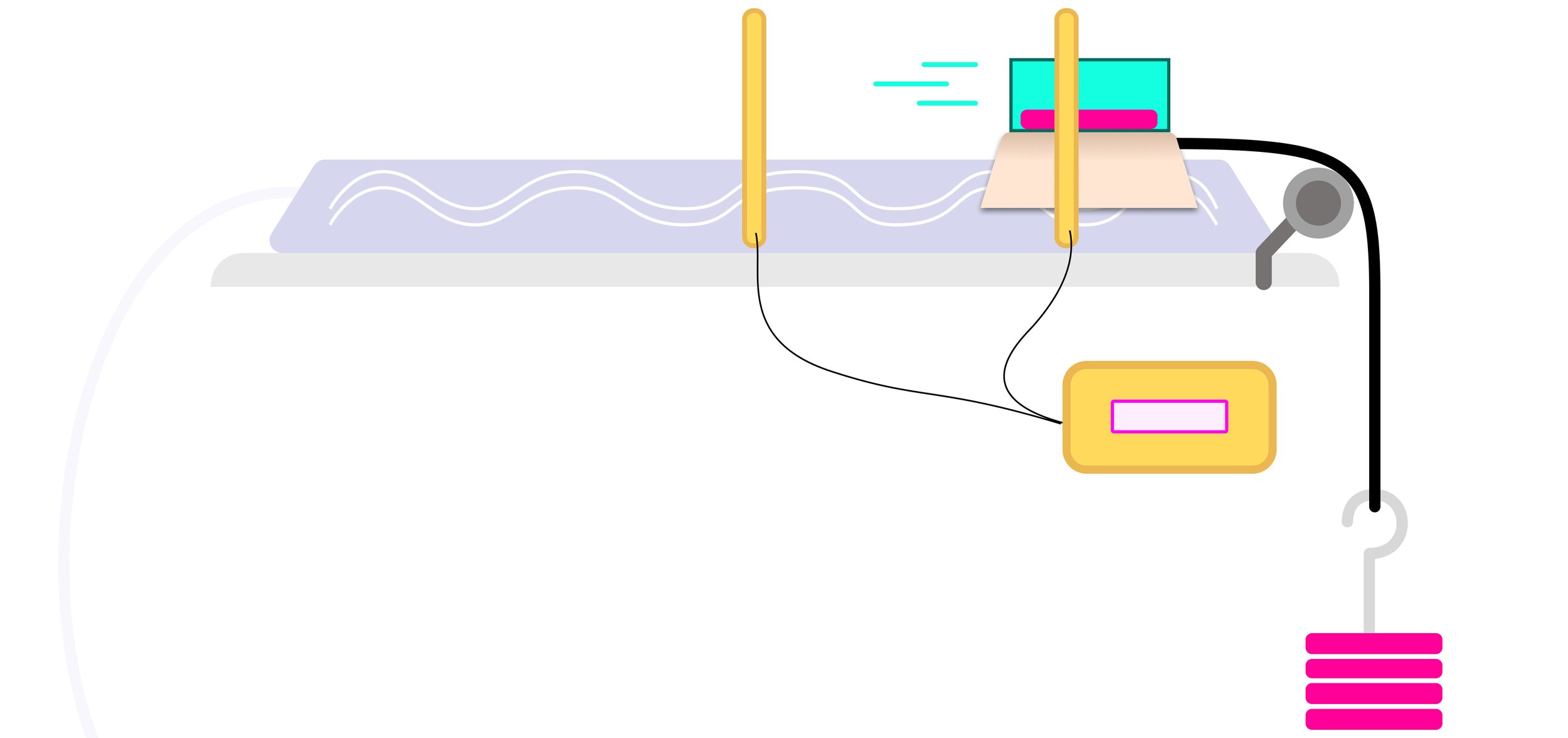
A 0.1m long card on a glider, attached to a string on a pulley.
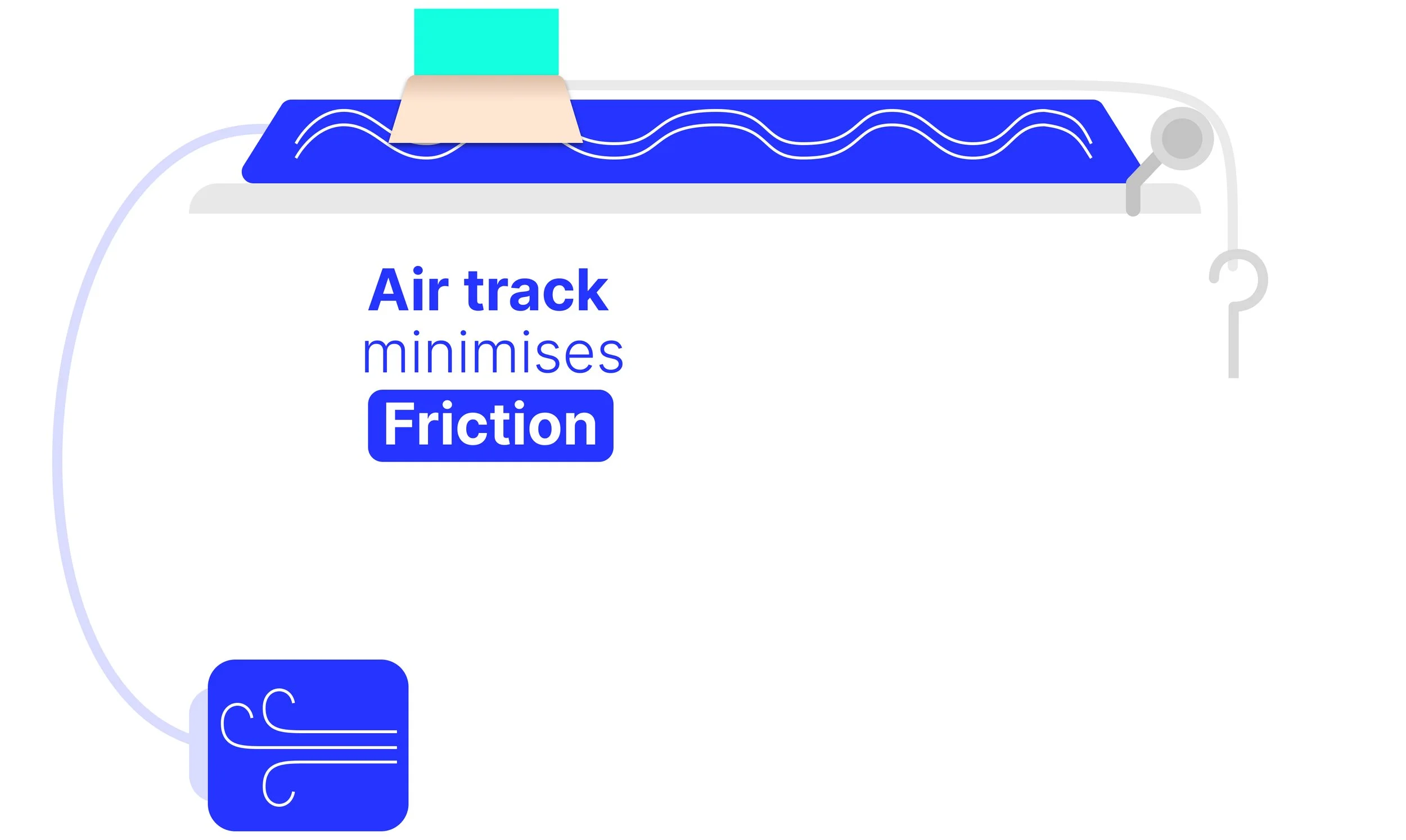
An air blower attached to a level air track to be placed under the glider and string. This minimises friction as the glider moves on a cushion of air.
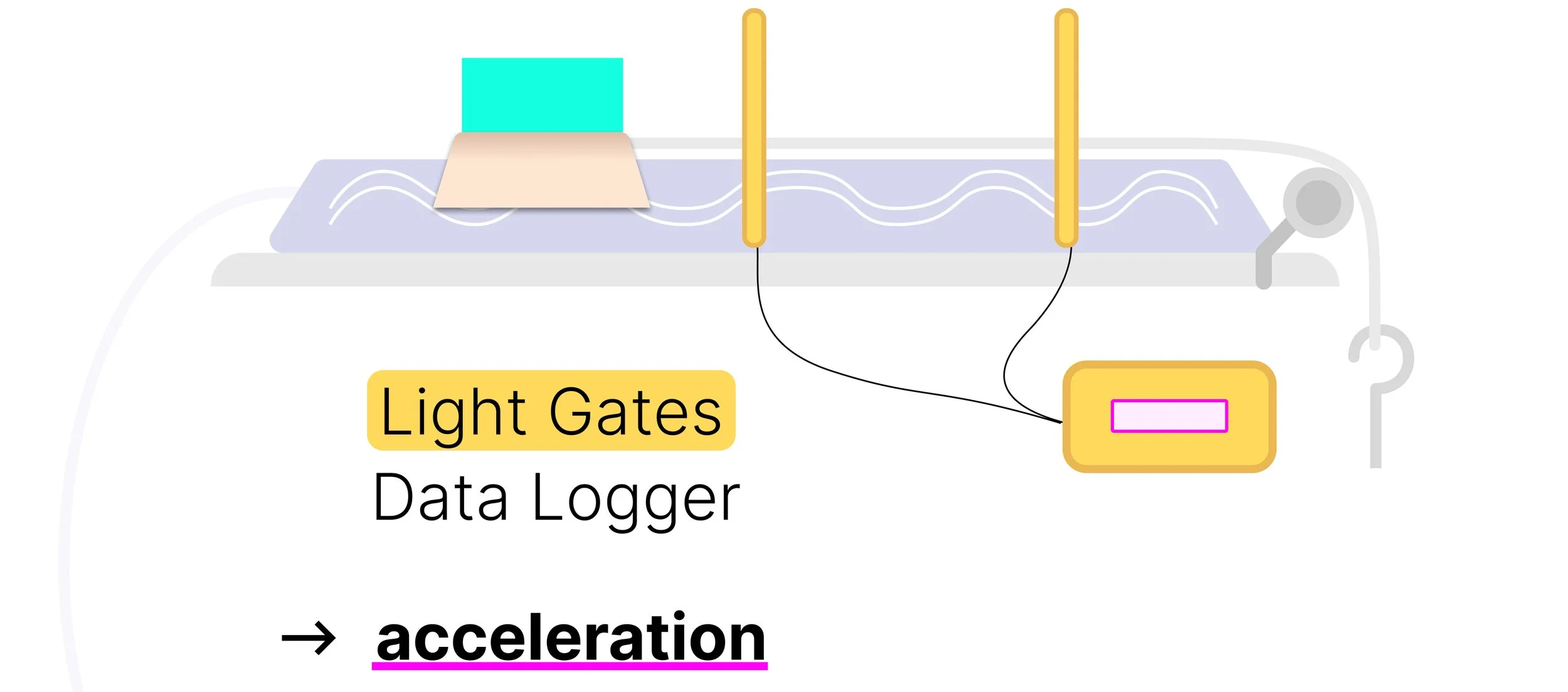
Two light gates connected to a data logger. This gives us acceleration.
2. Measure Acceleration
-
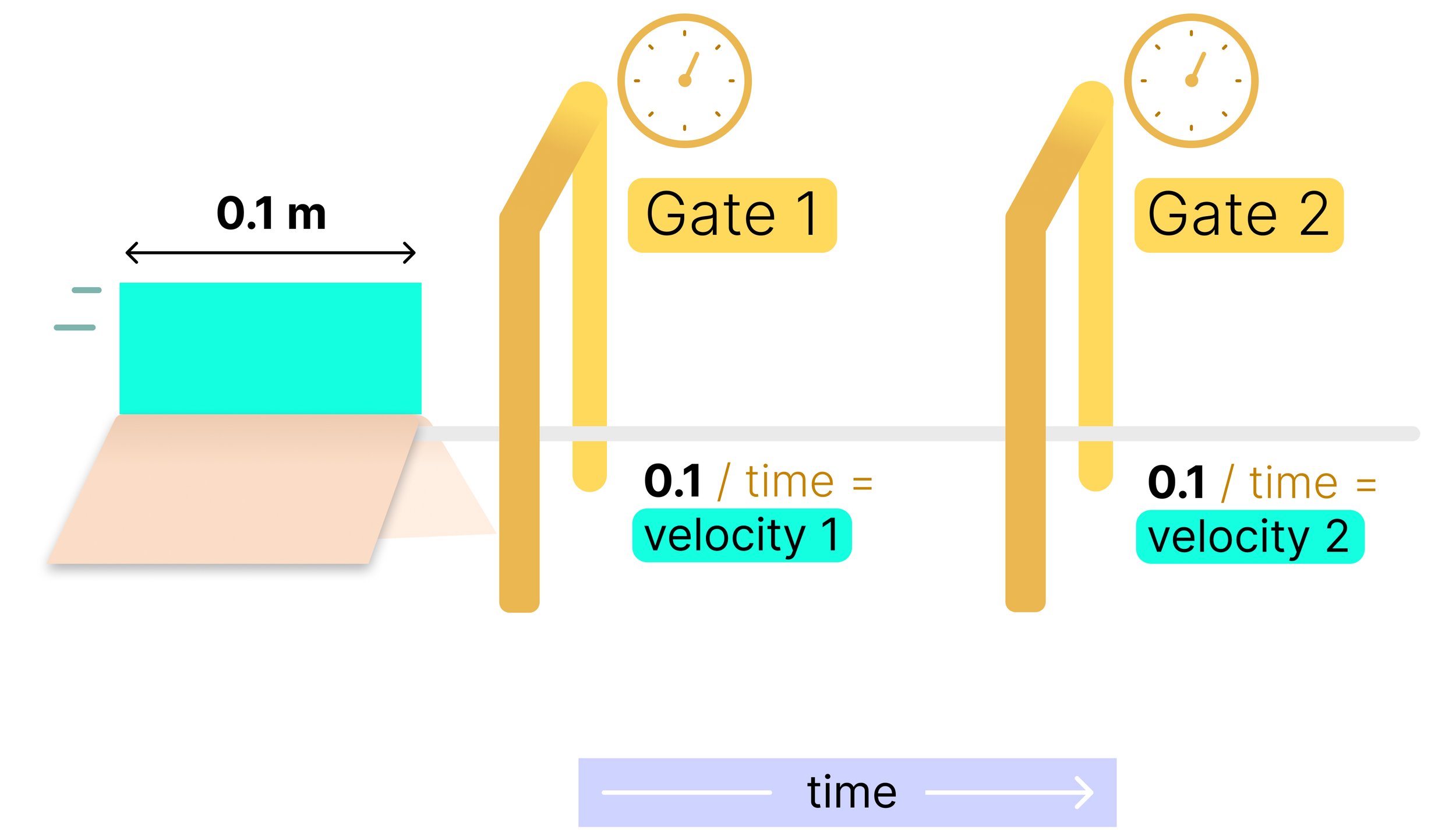
We input the length of our card (0.1m)
Each light gate records the time its beam is interrupted for (as the card passes). The data logger uses these times and the known card length to calculate the velocities.
-
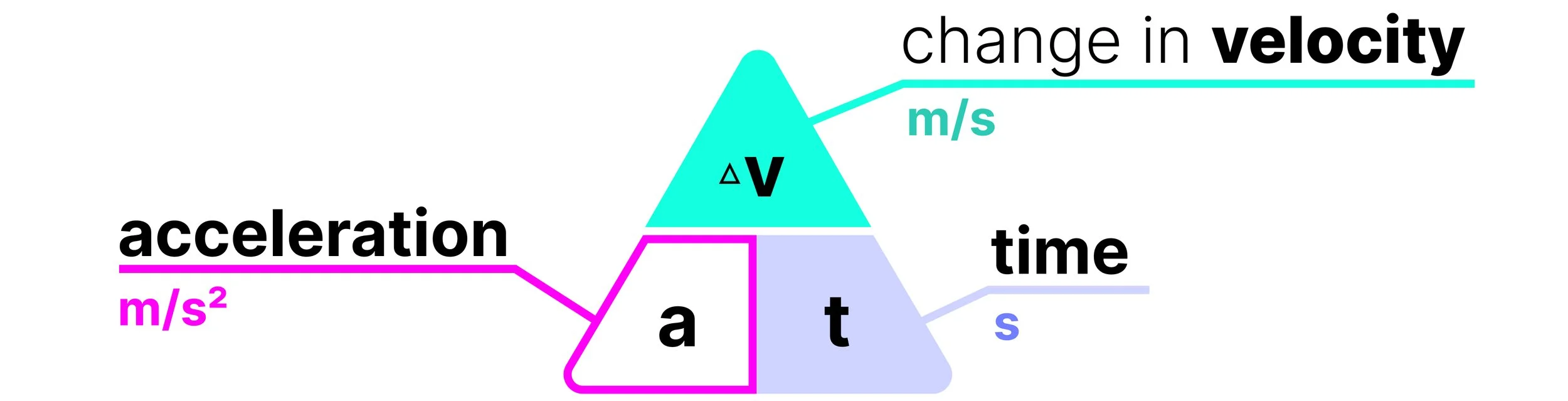
Subtracting these two velocities gives change in velocity.
Change in velocity is then divided by the time it takes for the card to travel from light gate 1 to light gate two to give acceleration.

3. Change Force
-
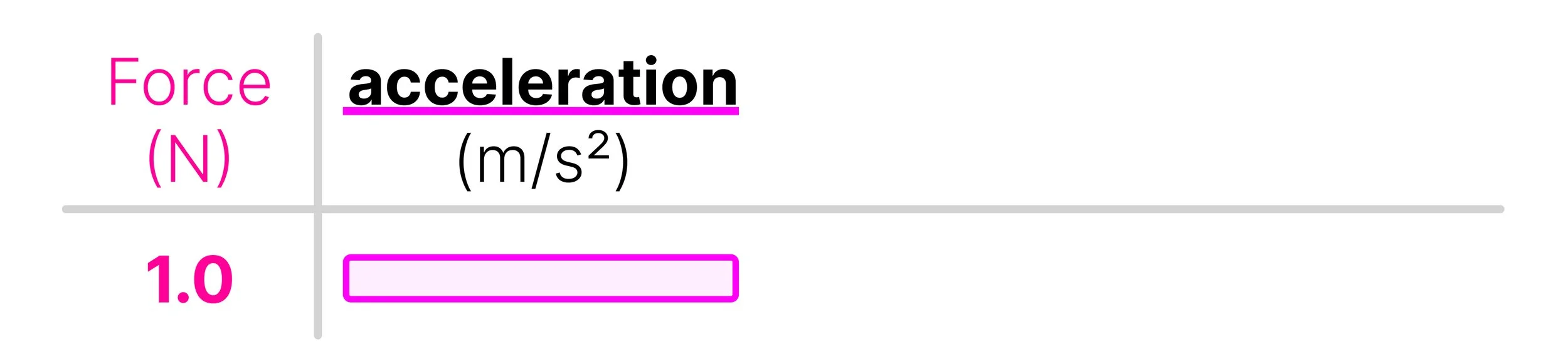
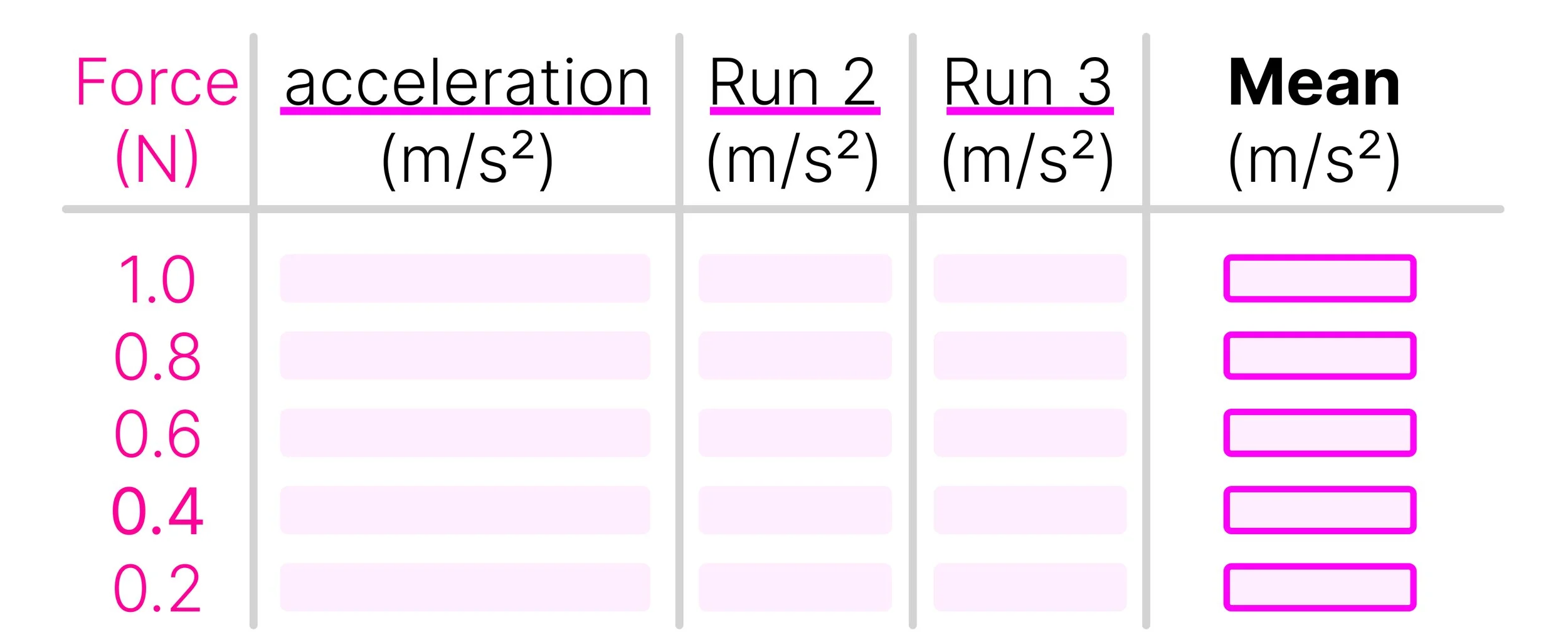
Place five 0.2N weights on the string.
Release the glider without pushing it, ensuring the card passes through both light gates before the hanging masses reach the floor.
Note the acceleration from the data logger.
-
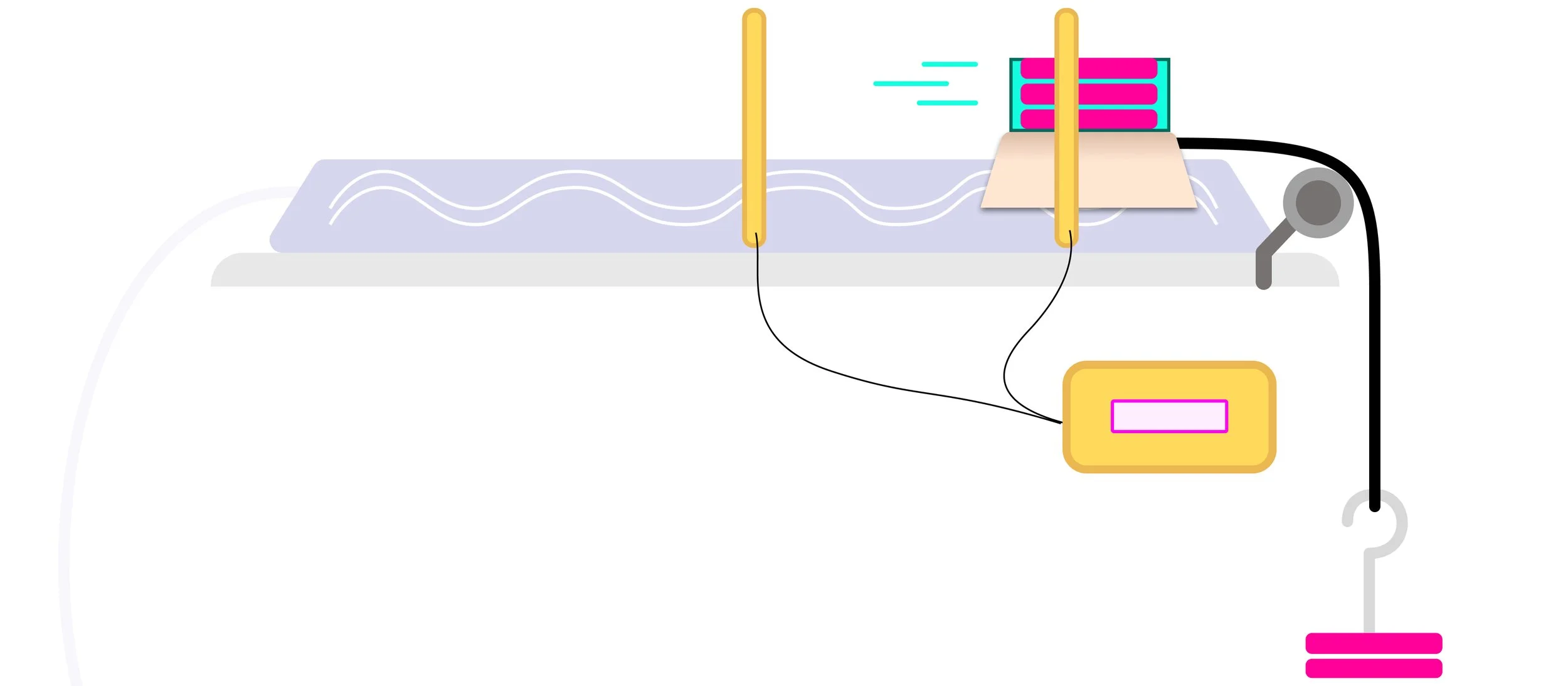
Take one 0.2N weight off and place it on the glider (to keep the mass constant).
Note down the acceleration.
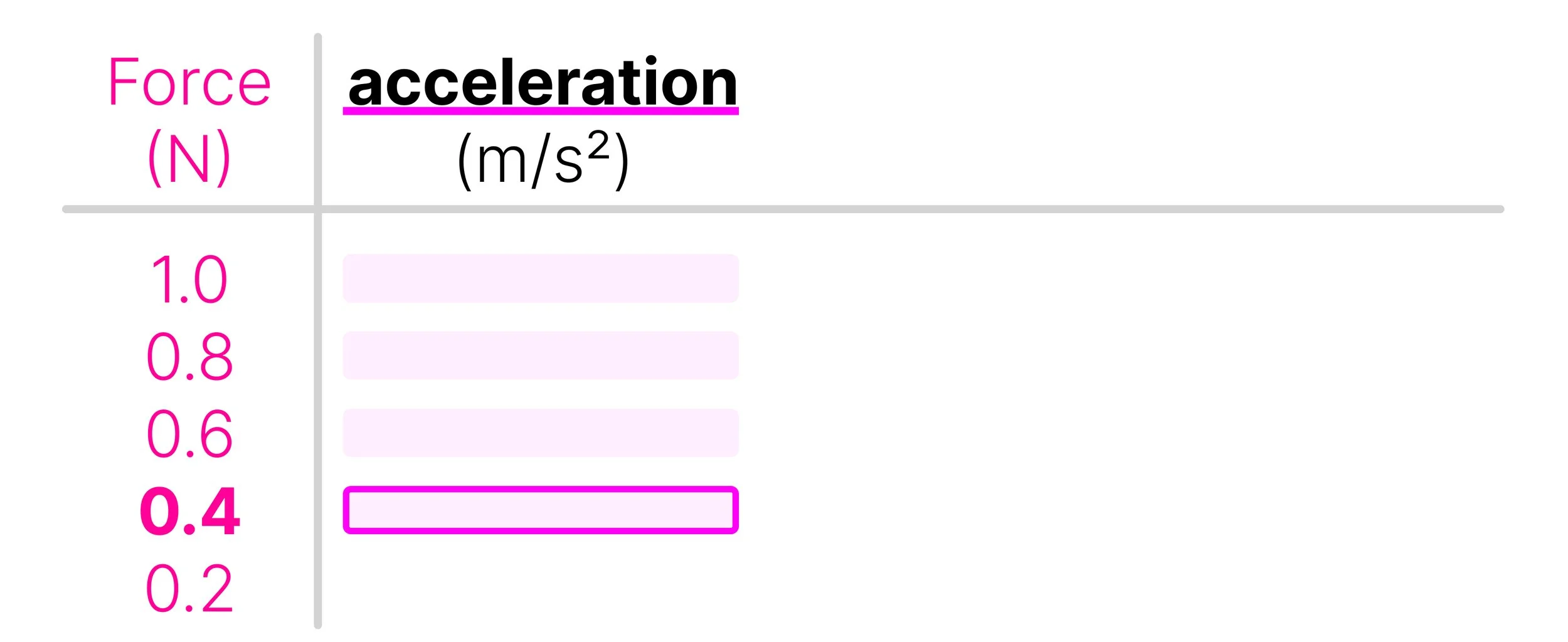
Continue transferring one weight at a time onto the glider, recording the acceleration for each force down to 0.2 N.
4. Plot
-
Repeat the readings for each force and find a mean.
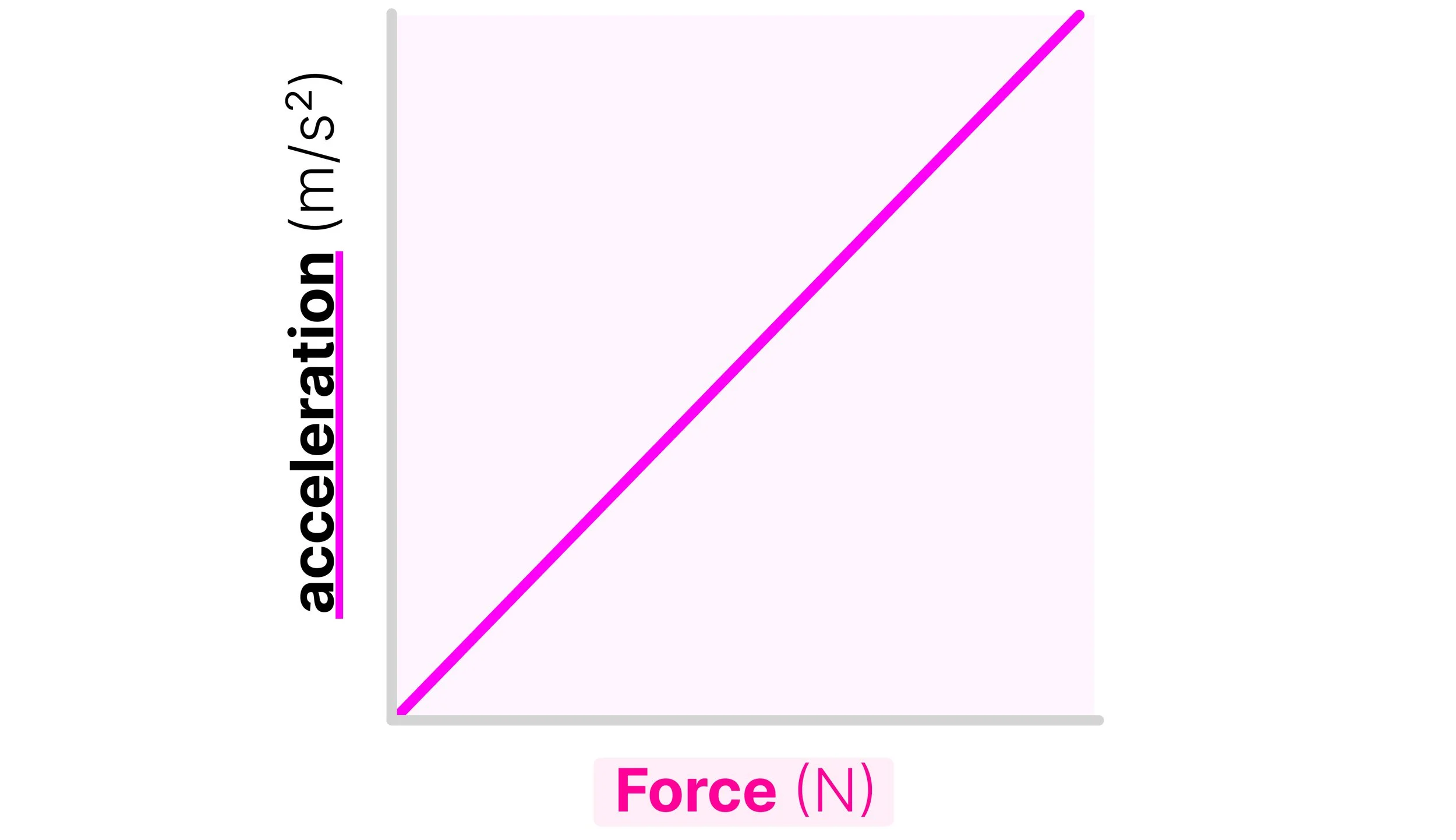
Plot the mean acceleration on the y axis against the force on the x axis.
The graph should show a straight line through the origin, demonstrating that acceleration is directly proportional to the resultant force when mass is constant. This supports Newton's second law, F = ma.
Continue Revising Paper 2




Need help improving your GCSE Physics grade?
These visuals are created by our experienced GCSE tutors.
