
I-V Characteristics - AQA Practical
AQA GCSE Physics Electricity required practical: evaluating current-voltage characteristics and graphs of fixed resistors, filament lamps and diodes. Combined & Triple Science.
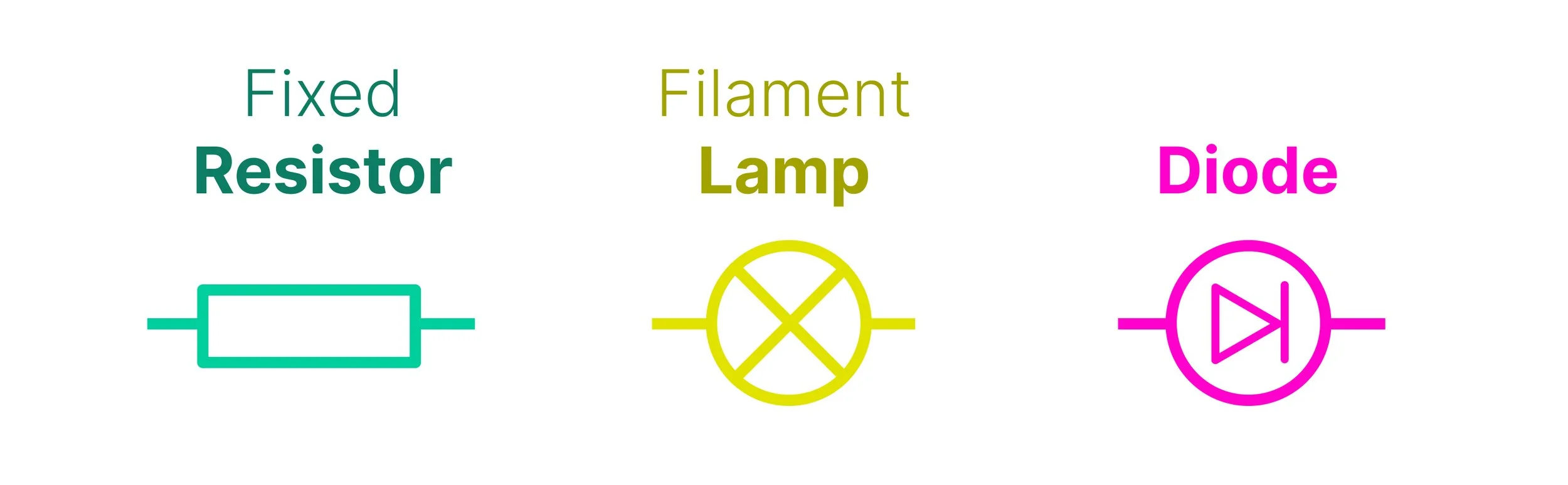
Plan a valid method to investigate the current-voltage relationship of three components:
fixed resistor
filament lamp
diode
[6 marks]
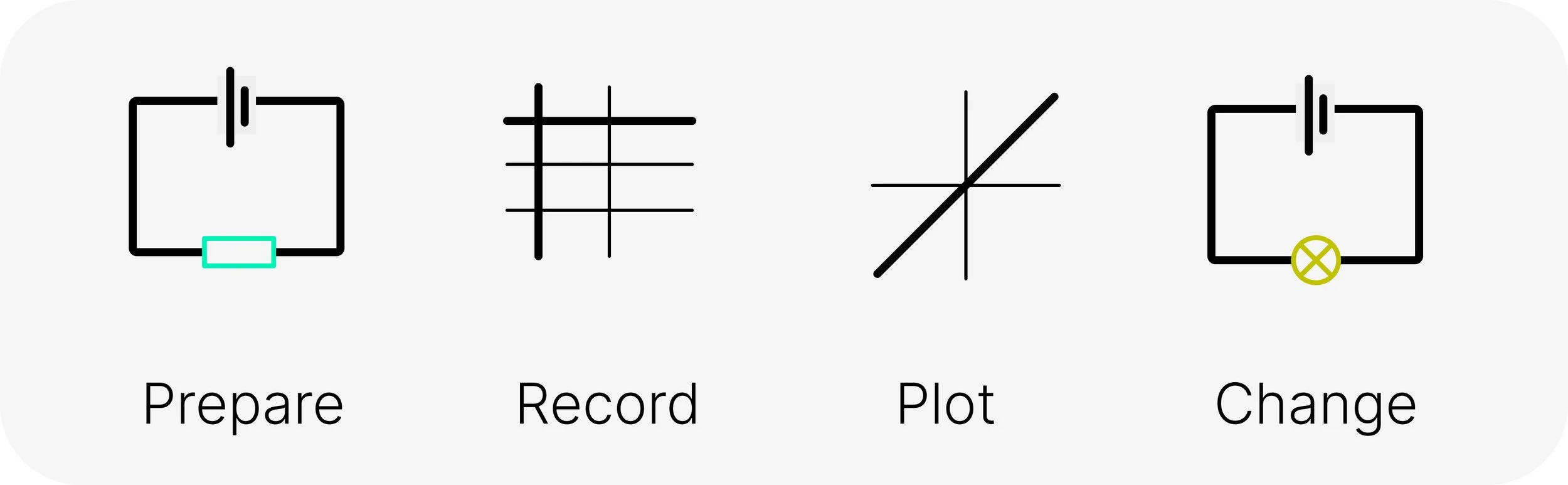
1. Prepare to test fixed resistor
-
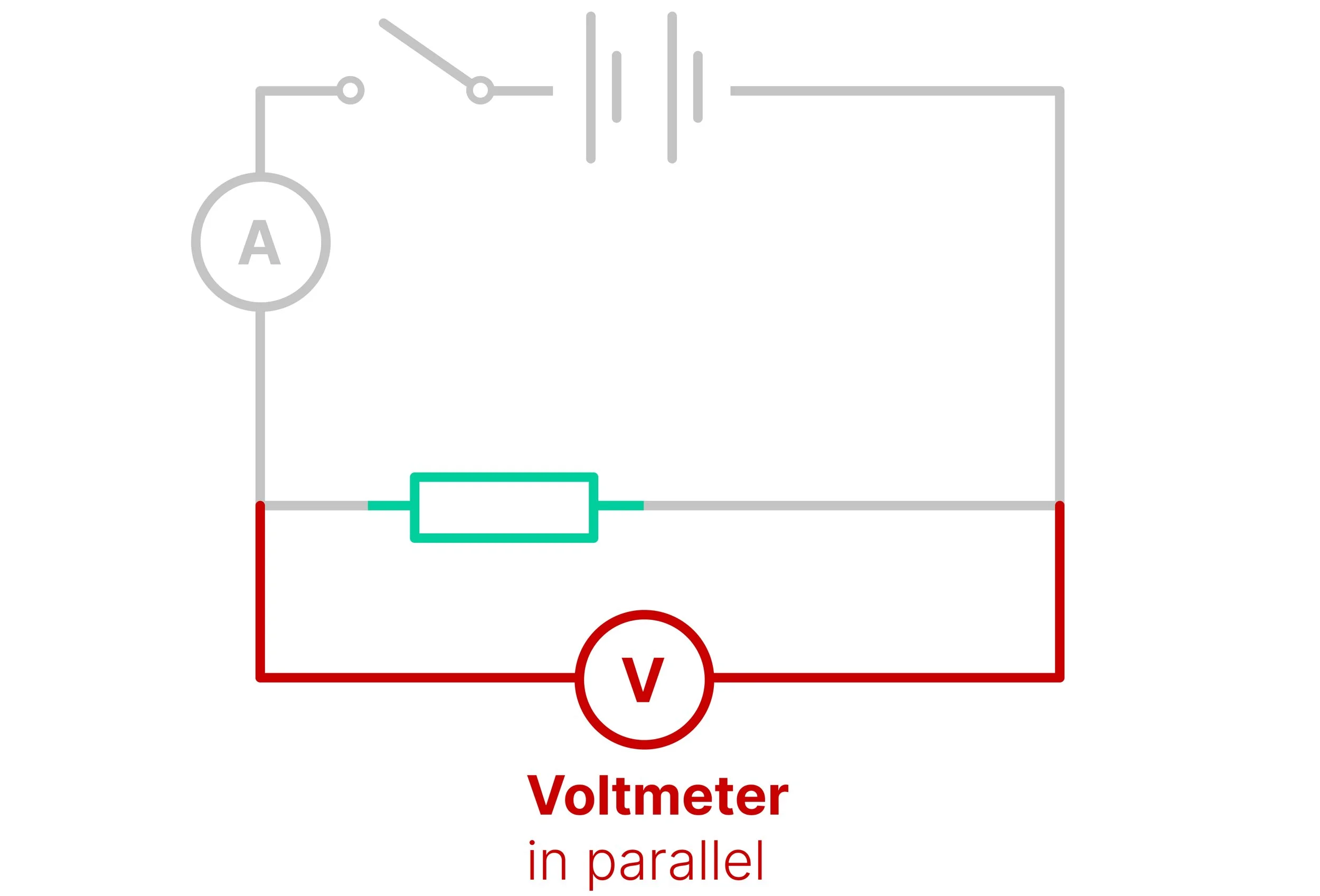
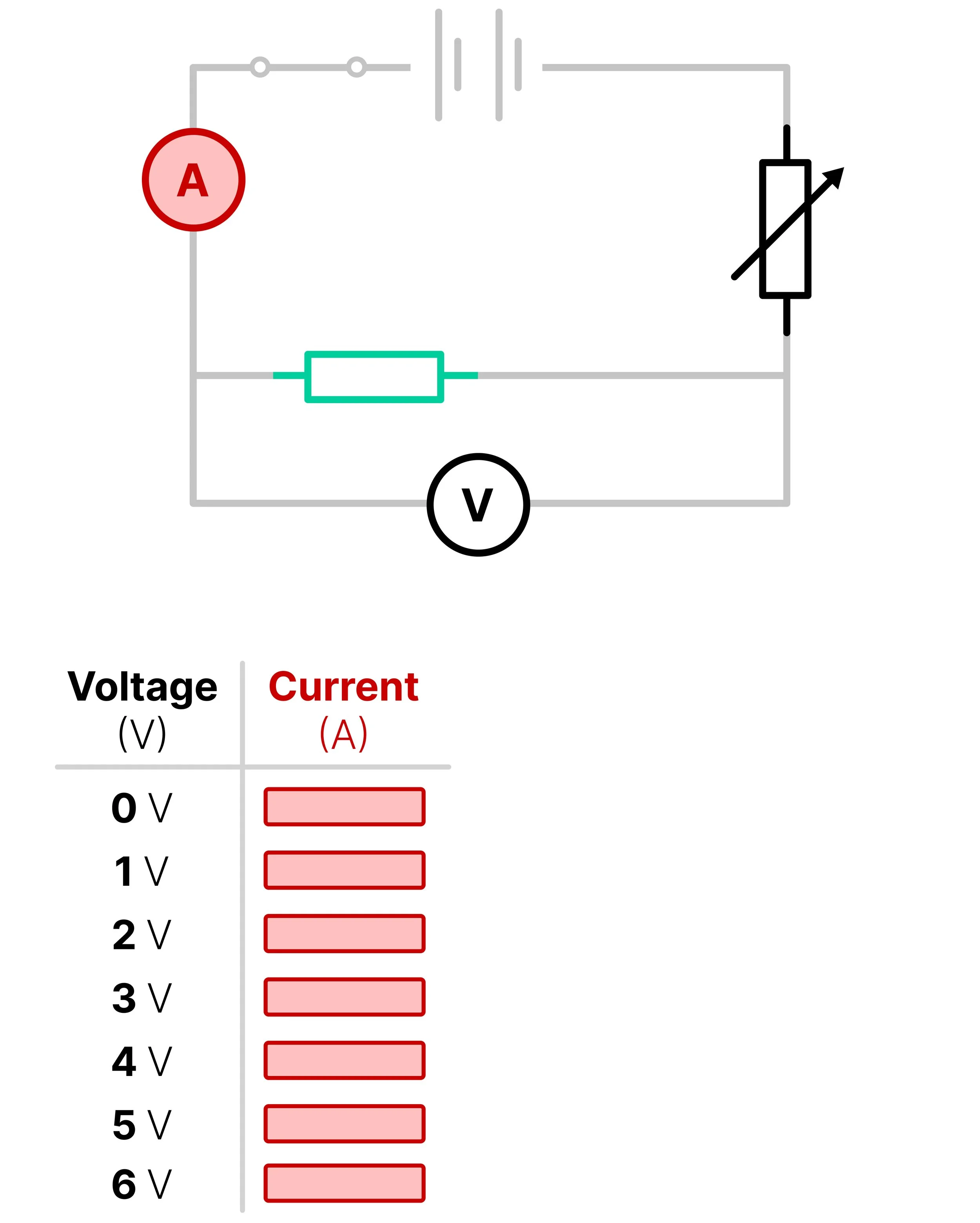
6 V cell to power the circuit
Switch
the first component we’re testing: Fixed Resistor


-
Ammeter in series
Voltmeter in parallel

-
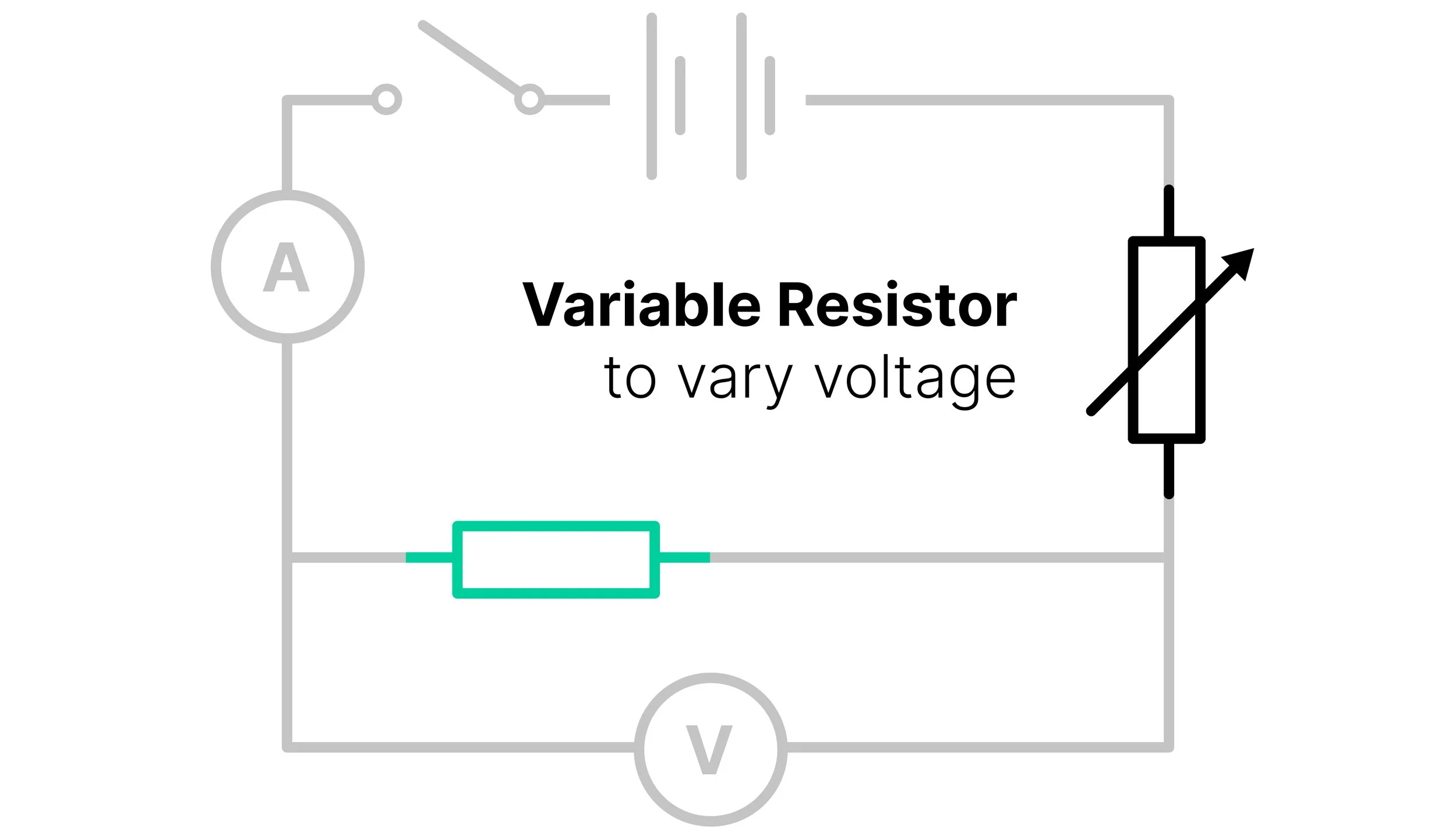
We add a variable resistor.
We adjust the variable resistance to control the voltage shown on the Voltmeter to values near 0V, 1V, 2V etc.
2. Record Readings
-
Voltage (potential difference) shown on voltmeter (we generate those values by adjusting the variable resistor)
Current in Amps shown on ammeter
Adjust the variable resistor to obtain different potential differences from 0V to 6V (in 1V intervals) and, therefore, different current readings.
-
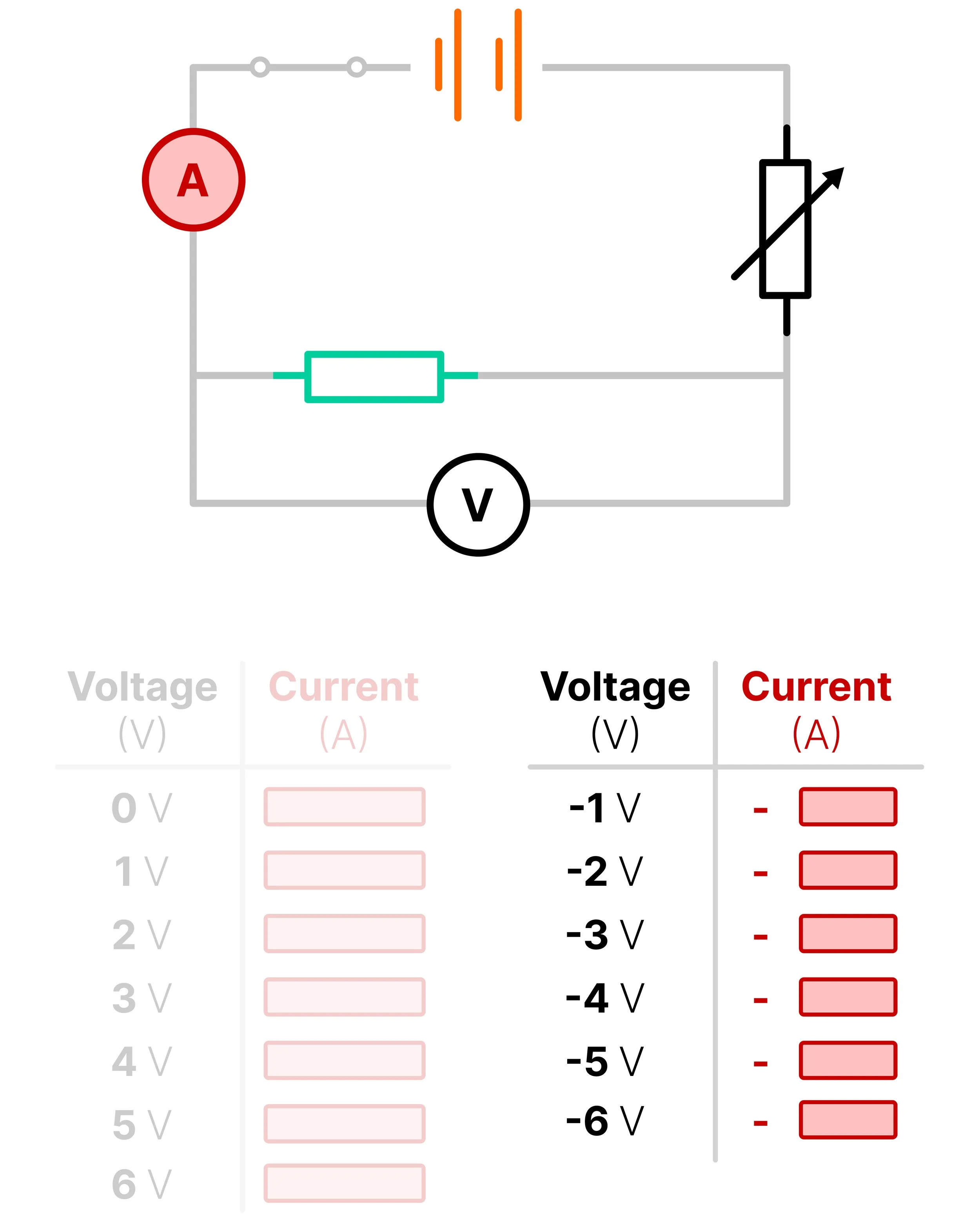
Turn off switch
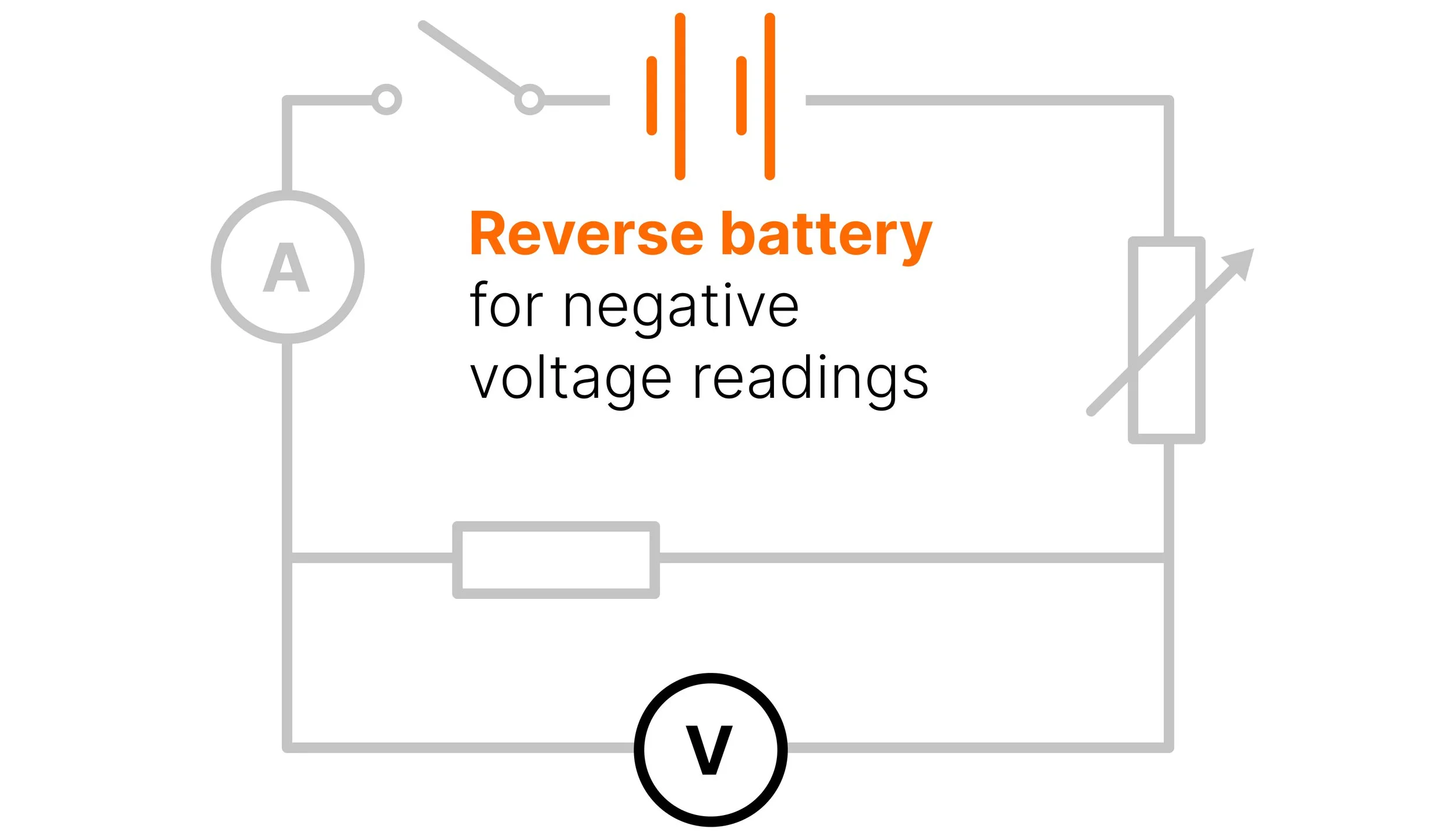
Reverse connection of the battery,
Turn switch back on and take the same readings
3. Plot
-
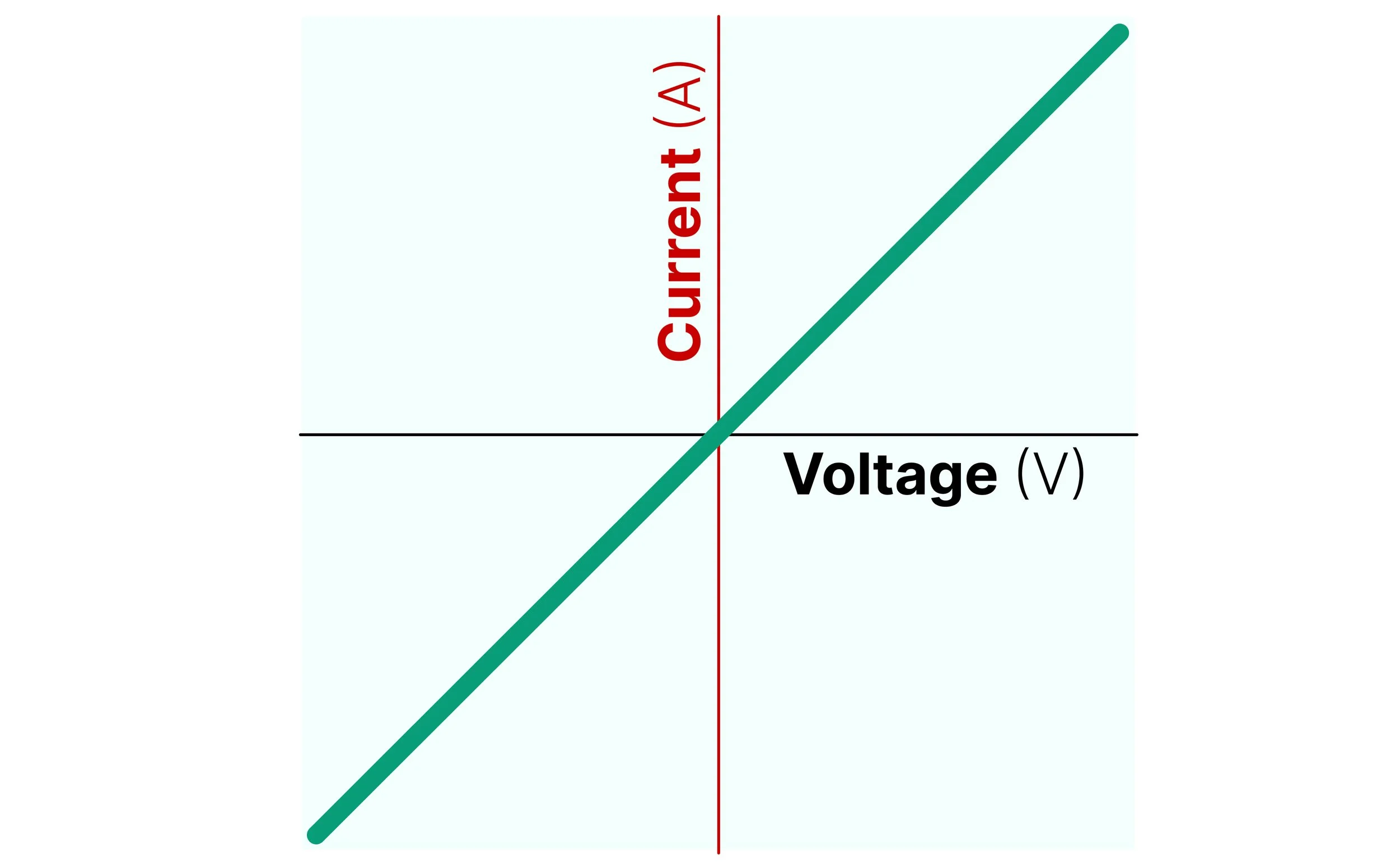
Plot an I-V graph
(current on the y axis, voltage on the x axis)
4. Change Component
to filament lamp, then diode
-
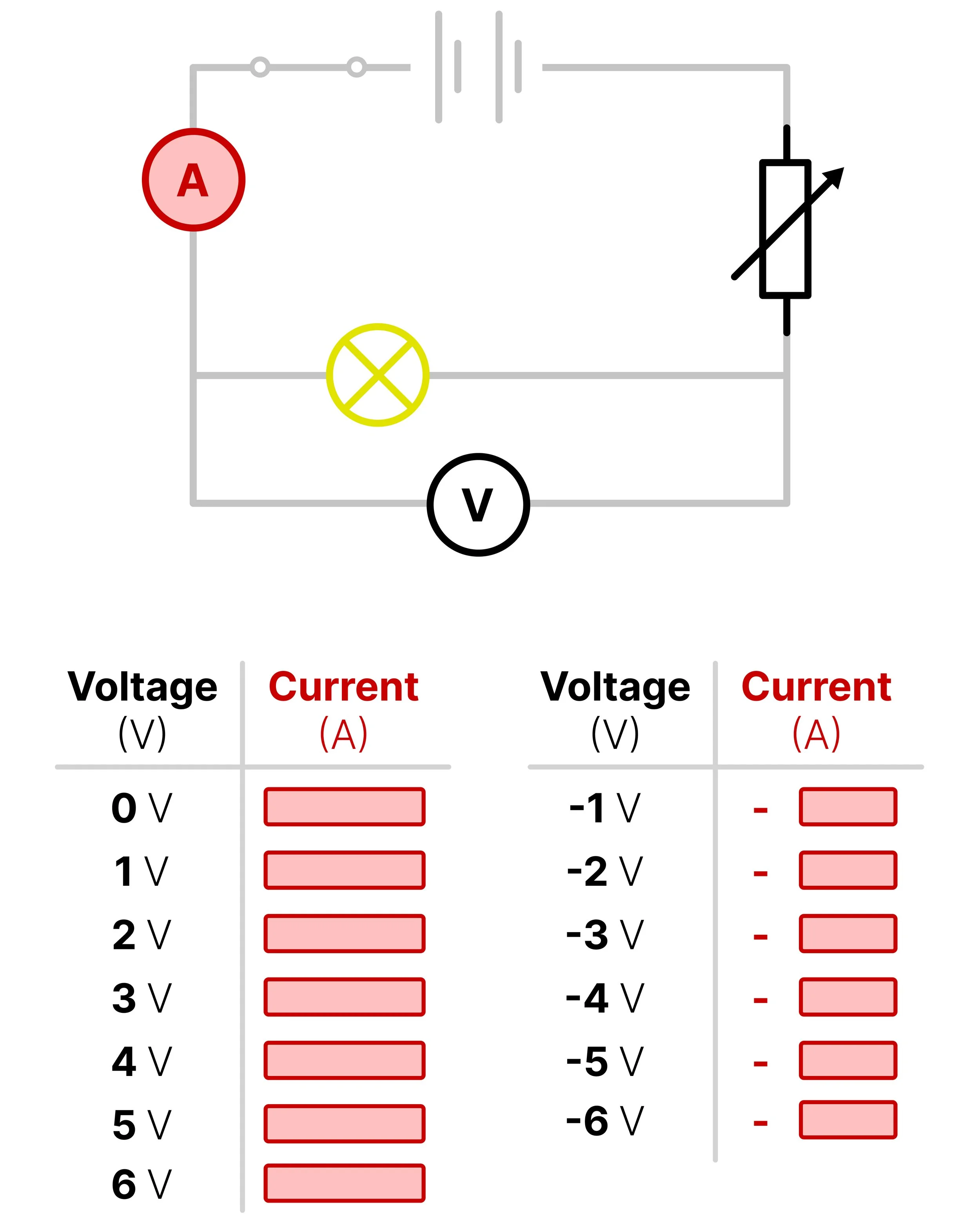
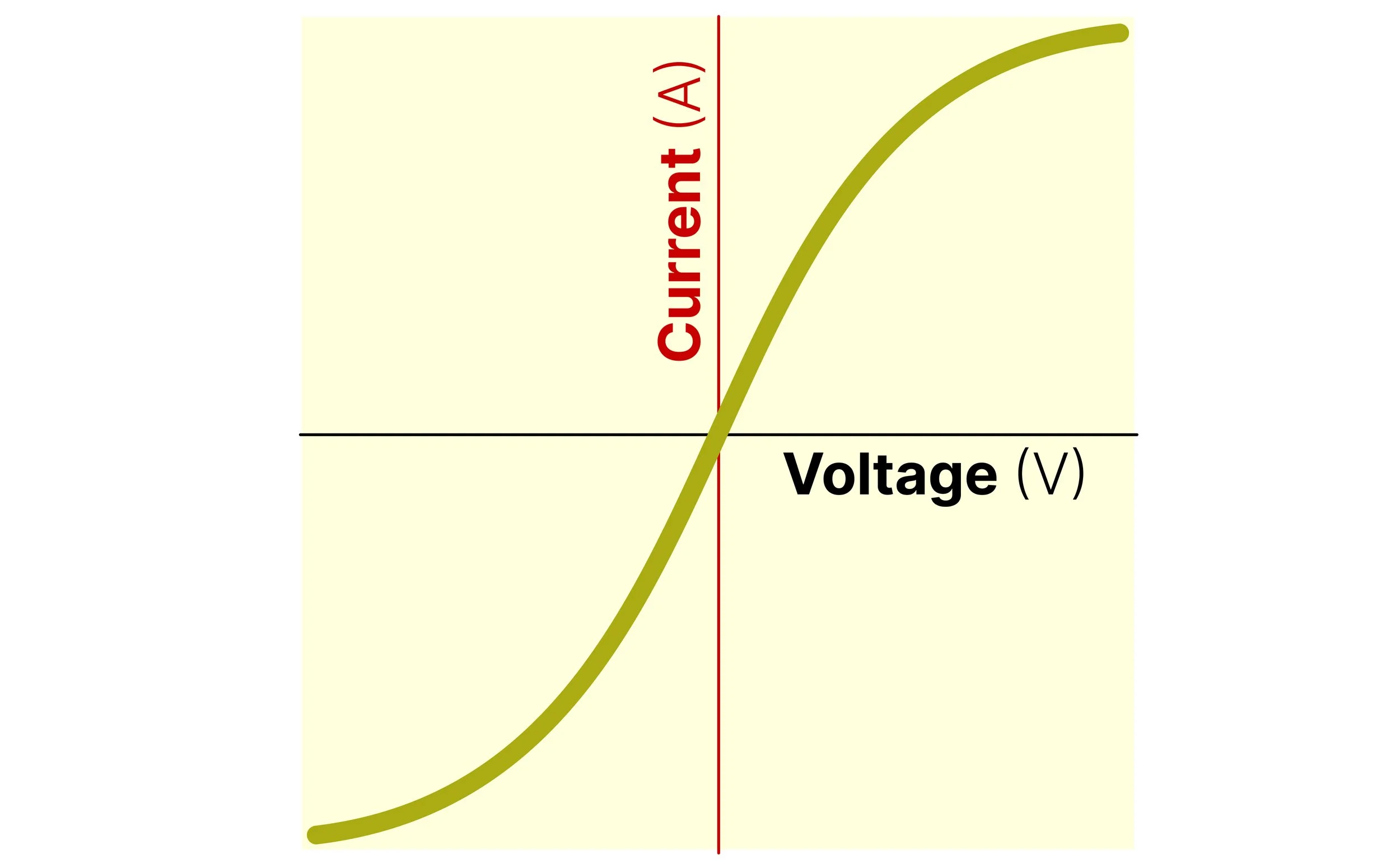
Turn the switch off, and replace the fixed resistor with a filament lamp
Turn the switch back on and repeat the entire process
-
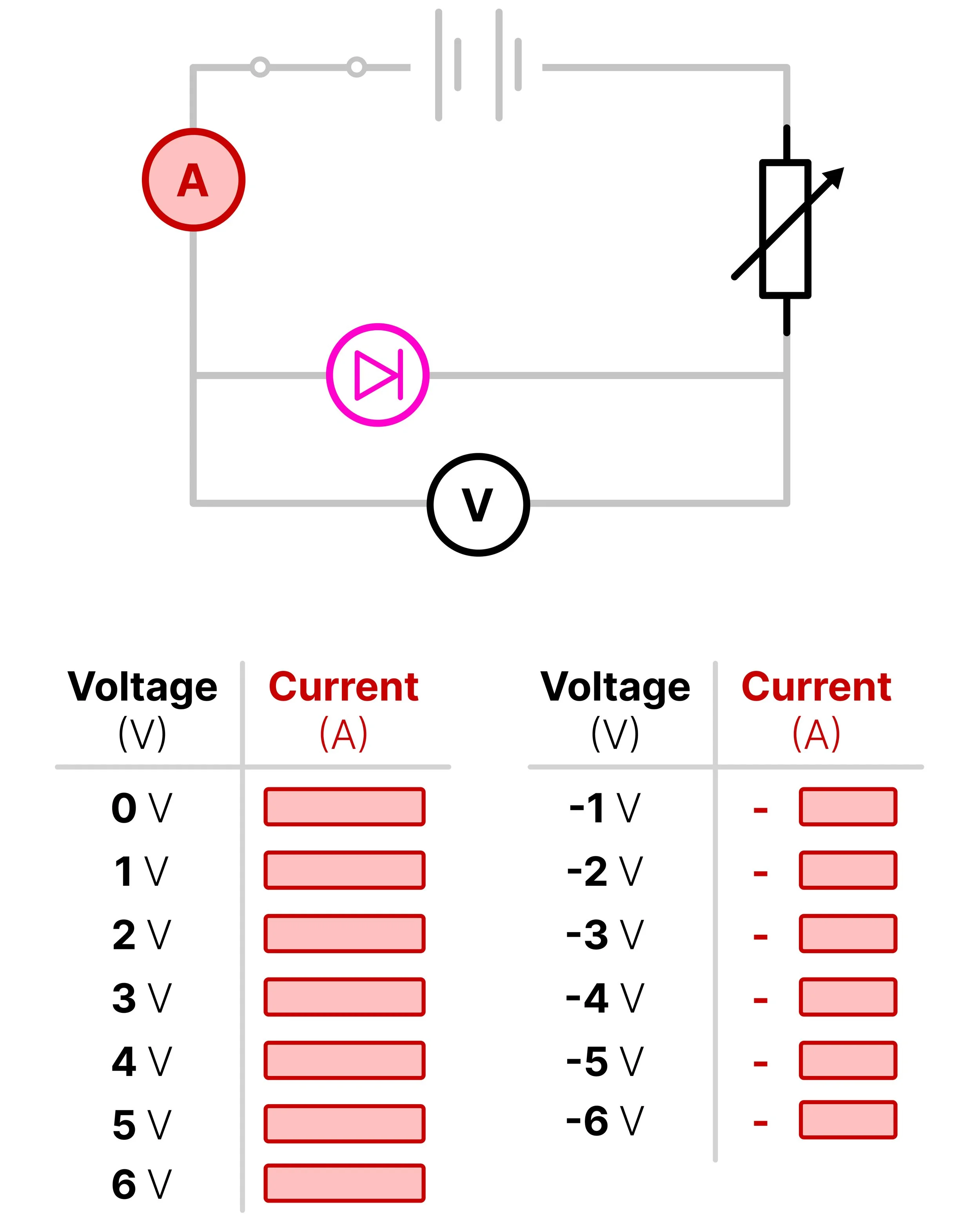
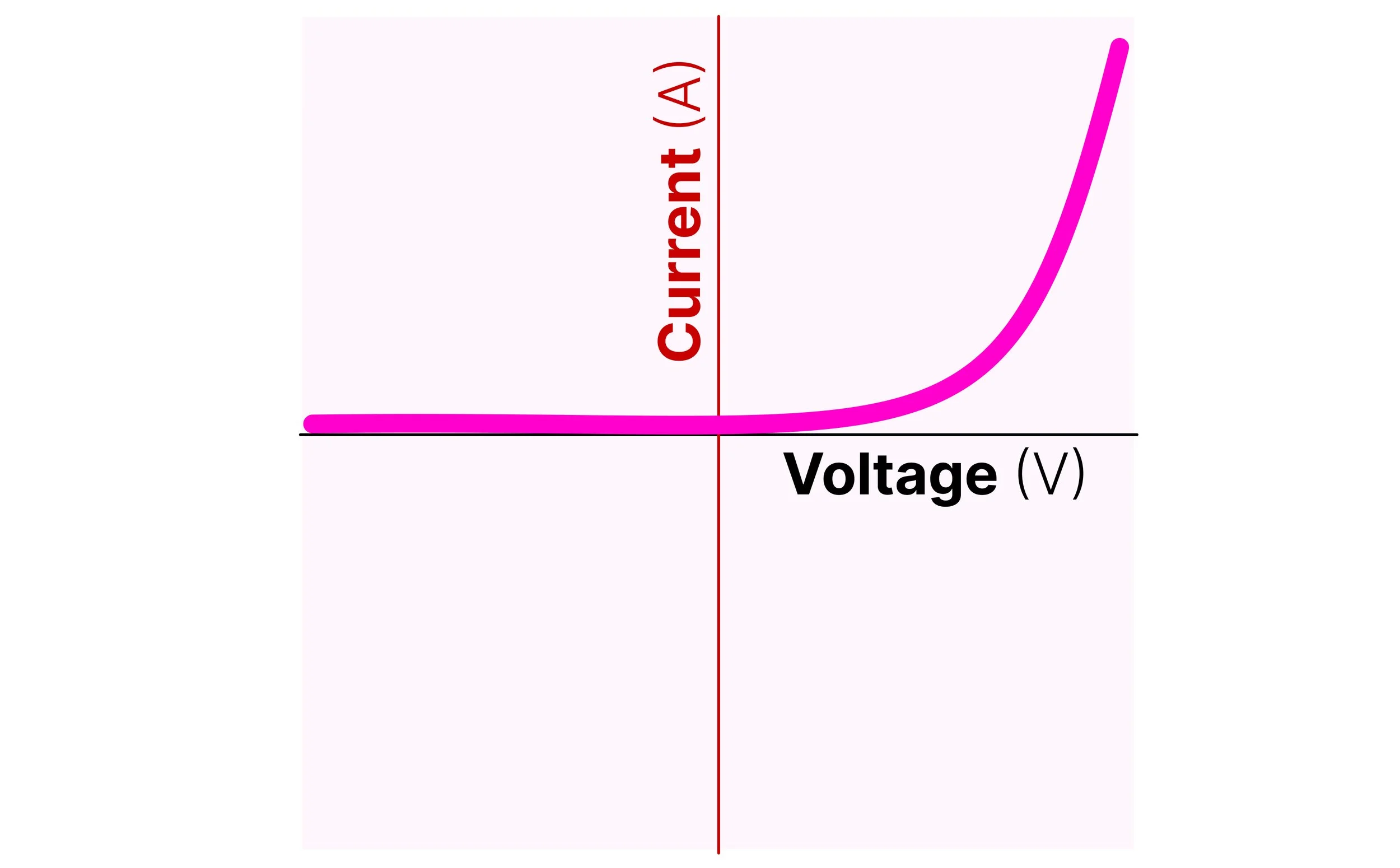
Turn the switch off, and replace the filament lamp with a diode
Turn the switch back on and repeat the entire process
Challenge:
-
Increasing the temperature increases the resistance of the fixed resistor. This would affect the current readings and prevent us from obtaining a straight-line I–V graph.
-
A diode only allows current to flow easily in one direction. When the potential difference is reversed, the diode blocks the current, so almost no current flows.
Therefore, for negative potential differences, the current is approximately zero, so the graph stays close to the x-axis.
Continue Revising Paper 1

Need help improving your GCSE Physics grade?
These visuals are created by our experienced GCSE tutors.
