
Rate of Reaction: AQA Disappearing Cross Practical
AQA GCSE Chemistry Rate of Reaction Practical using the ‘Disappearing Cross’ method, where we change the temperature each time, with step-by-step visuals. Combined & Triple Science.
A student investigates how the Rate of a Reaction changes with Temperature. He has the following solutions:
Sodium thiosulfate
Hydrochloric acid
Plan a valid method using the Disappearing Cross method.
[6 marks]
1. Preparation
-
Draw a cross on a piece of paper
Place an empty conical flask on it


-
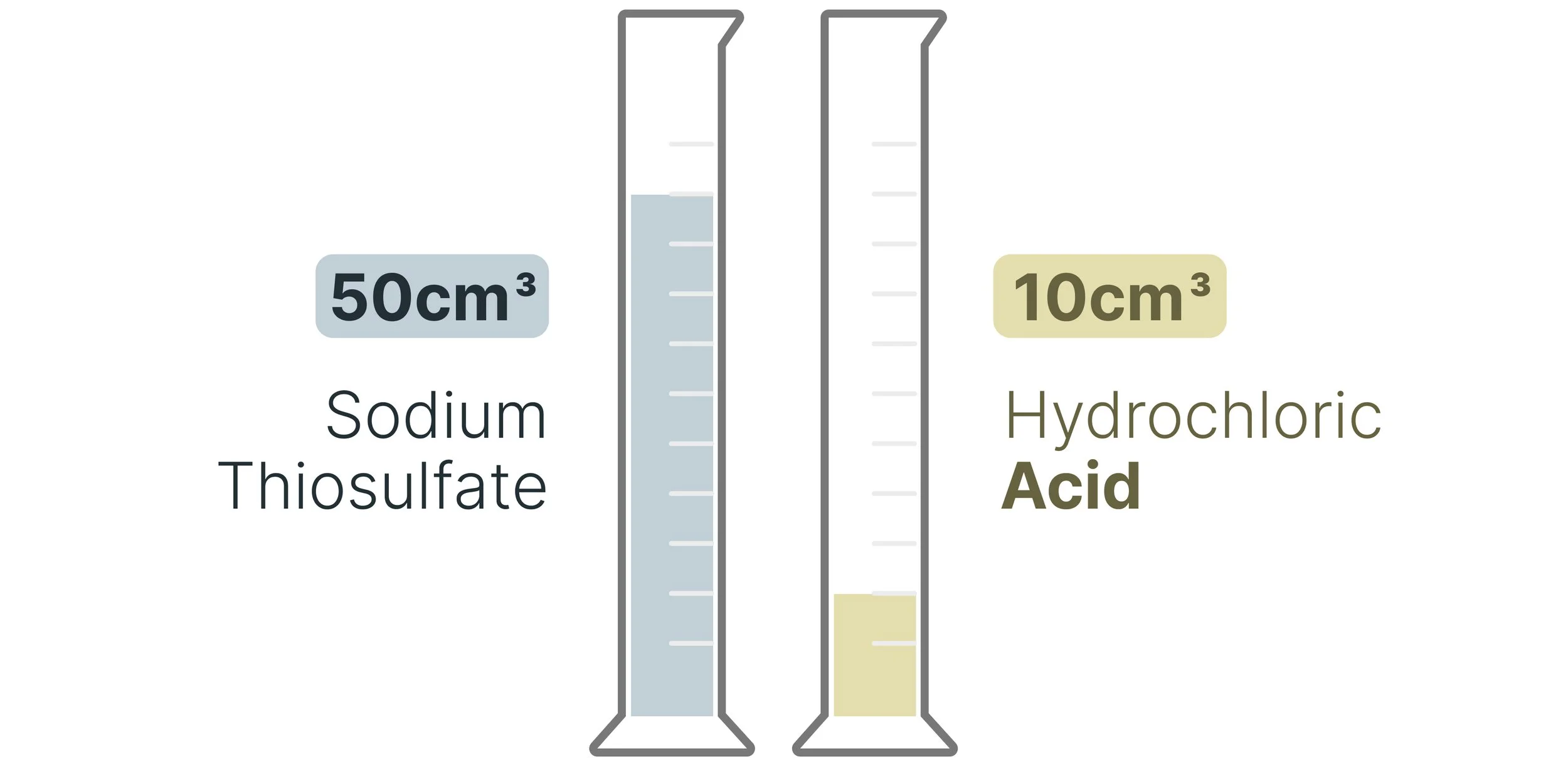
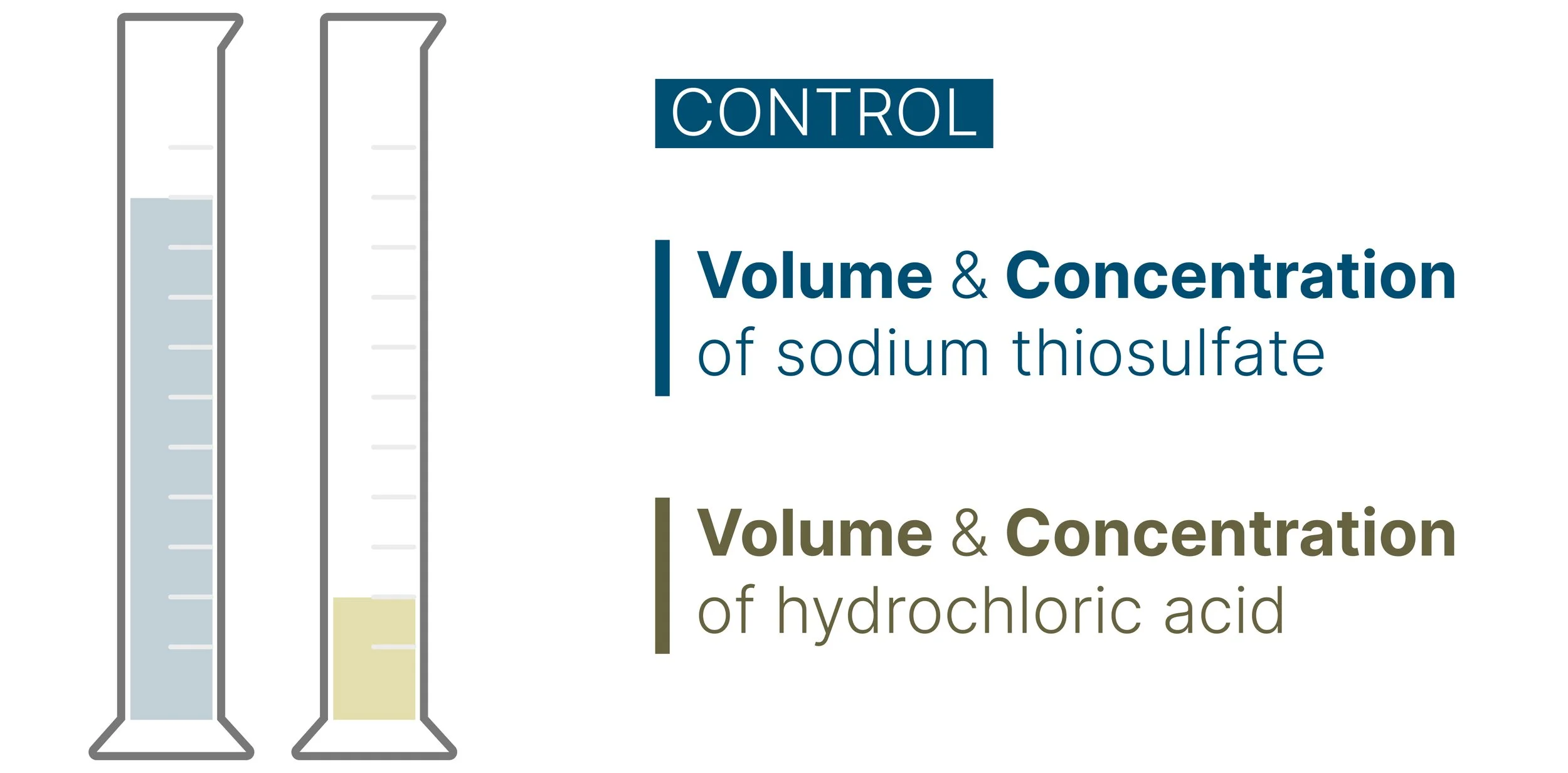
Use a measuring cylinder to measure 50cm³ of sodium thiosulfate
Use another measuring cylinder to measure 10cm³ of hydrochloric acid
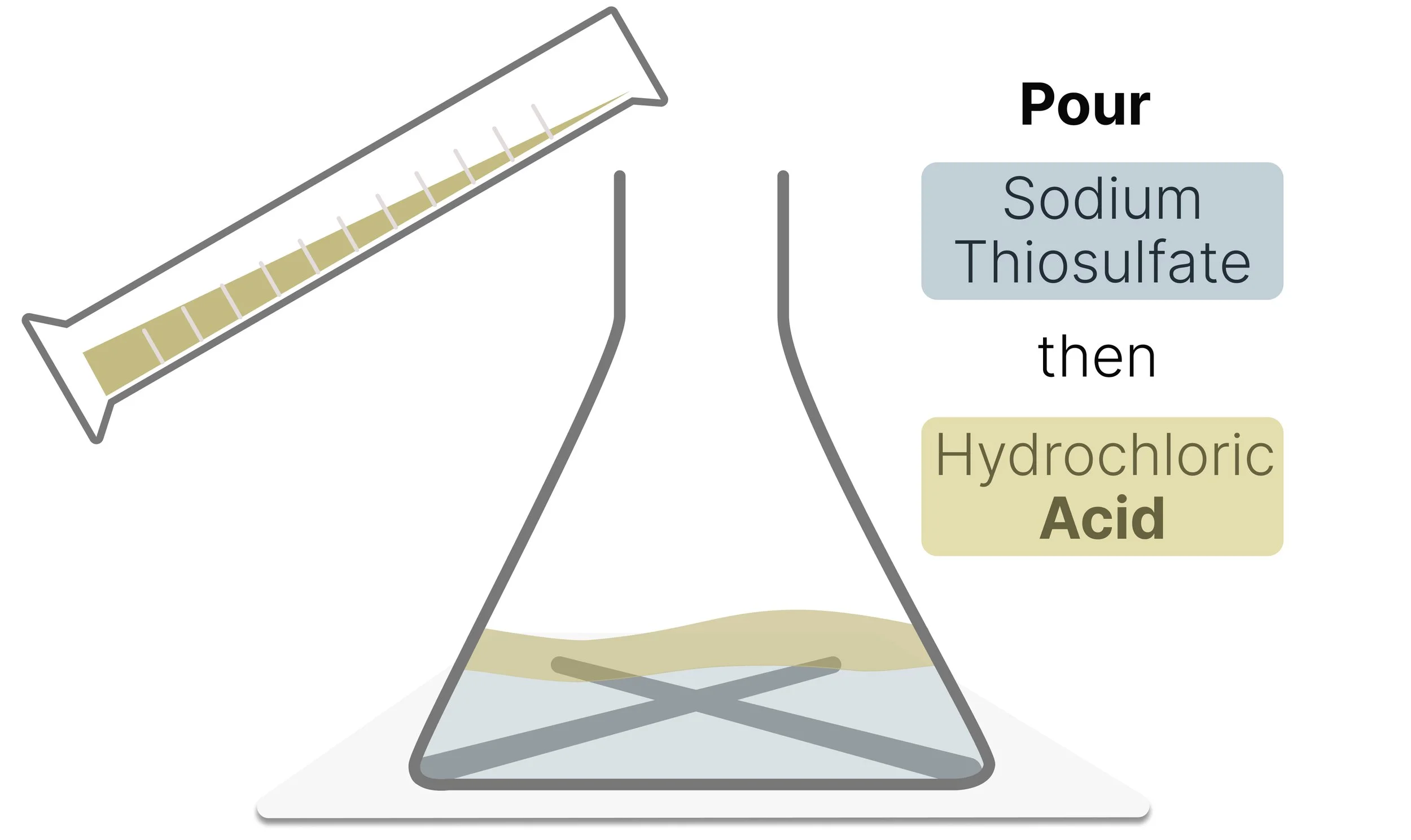
Pour the sodium thiosulfate into the conical flask first, then the acid
2. Measurement
-
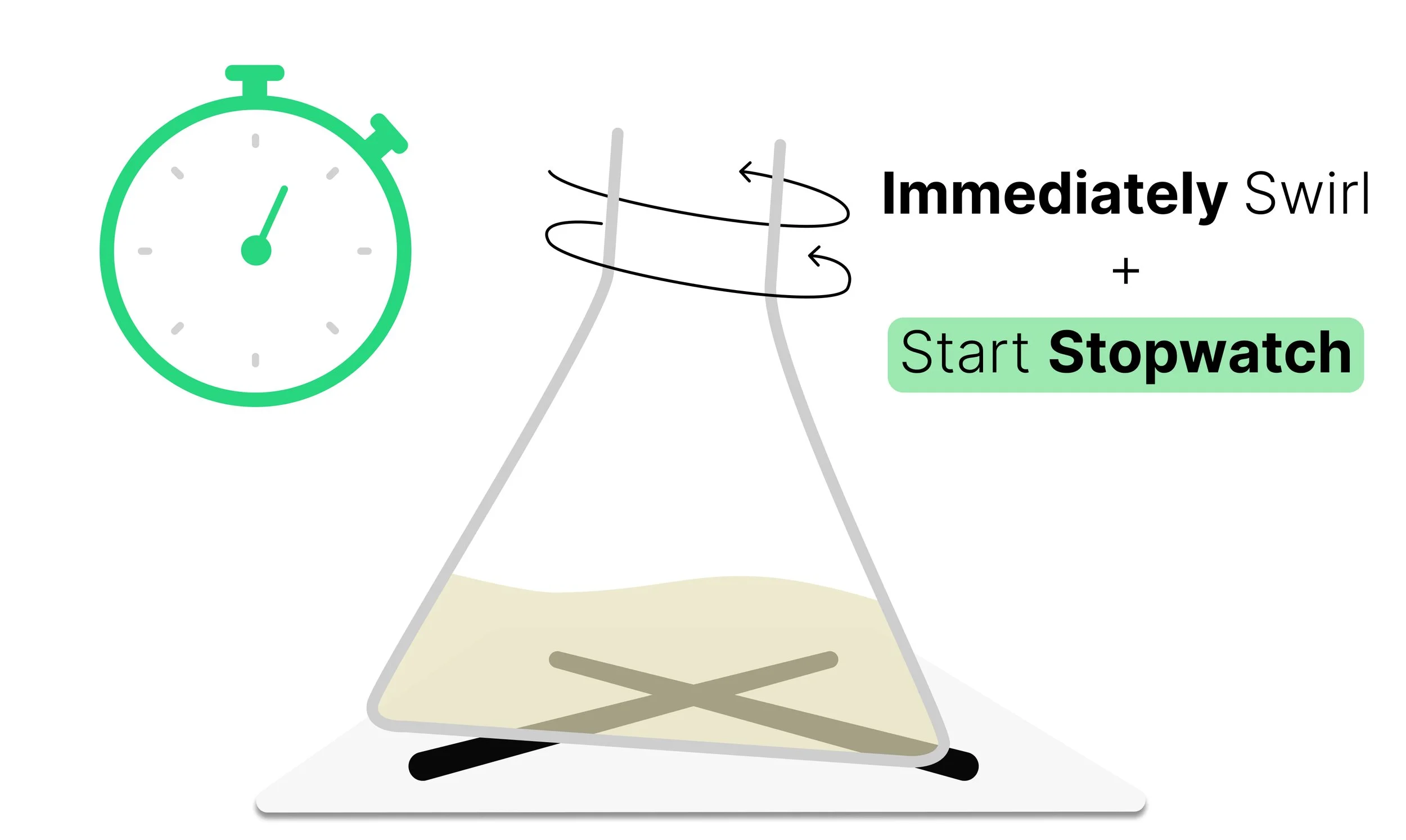
Start the stopwatch as soon as the hydrochloric acid is added, then immediately swirl the flask
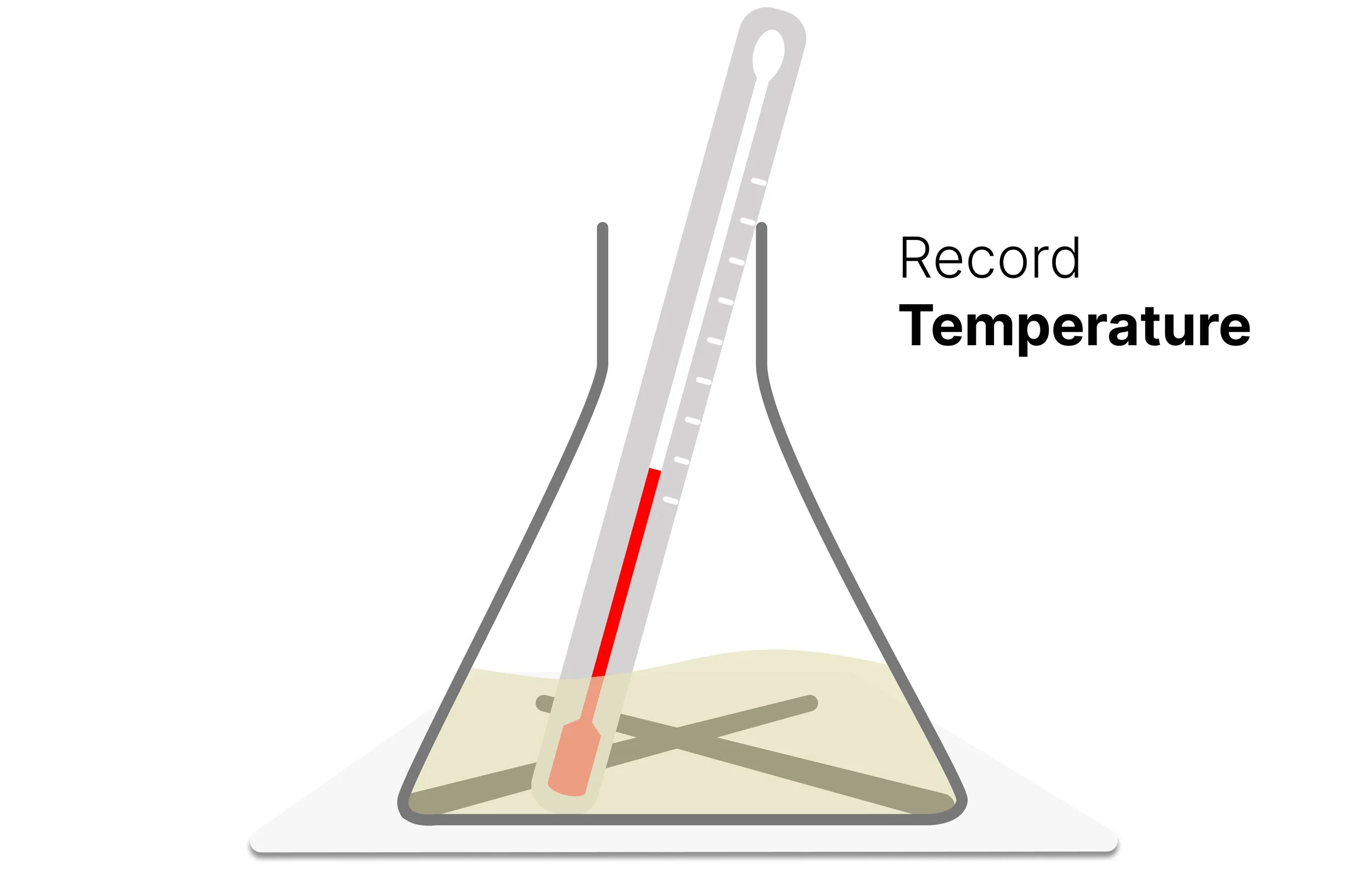
We can then measure temperature using a thermometer
-
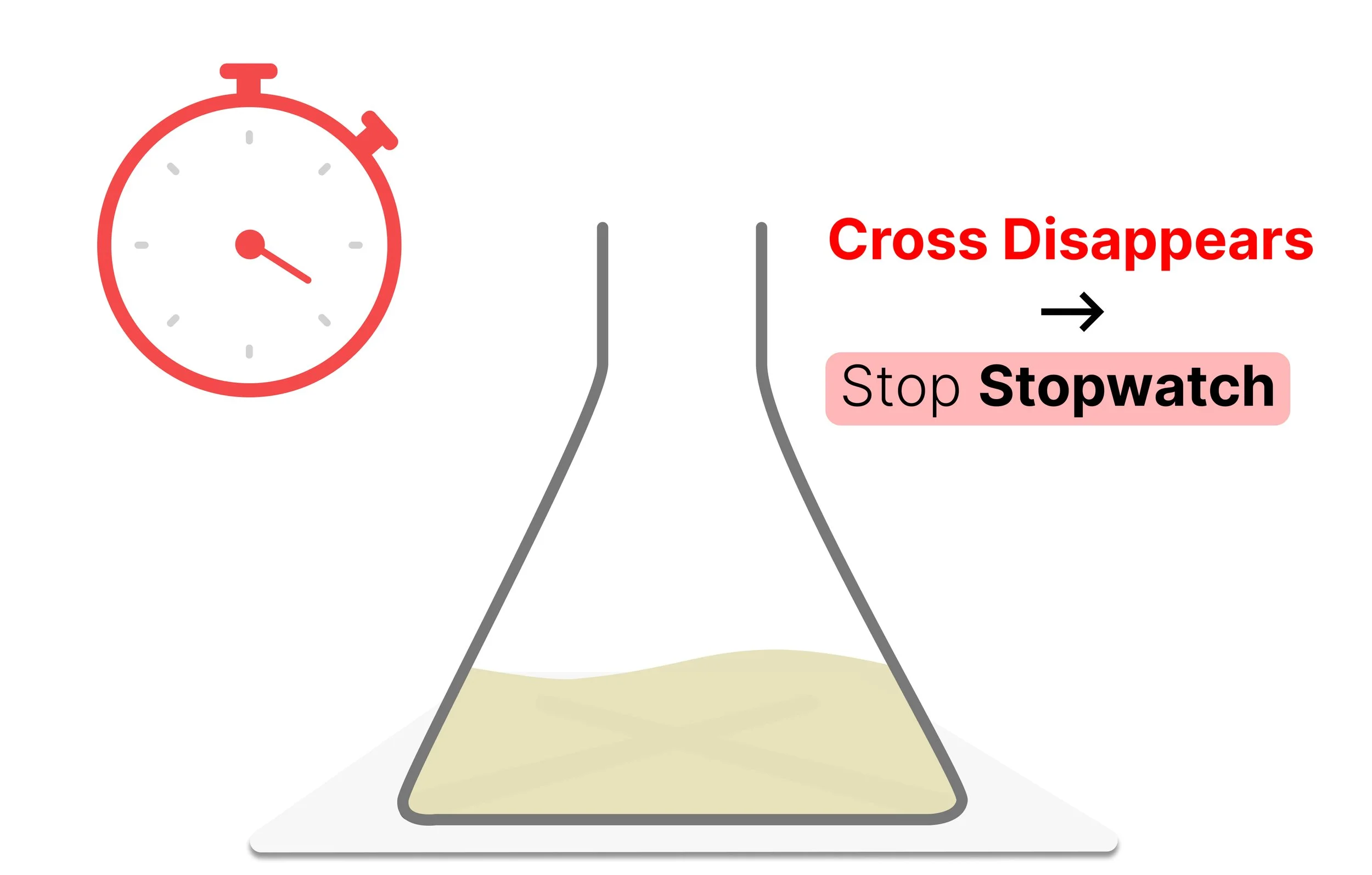
Stop the stopwatch, as soon as the cross disappears. Make sure you are looking down through the conical flask at the cross.
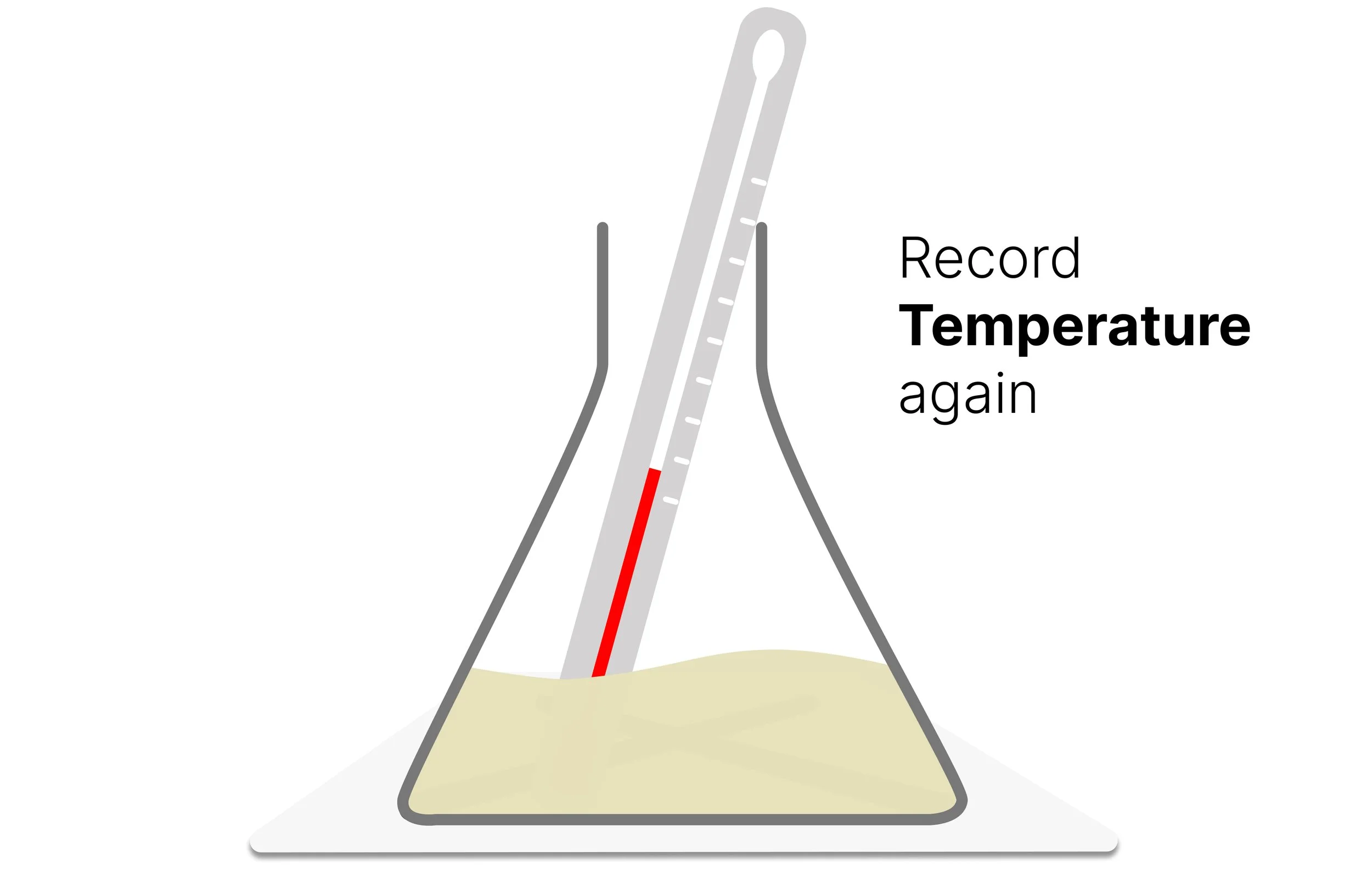
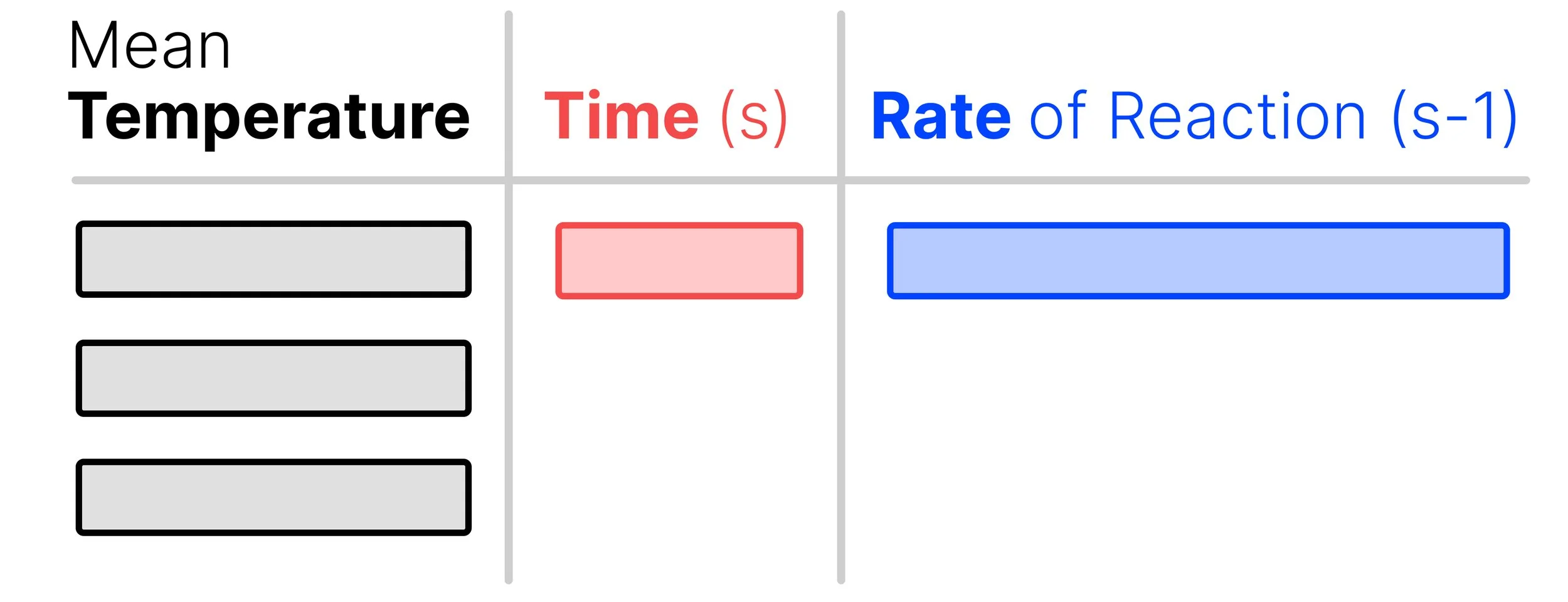
We record the temperature again and calculate a mean from the two temperatures.
3. Results
-
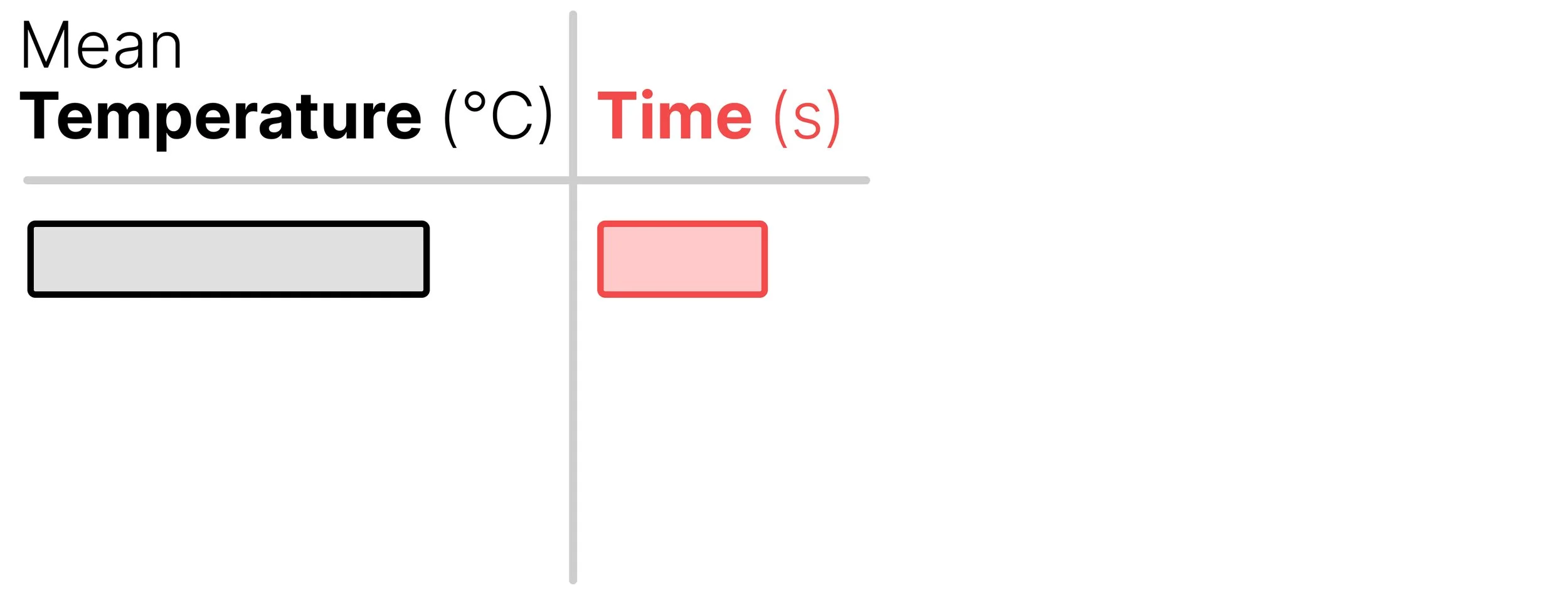
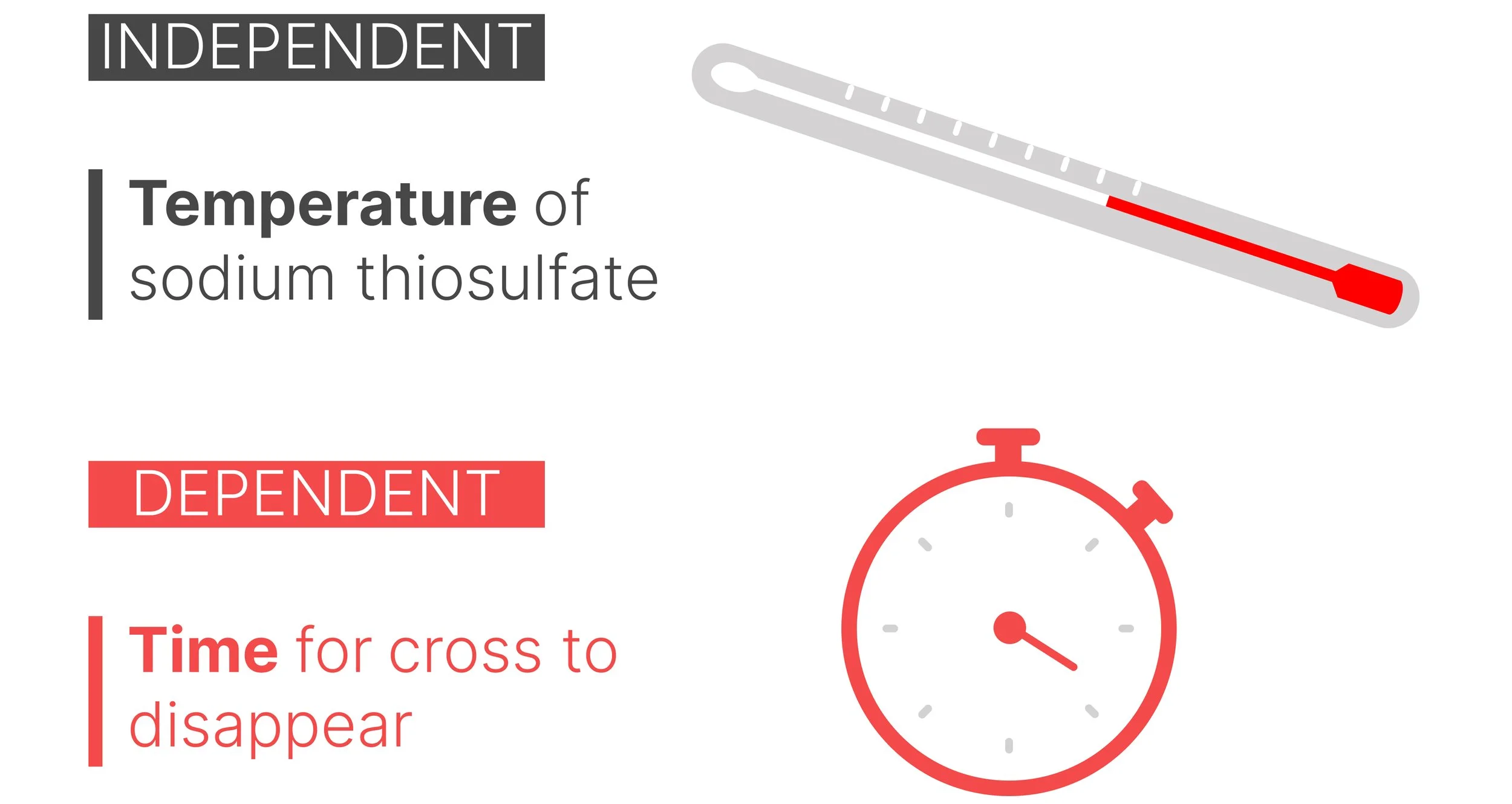
Independent variable (what will change): Mean Temperature (°C) in degrees Celsius
Dependent variable (what we are measuring): Time taken for cross to disappear (s) in seconds
Mean temperature is calculated from the two measured temperature values = (initial temperature + final temperature) ÷ 2.
-
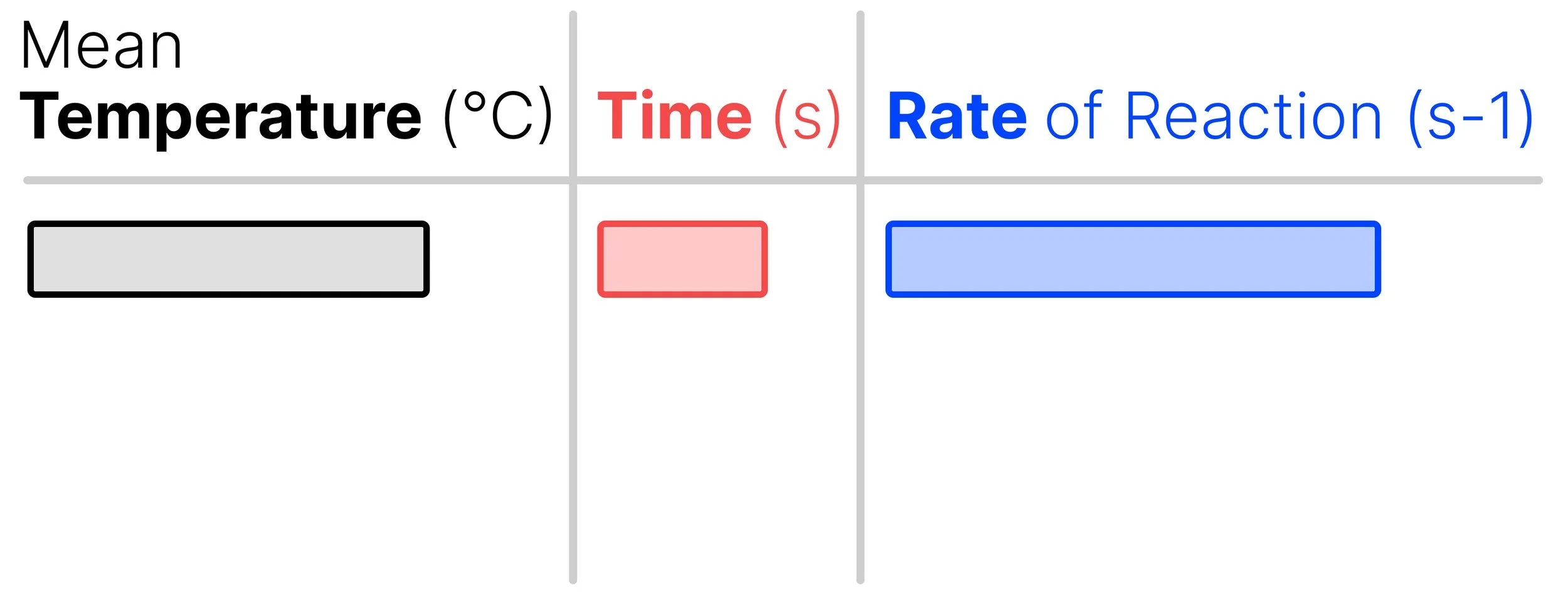
Relative rate of reaction (s⁻¹) = 1 ÷ time (s)
Add that to your table

-
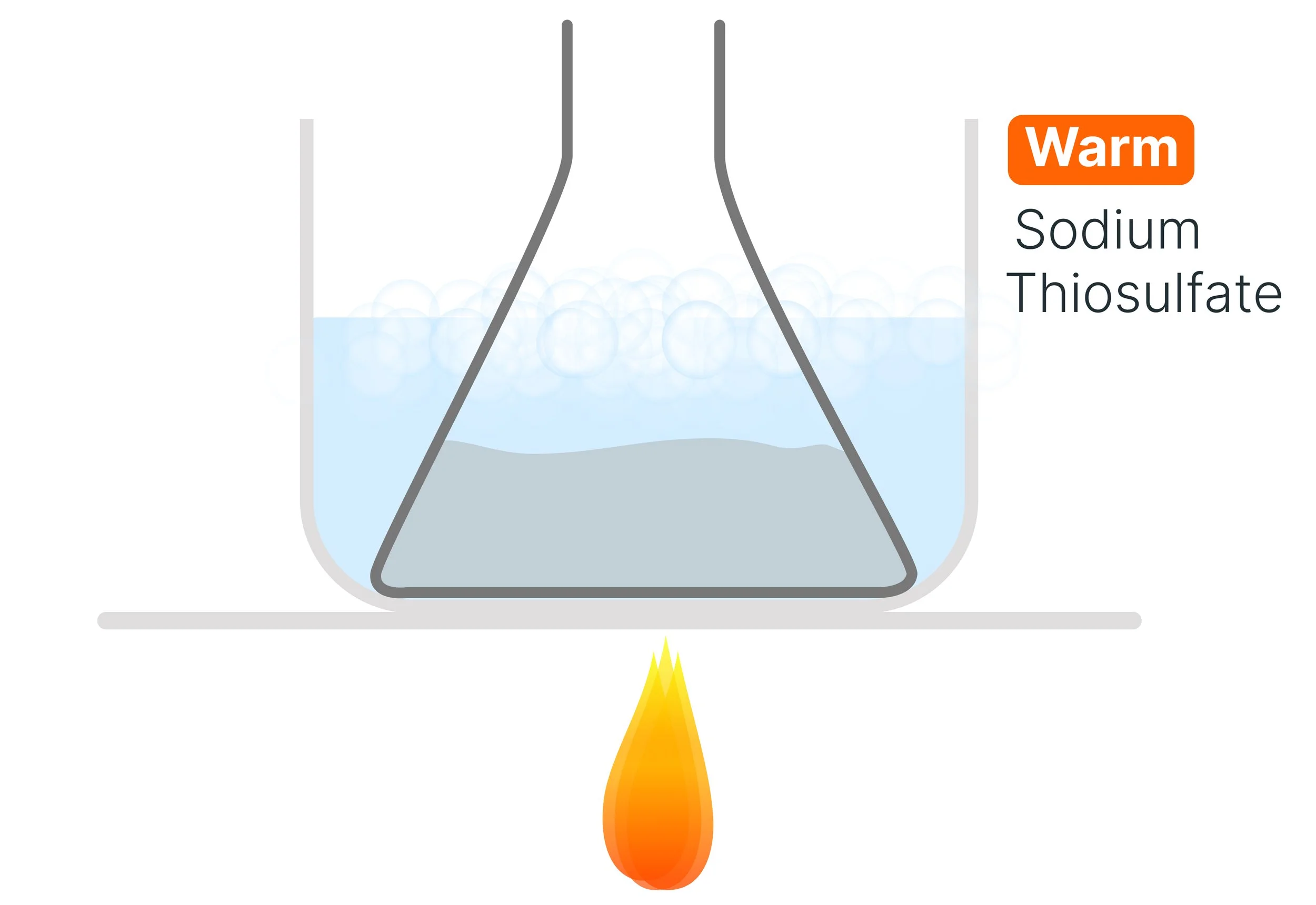
Warm sodium thiosulfate to different temperatures using a hot water bath
Repeat all previous steps to find Rate of Reaction for different Temperatures
Variables
Challenge:
-
Sulfur precipitate forms, making it cloudy enough
-
Judgement of when the cross fully disappears can differ from person to person.
Having the same person makes sure the endpoint is judged consistently, improving reliability.
-
Instead warming the solution to obtain different temperatures and measuring with a thermometer, use different volumes of sodium thiosulfate solution and water, keeping their combined volume constant.
Keep the hydrochloric acid volume & acid concentration, as well as the temperature unchanged.
Continue Revising Paper 2














Need help improving your GCSE Chemistry grade?
These visuals are created by our experienced GCSE tutors. Want personalised support?

Chemical Tests for Negative ions.