
Electrolysis: AQA Required Practical
AQA GCSE Chemistry Electrolysis Practical, where we use aqueous copper chloride (II) as the electrolyte and observe products at the electrodes. Combined & Triple Science.
A student investigates the electrolysis of aqueous copper chloride (II).
Describe a valid method to identify the products formed at the cathode and anode.
[6 marks]
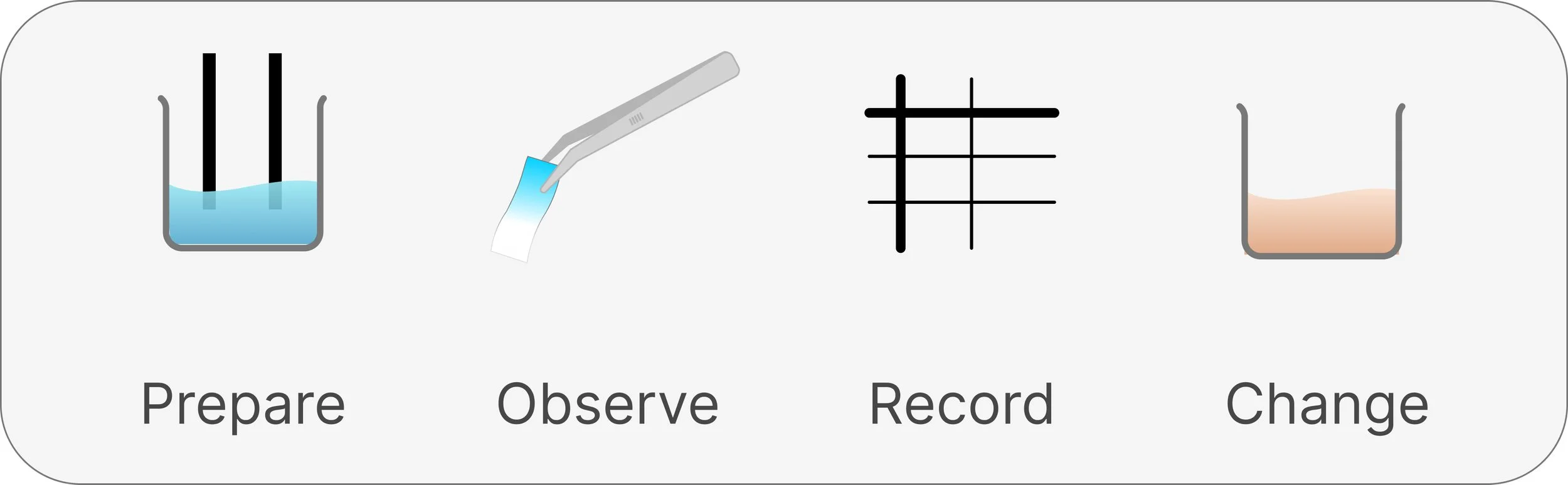
1. Prepare
-
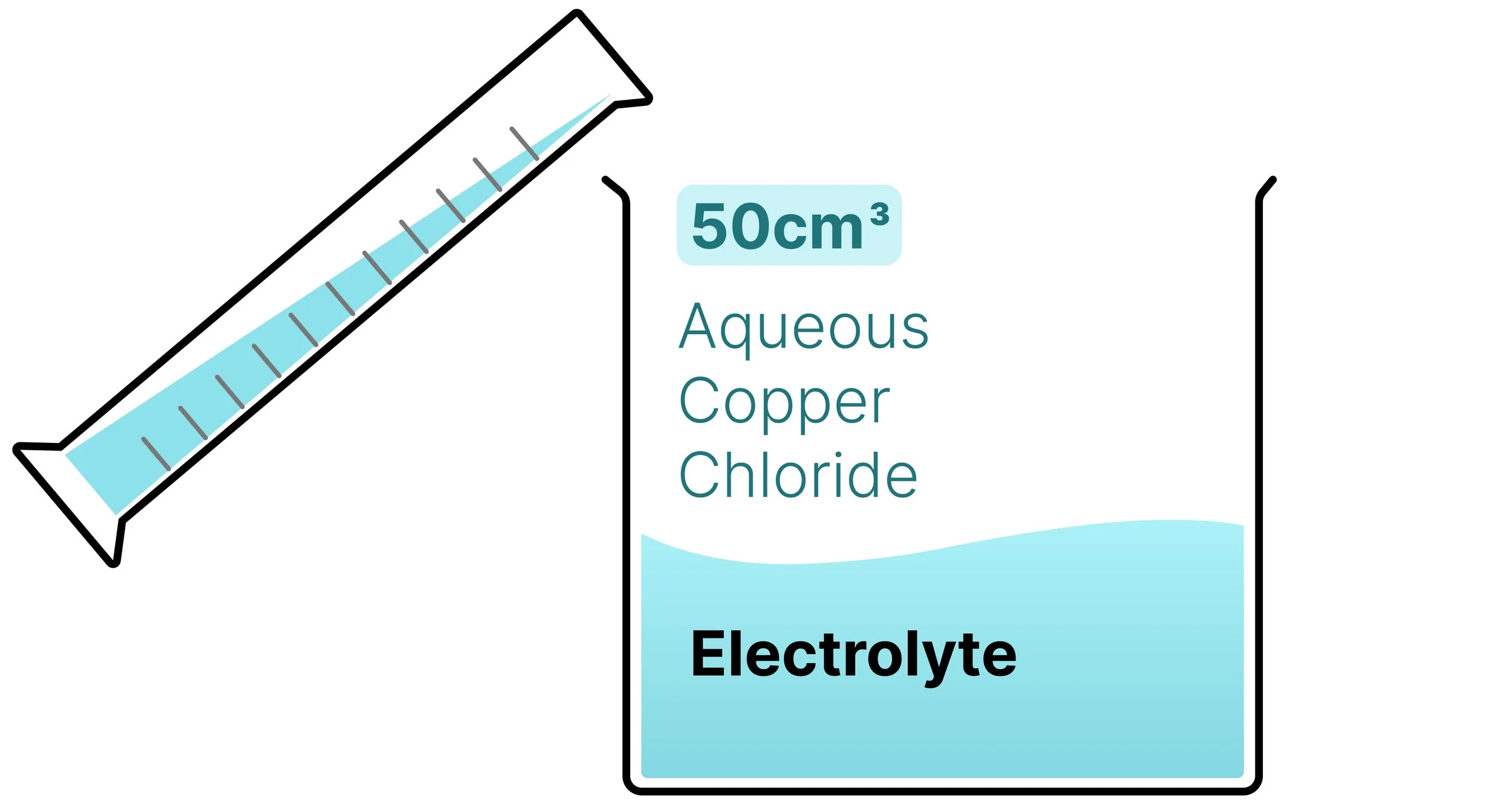
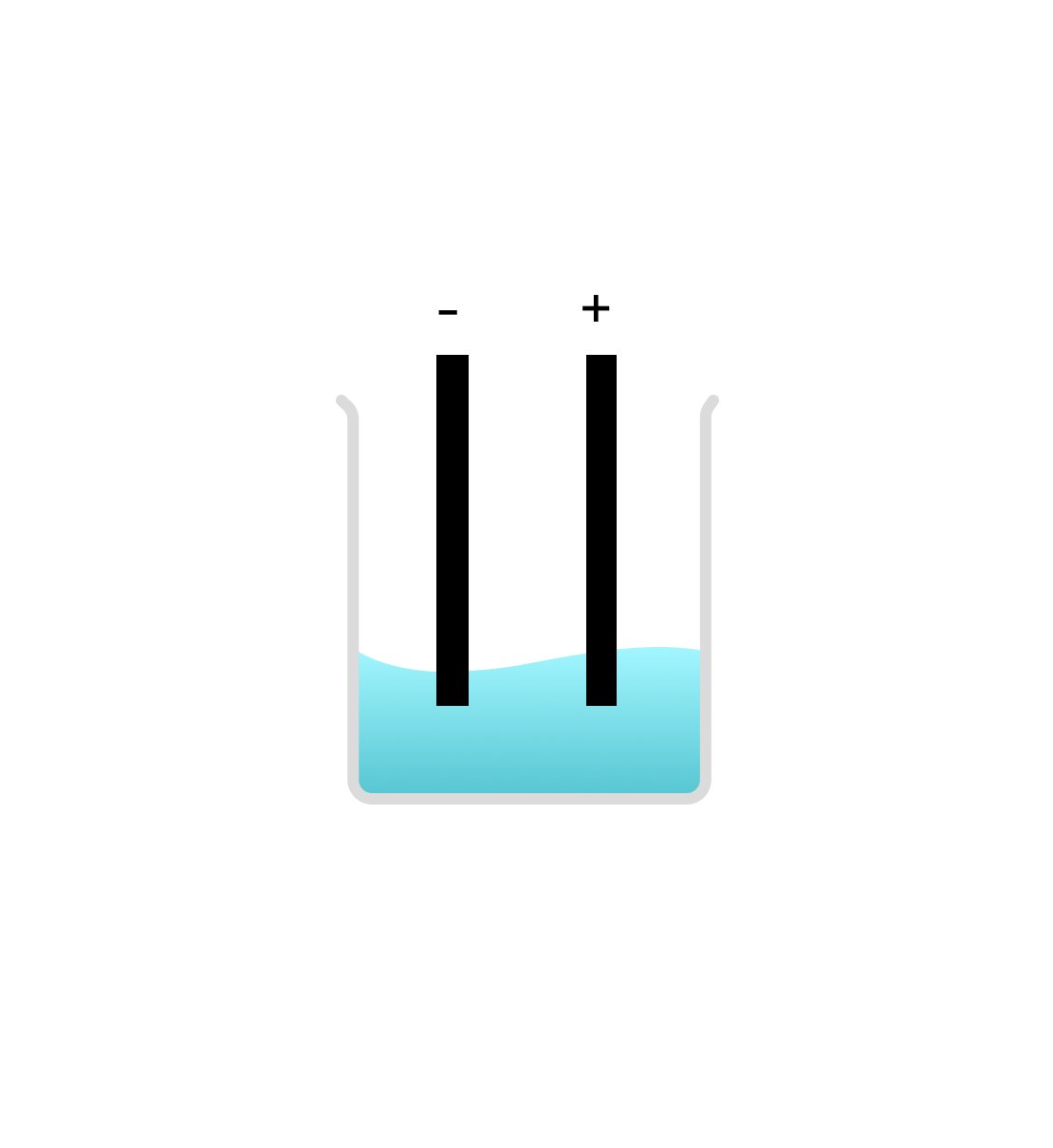
Measure 50cm³ of aqeous copper chloride and pour into a beaker. That’s our electrolyte (based on the question)
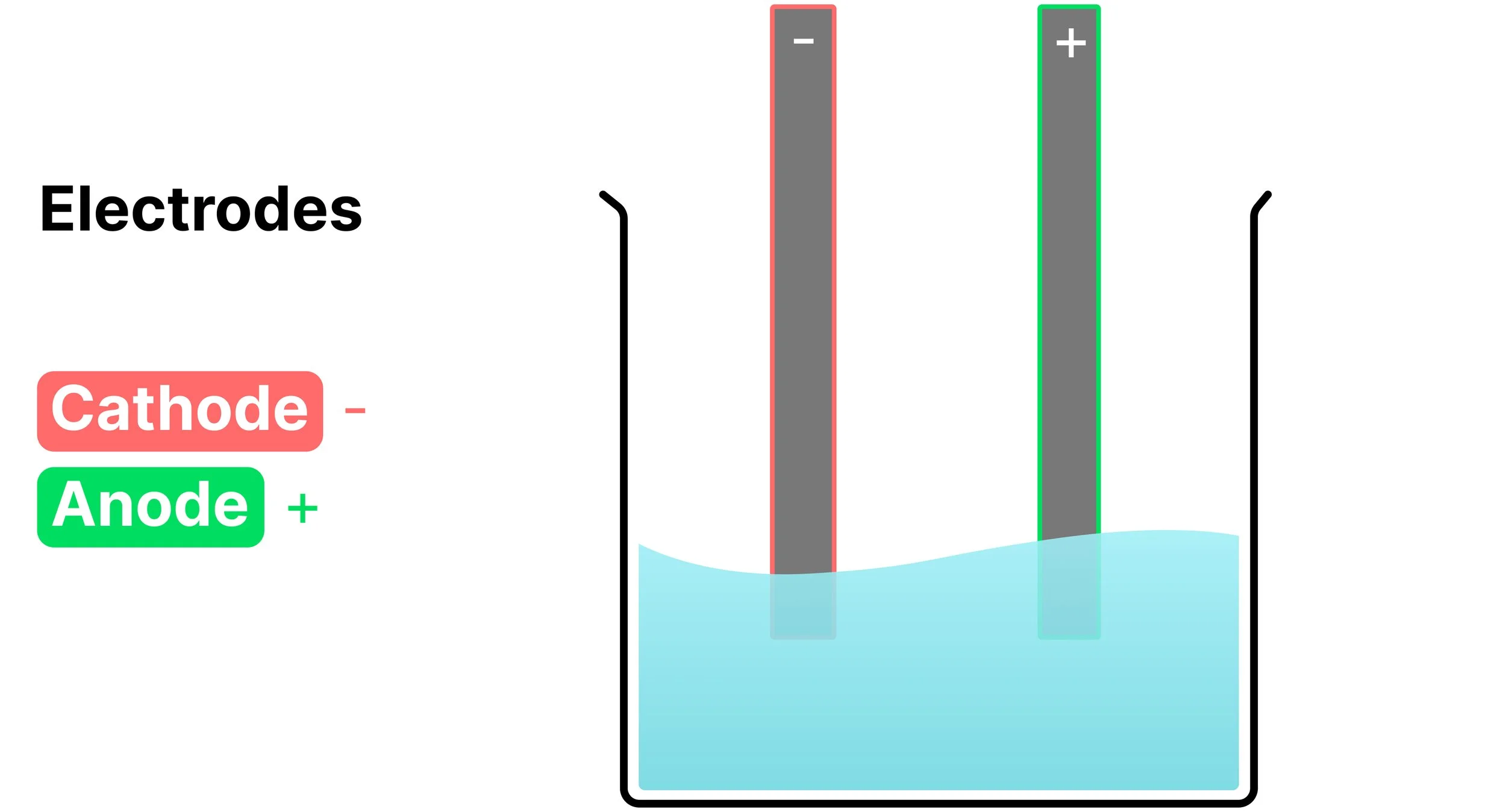
Insert two inert graphite electrodes, ensuring they do not touch.
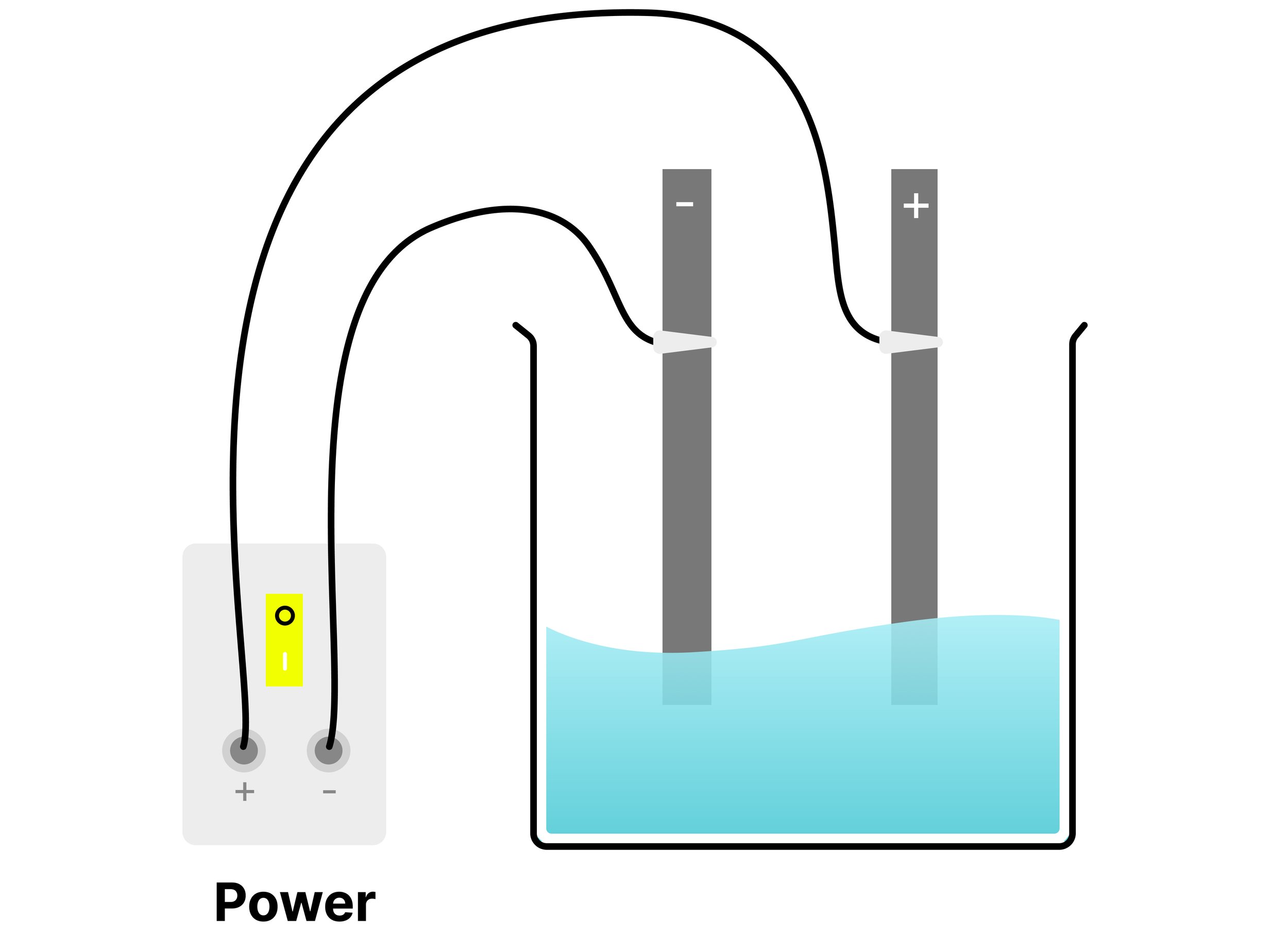
Connect the cathode to the negative terminal and the anode to the positive terminal of a low-voltage DC power supply. Switch it on.
2. Observe
-
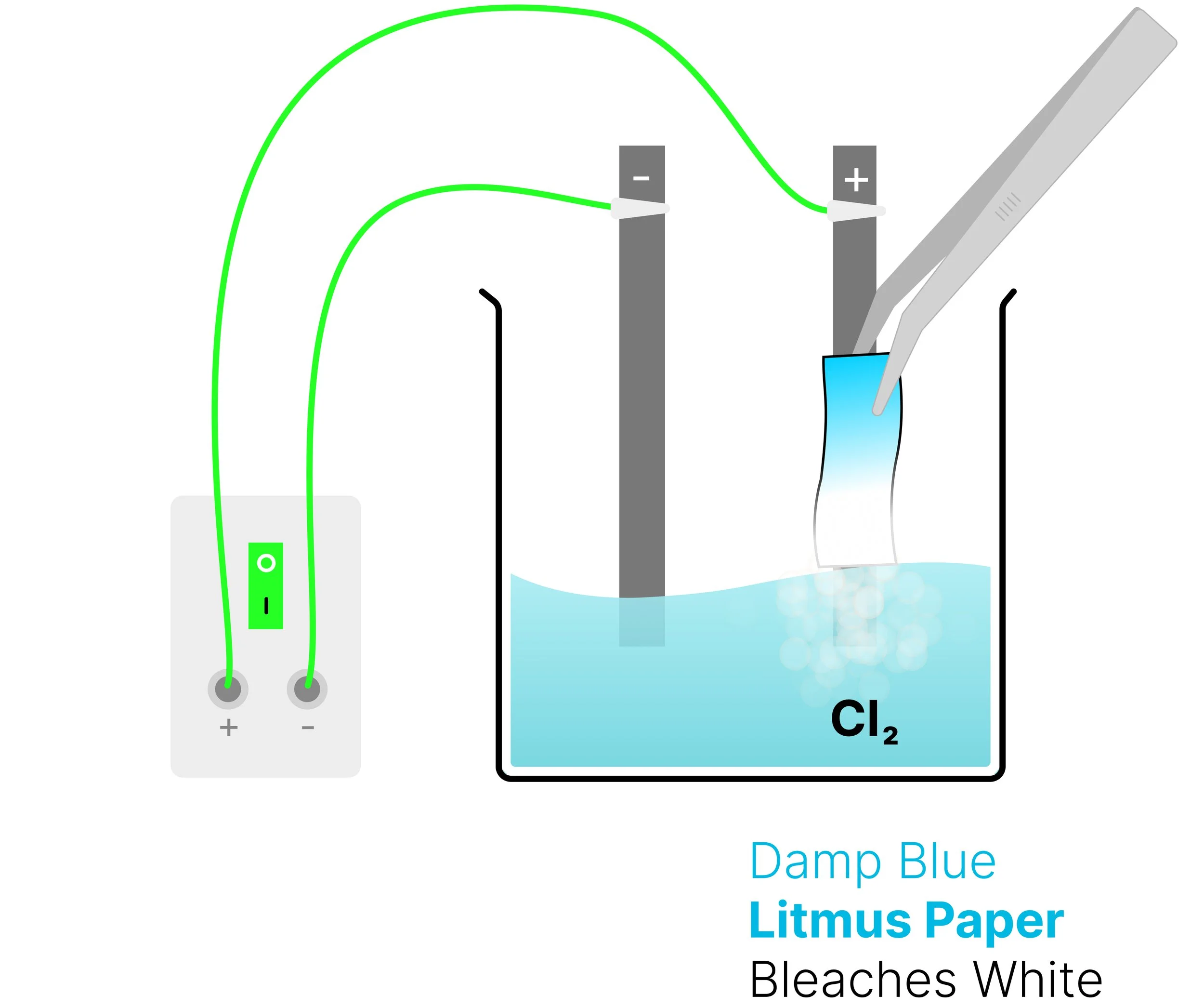
Bubbles are seen near the positive electrode. To confirm, it’s chlorine, hold damp blue litmus paper near the bubbles at the anode. It turns red, then bleaches white, indicating chlorine gas.
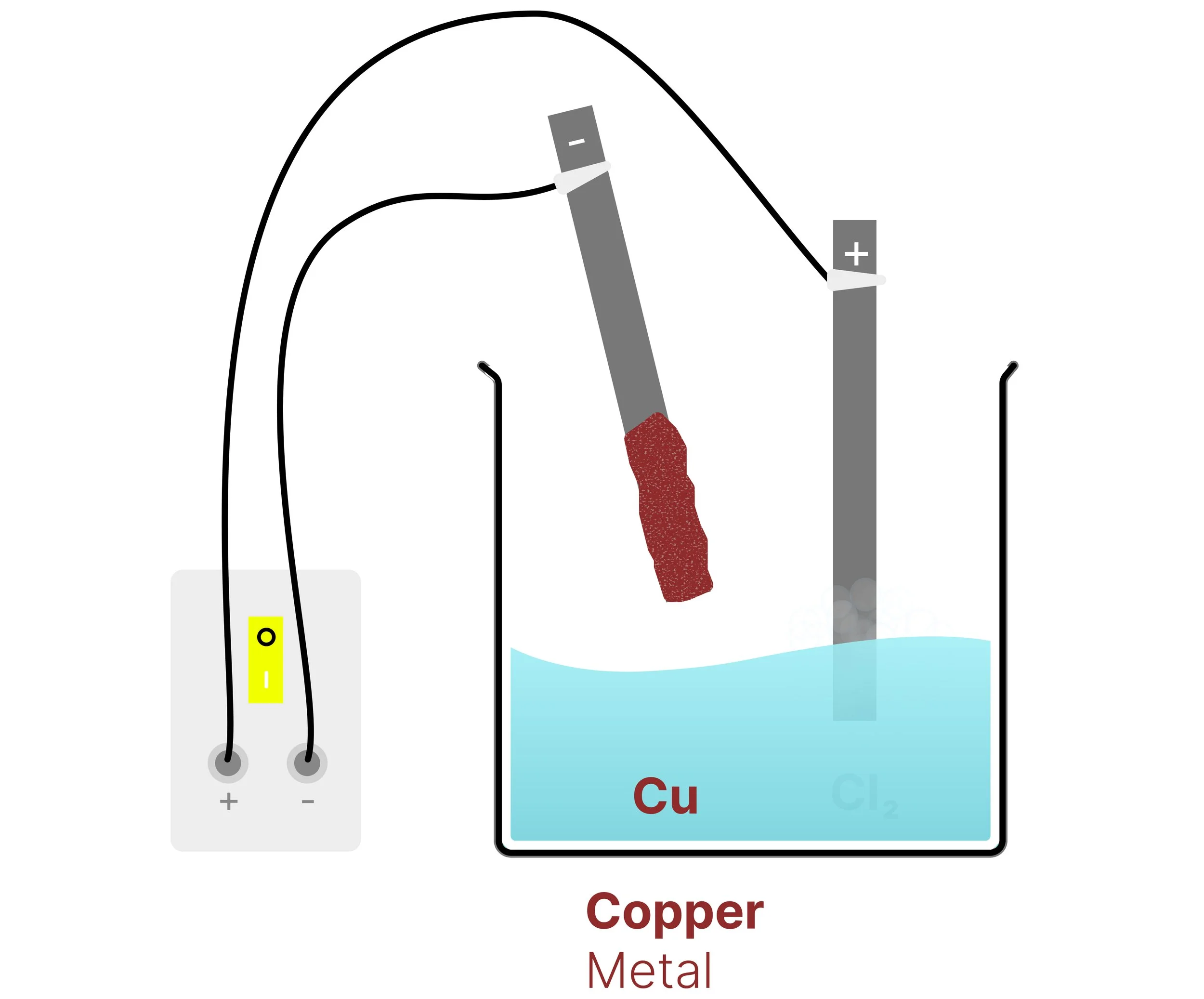
Turn off the power and inspect the reddish-brown copper deposit on the negative electrode. This is copper metal.
3. Record
-
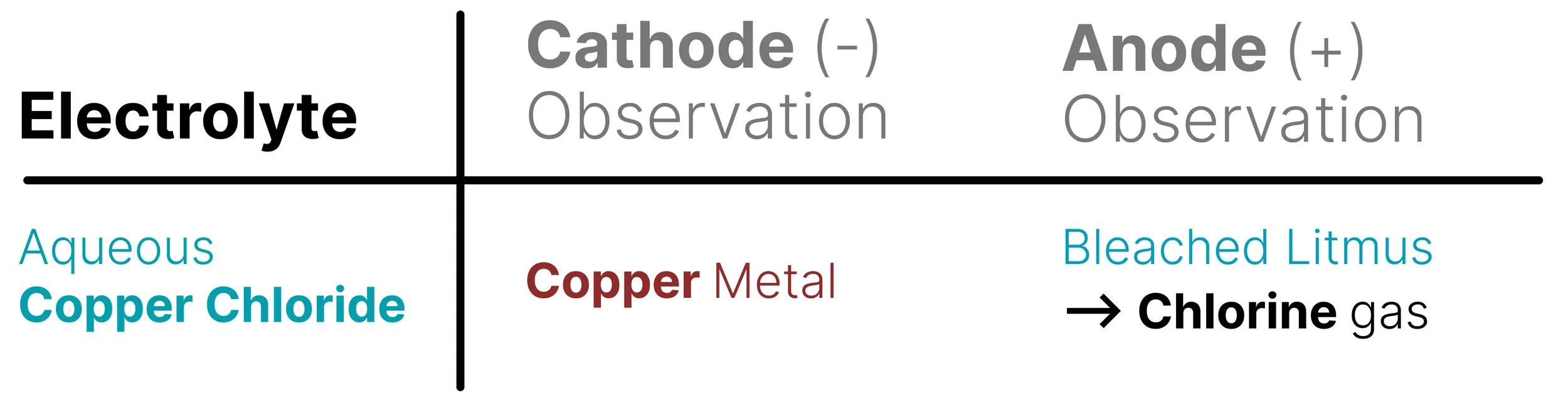
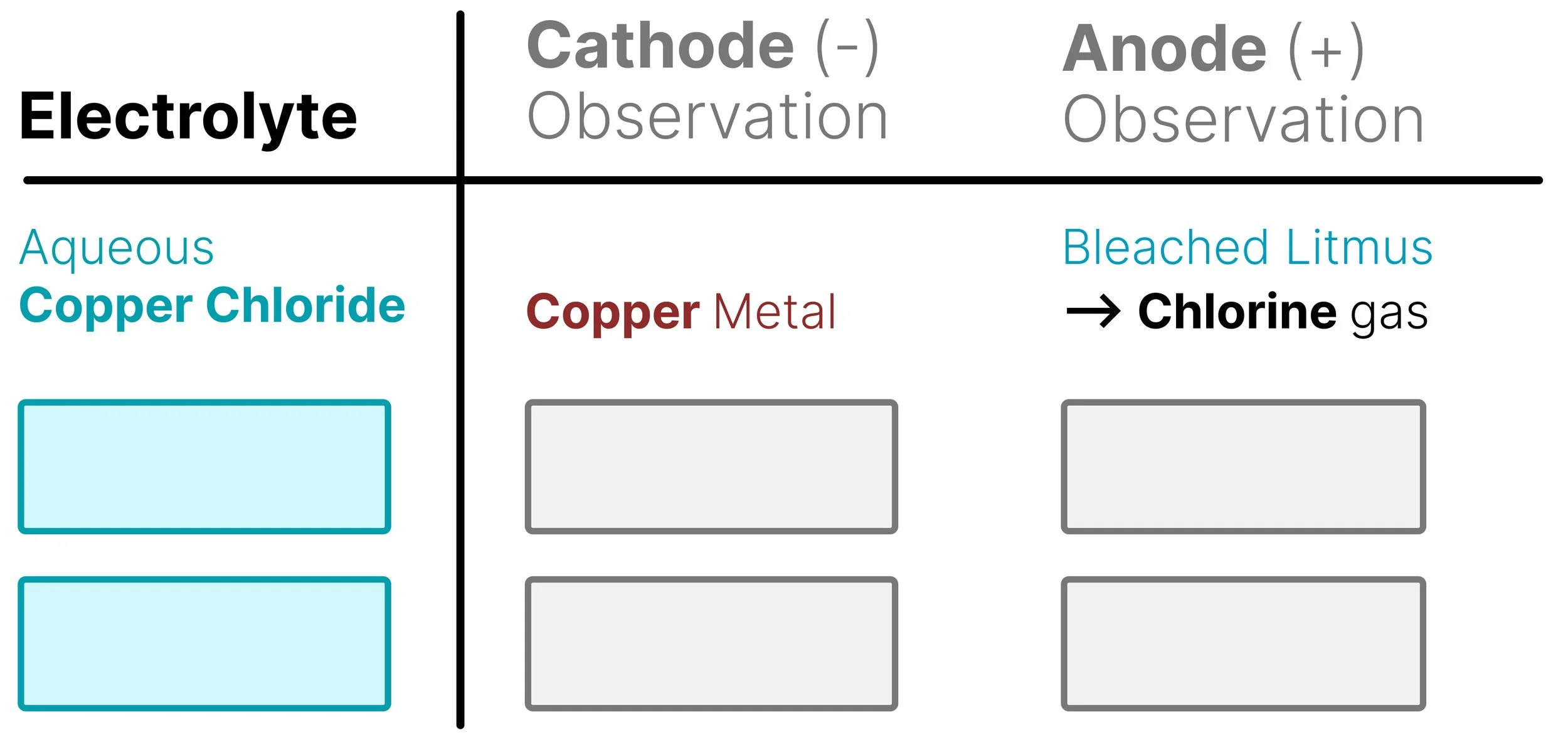
Independent variable (what will change): electrolyte
Dependent variable (what we are observing): visible changes and products formed at each electrode
4. Change
-
Clean the setup and electrodes to avoid contamination
Repeat all the steps for a different electrolyte like sodium chloride
Safety Precaution
-
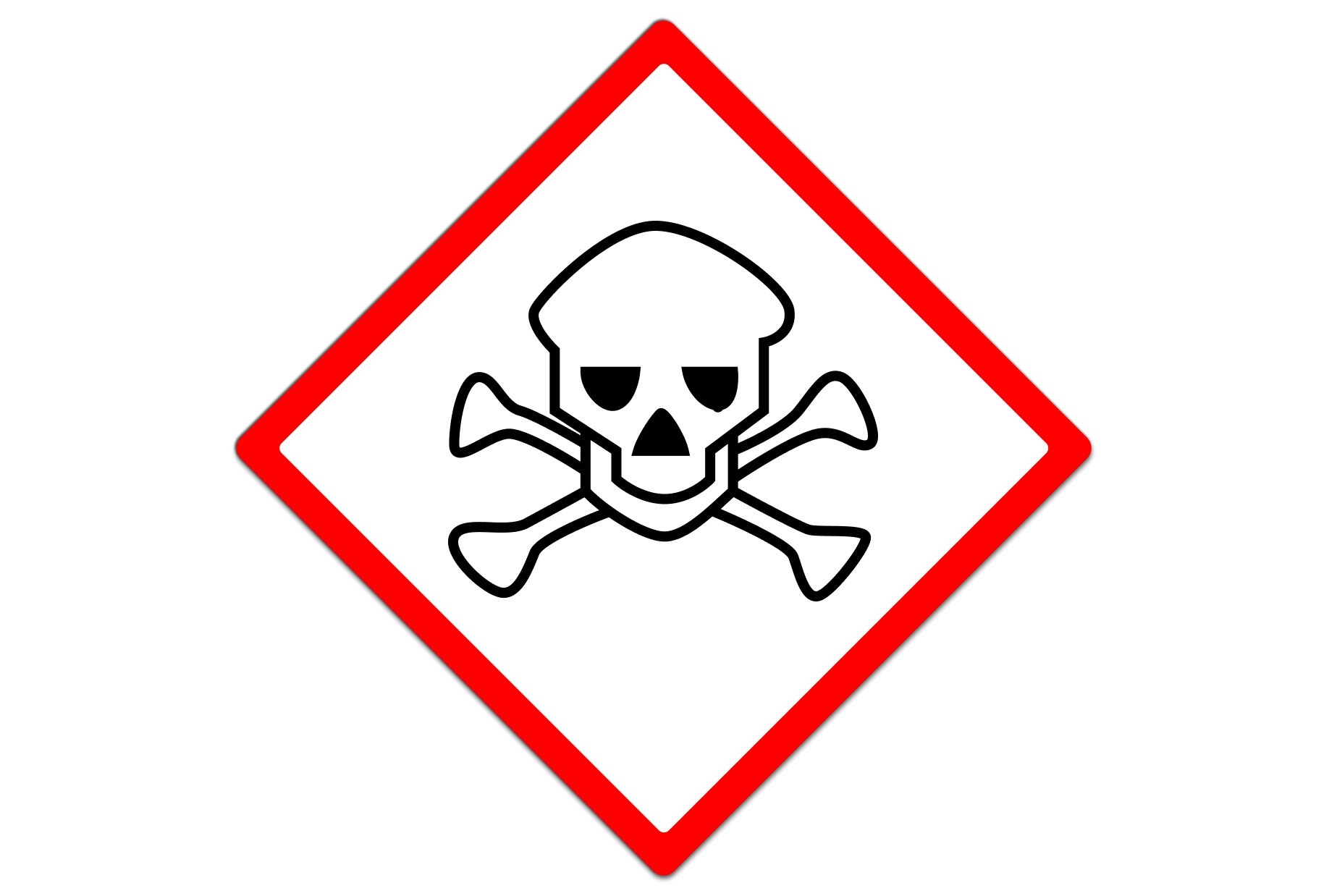
Chlorine gas is toxic, so a fume cupboard prevents people from inhaling it.
Continue Revising


Need help improving your GCSE Chemistry grade?
These visuals are created by our experienced GCSE tutors. Want personalised support?

Chemical Tests for Negative ions.