Group 7

Melting & Boiling Point


Look at Figure 1. Explain the trend in boiling points down Group 7.
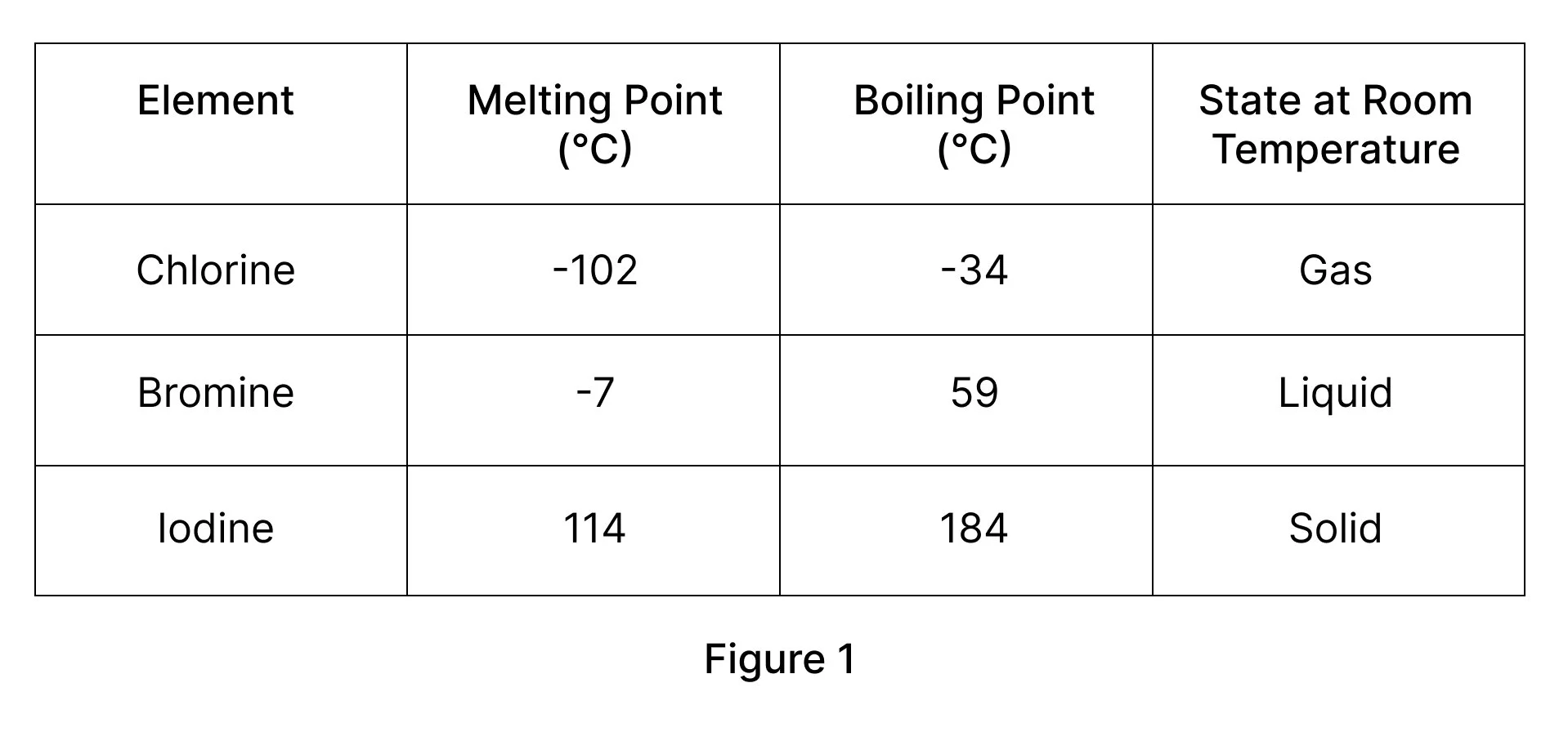
Table showing boiling points, melting points and state at room temperature of group 7 elements (halogens) going down the group (Chlorine, Bromine, Iodine).

[4 marks]

  • Group 7 elements form small molecules. (1 marks)

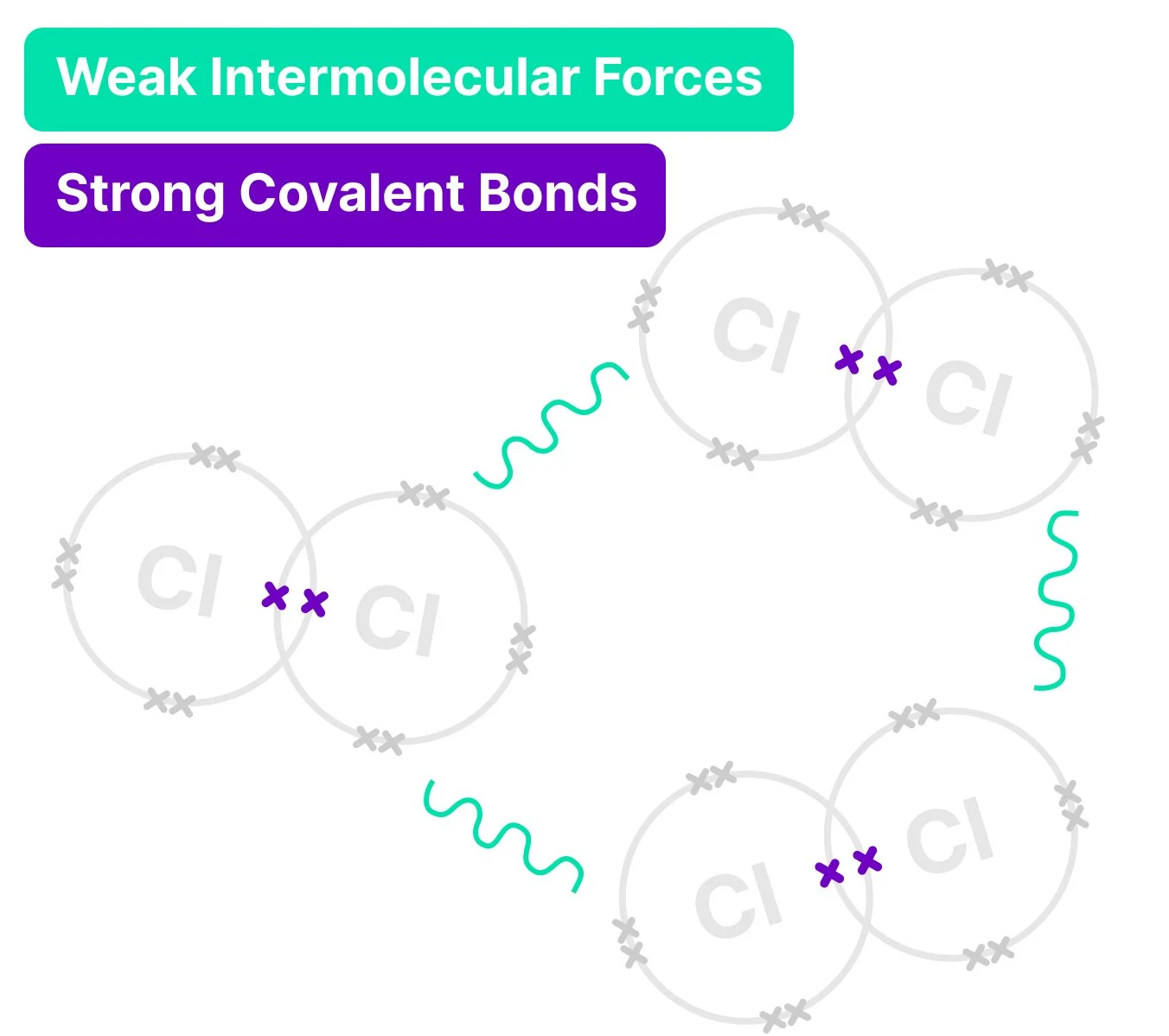
    Individual chlorine atoms are held in together in pairs:

    • Strong covalent bonds

    Between different chlorine molecules are:

    • Weak intermolecular forces

Both strong covalent bonds shown holding Chlorine atoms in pairs and weak intermolecular forces between the chlorine molecules.
  • Melting/ Boiling of Chlorine requires:

    • Small amount of energy only to break the weak intermolecular forces.
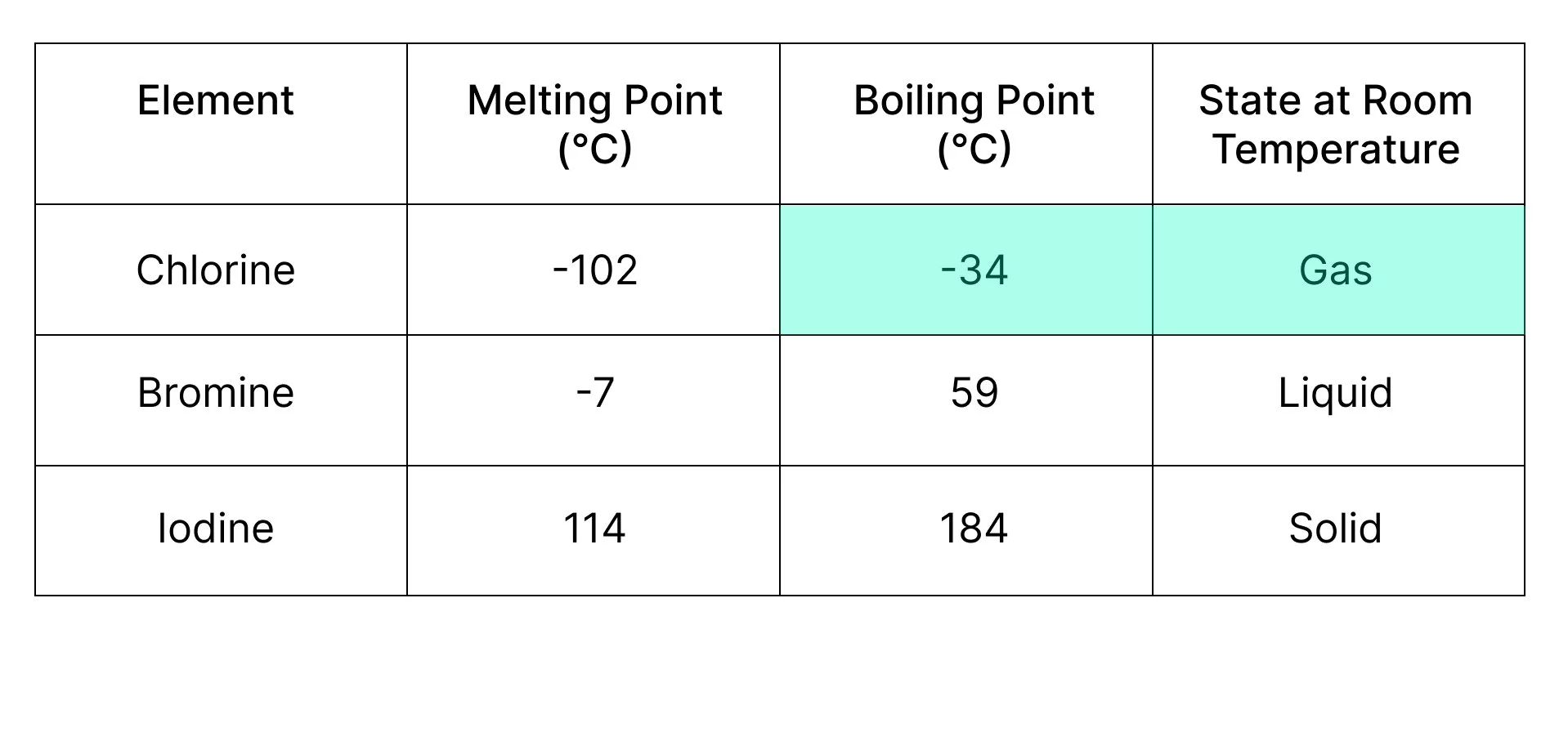
Table showing halogen melting points, boiling points and states at room temperature of halogens going down the group with Chlorine's low boiling point and gas state highlighted in green.
  • More electrons as you go down. And more electron shells.

    So larger molecules. (1 mark)

    So stronger intermolecular forces. (1 mark)

    More energy is needed to break them. (1 mark)

    Thus higher melting and boiling points.
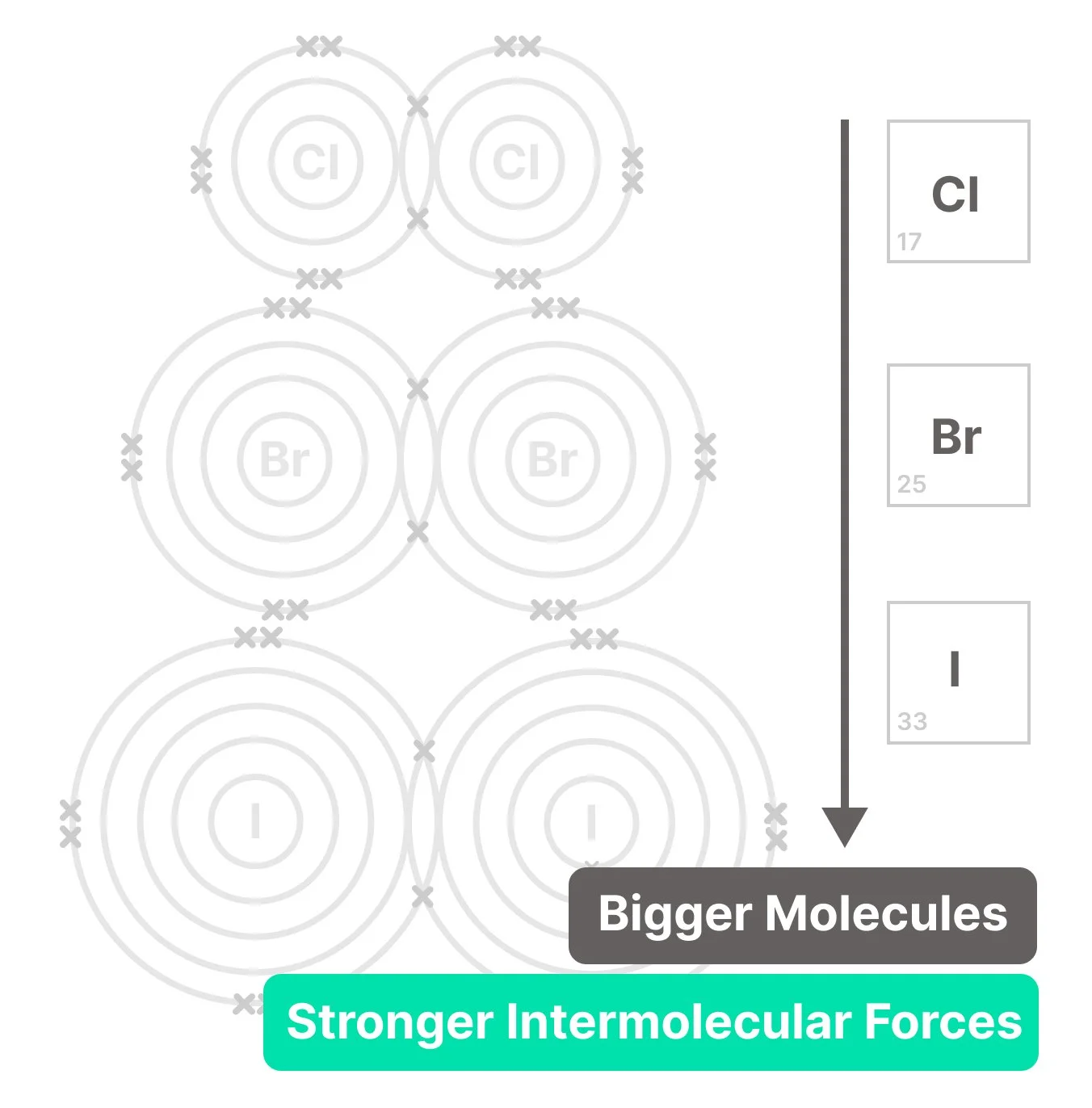
Increasing number of electron shells and molecule sizes of Halogens going down the group (Chlorine, Bromine, Iodine) so stronger intermolecular forces.
Next
Next

Pressure