This question focuses on chemical bonding and structure.
Calcium chloride is formed when calcium reacts with chlorine gas.
Describe, in terms of electrons, what happens to the calcium atoms and chlorine atoms when this ionic compound is produced.
[4 marks]
-
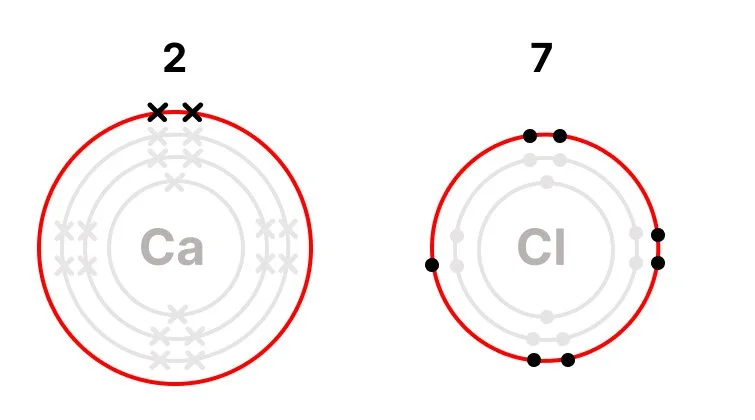
Calcium is in group 2, so 2 electrons.
Chlorine is in group 7, so 7 electrons.
-
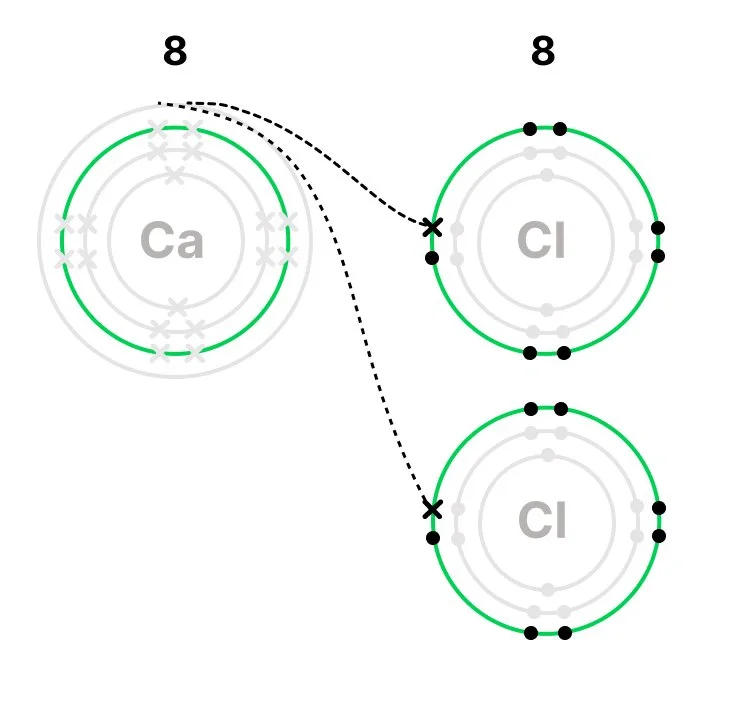
Calcium loses 2 electrons. (1 mark)
Each Chlorine gains 1 electron. (1 mark)
We need two Chlorines for one Calcium. (1 mark)
-
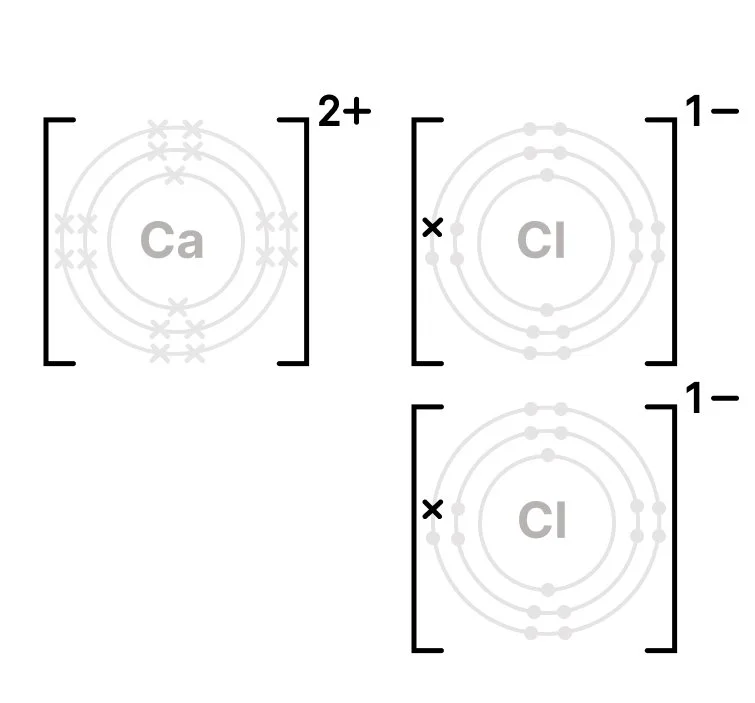
Calcium now has 2+ charge (since it lost 2 negative electrons).
Each Chlorine now has 1+ charge (since each gained 1 negative electron).
(1 mark)
How do we write the final chemical formula?
[1 mark]
When Calcium Chloride solution is electrolysed, what is formed at the Cathode (negative electrode)?
[1 mark]
-
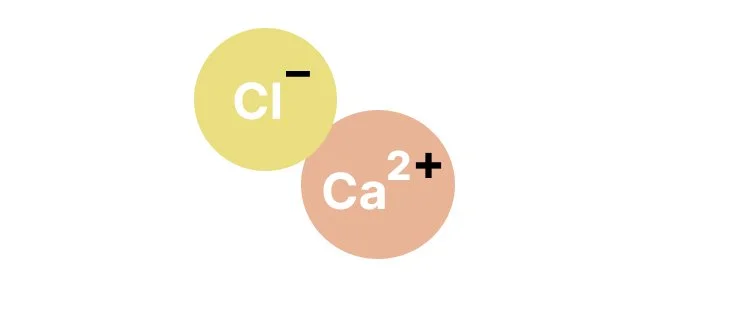
Ca2+
Cl-
-
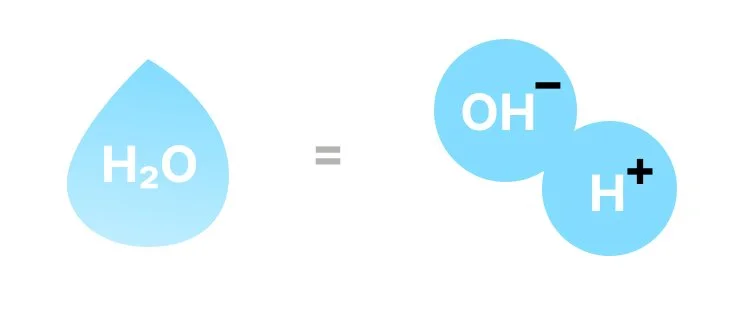
Aqueous means dissolved in Water.
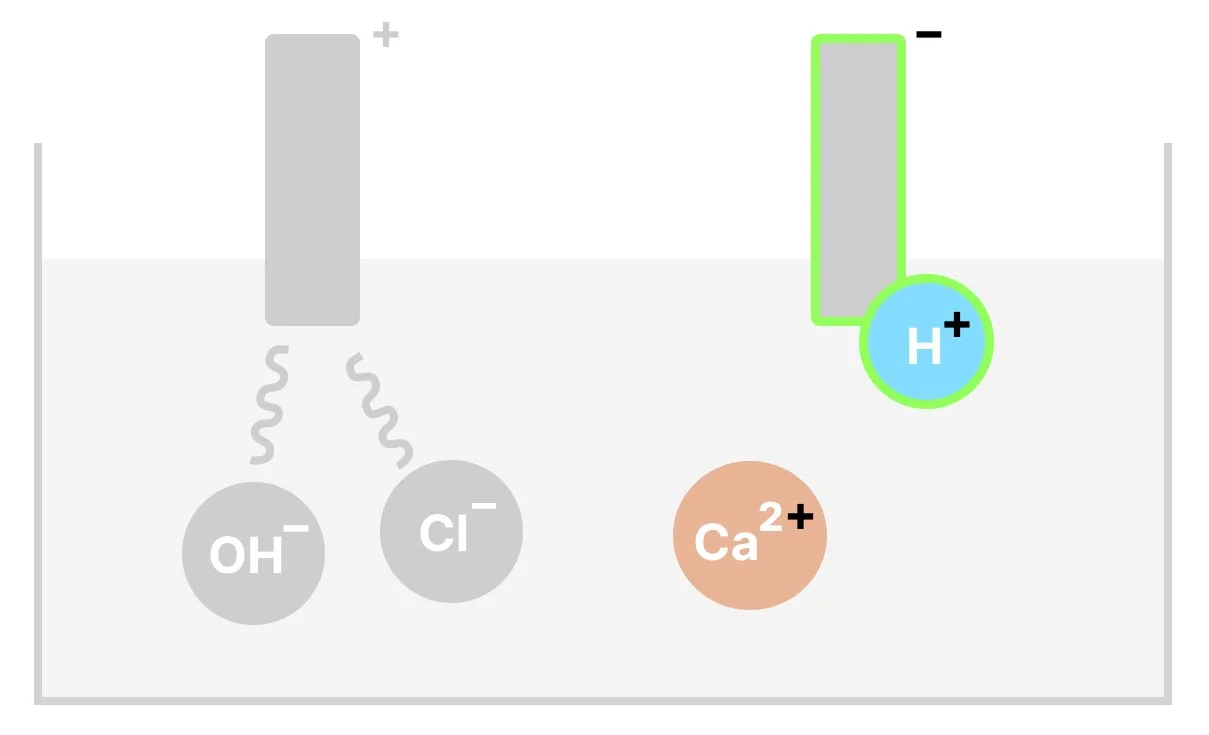
Water splits up into H+ and OH-
-
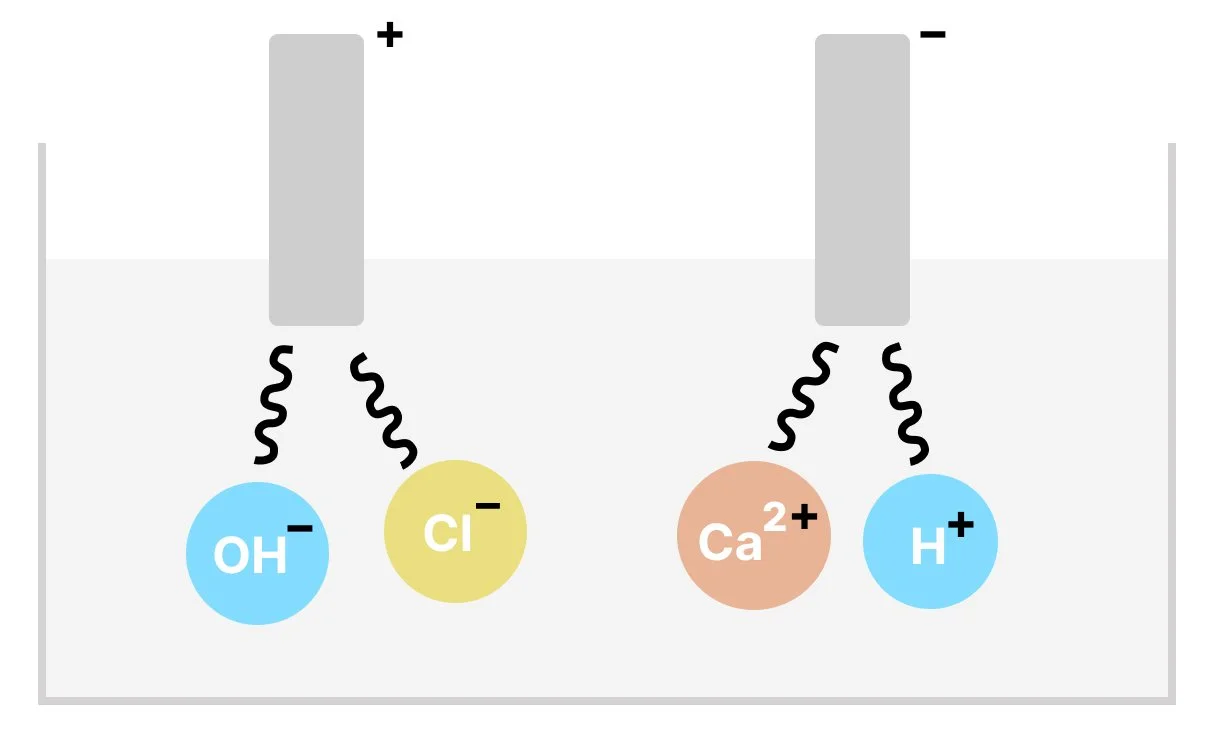
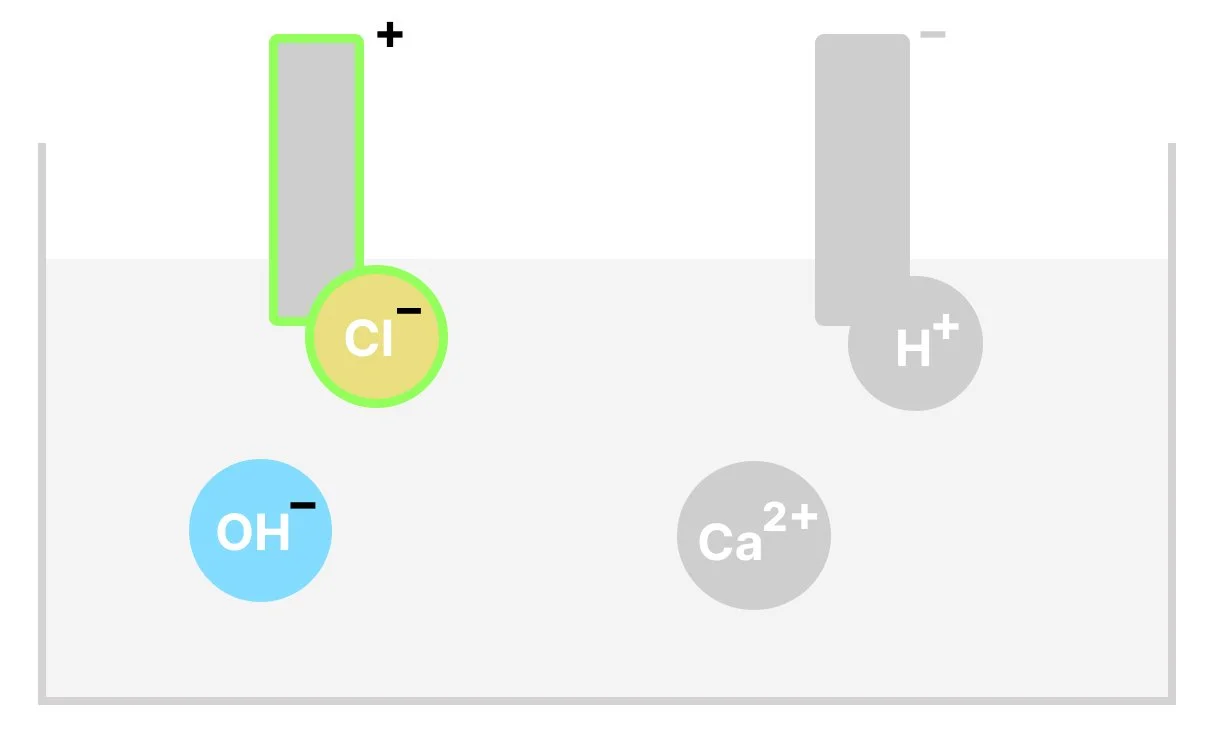
Negative ions (OH- and Cl-) are attracted to the positive Anode.
Positive ions (Ca2+ and H+) are attracted to the negative Cathode.
-
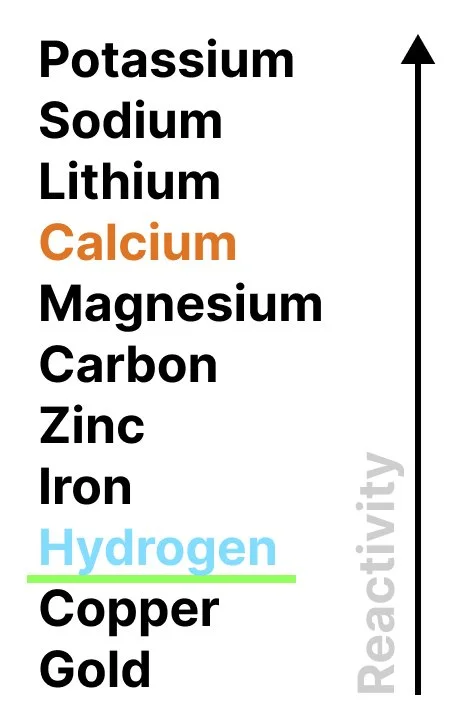
At the negative electrode (Cathode), the LESS reactive ion wins.
H+ wins.
-
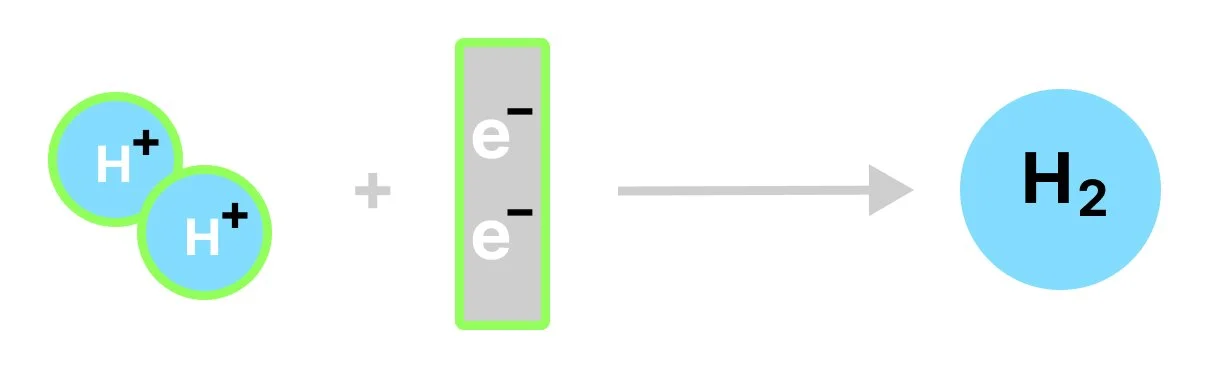
H+ ions gain negative electrons at the Cathode - so Hydrogen gas if formed.
What is formed at the Anode (positive electrode)?
[1 mark]
-
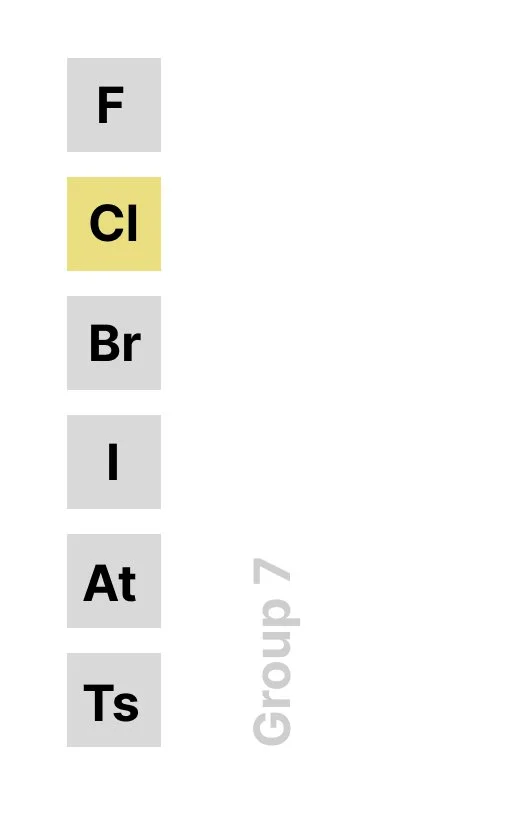
At the Anode, a Halide ion (from Group 7) wins. Otherwise, OH- wins.
-
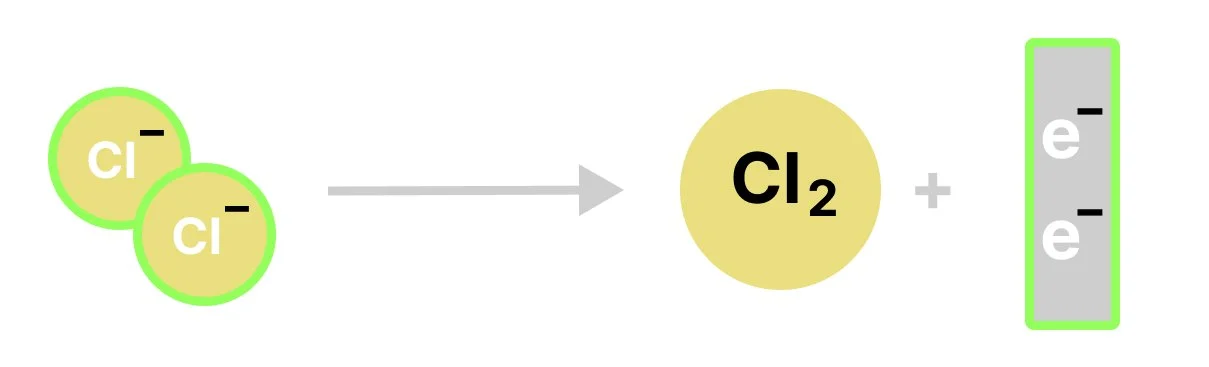
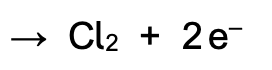
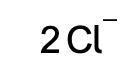
The Chlorine ions have too much negative charge.
They let go of electrons at the Anode.
Chlorine gas if formed.
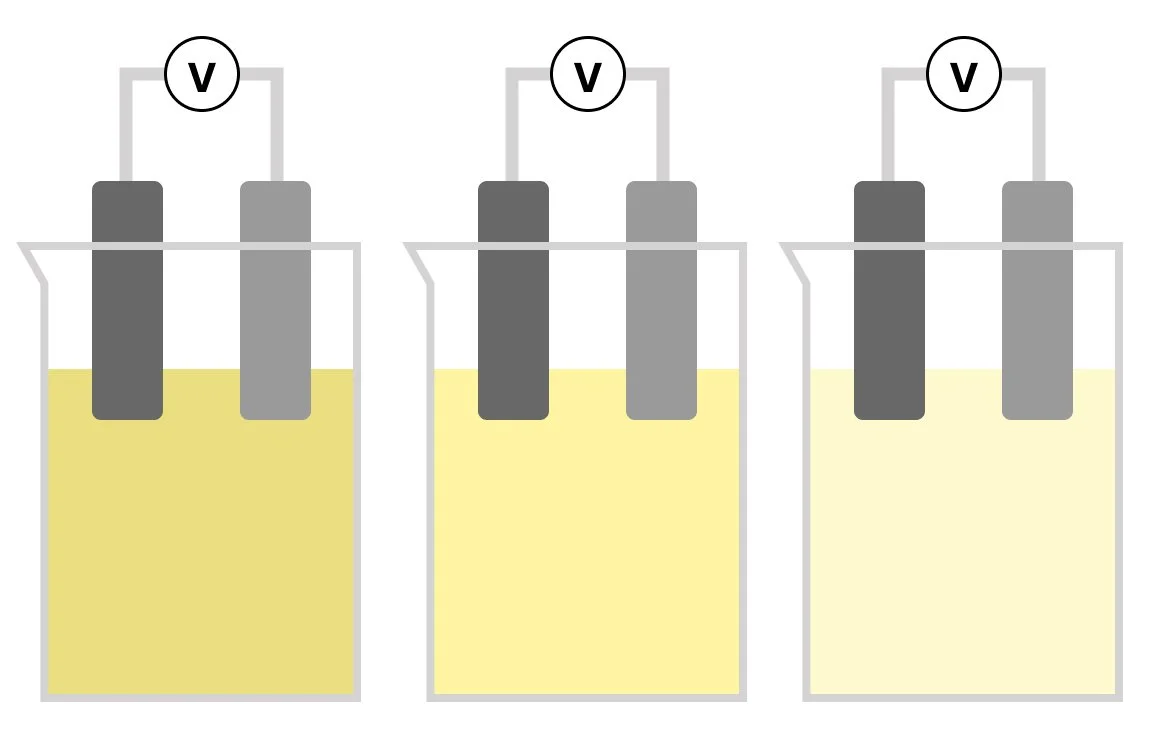
Investigate the effect of electrolyte concentration on chemical cell voltage.
Plan a valid method using the following starter materials:
Metal electrodes
Pure water
1.0 mol/dm³ Sodium Chloride solution
[6 marks]
-
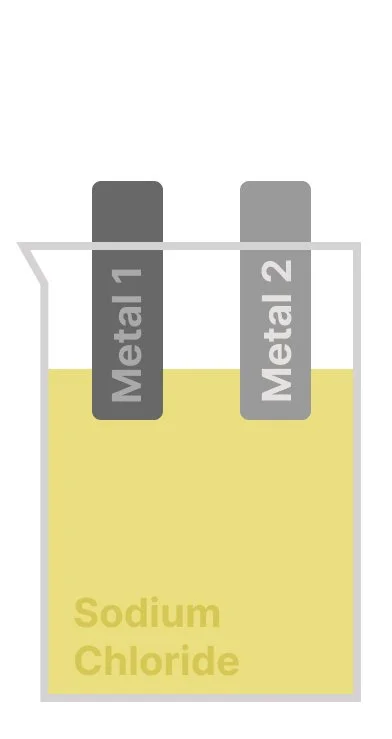
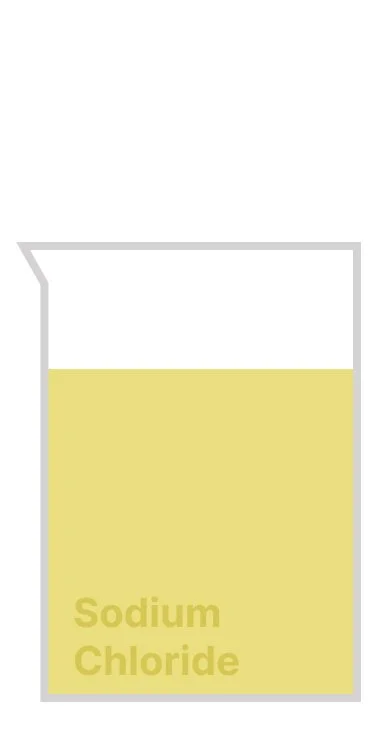
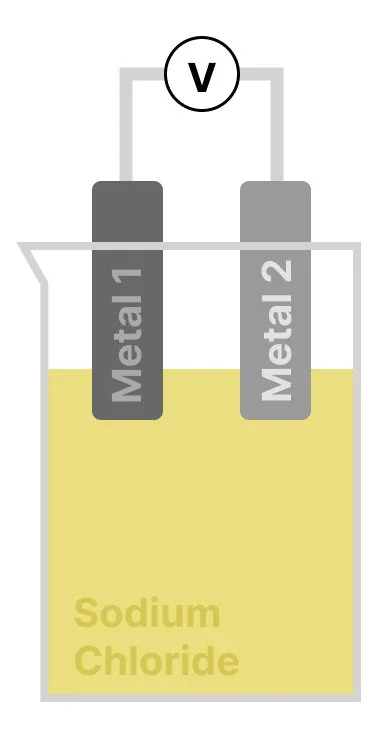
• Sodium Chloride solution as the electrolyte
• Two different metals as electrodes
• Measure Voltage
-
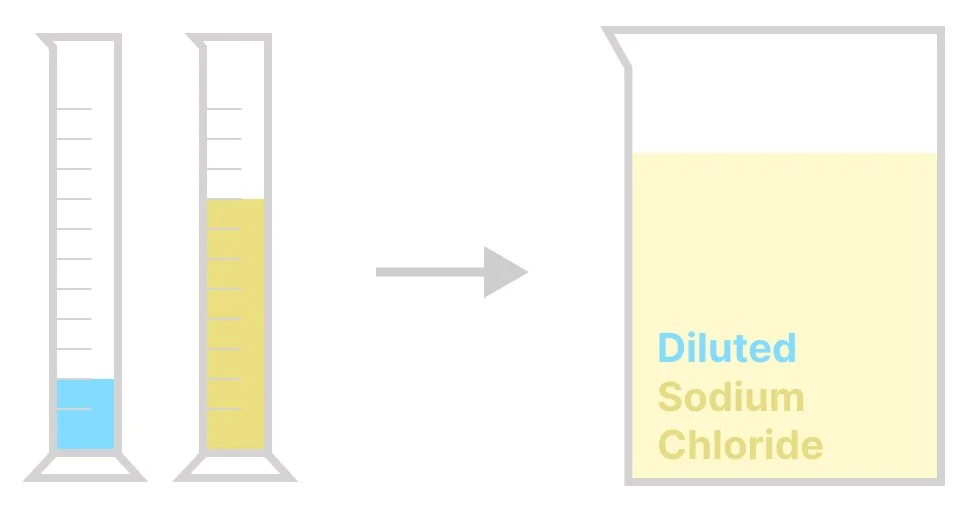
Dilute the Sodium Chloride solution with water by:
• Measuring volumes of sodium chloride solution and water using measuring cylinder and mixing
-
• Repeat at different concentrations of electrolyte solution
• Use the same two metals each time
• Use the same volume of electrolyte solution